
5,995
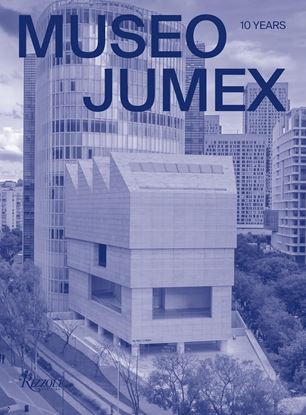
MUSEO JUMEX. 10 YEARS
This volume celebrates the 10th anniversary of Museo Jumex, Mexico City’s most important contemporary art museum, and its unique collection.
Located in the vibrant Polanco neighborhood of Mexico City, Museo Jumex opened its doors to the public in 2013 as a one-of-a-kind museum devoted to the production and discussion of contemporary art.
Founded by Eugenio López Alonso, a pioneer in the realm of contemporary art collecting in Mexico, and designed by Sir David Chipperfield, 2023 winner of the Pritzker Architecture award, Museo Jumex has achieved international recognition for its dual mission of bringing works of renowned international artists to Mexico for the first time and elevating the work of today’s Mexican and Latin American artists.
5,995
6,500
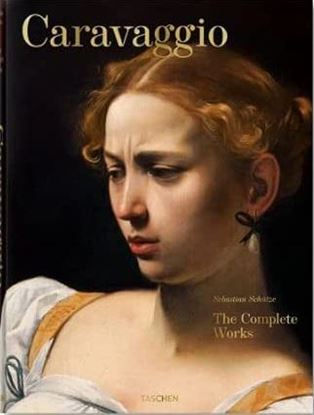
CARAVAGGIO (XL) (INT)
Caravaggio, or more accurately Michelangelo Merisi da Caravaggio (1571–1610), was a legend even in his own lifetime. Notorious bad boy of Italian painting, the artist was at once celebrated and controversial: Violent in temper, precise in technique, a creative master, and a man on the run.
This work offers a comprehensive reassessment of Caravaggio’s entire œuvre with a catalogue raisonné of his works. Each painting is reproduced in large format, with recent, high production photography allowing for dramatic close-ups with Caravaggio's ingenious details of looks and gestures.
Five introductory chapters analyze Caravaggio's artistic career from his early struggle to make a living, through his first public commissions in Rome, and his growing celebrity status. They look at his increasing daring with lighting and with a boundary-breaking naturalism which allowed even biblical events to unfold with an unprecedented immediacy before the viewer.
6,500
6,500
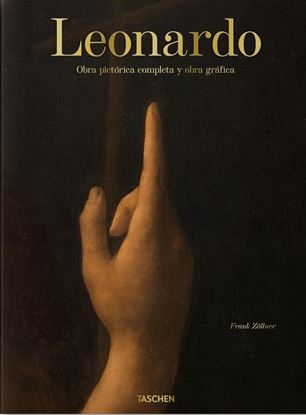
LEONARDO. OBRA PICTORICA COMPLETA (FP) E
Unmatched in his ingenuity, technical prowess, and curiosity, Leonardo da Vinci (1452–1519) epitomizes the humanistic ideal of the Renaissance man: a peerless master of painting, sculpture, cartography, anatomy, architecture – and more. Simultaneously captivating art historians, collectors, and the millions who flock yearly to admire his works, Leonardo’s appeal is as diffuse as were his preoccupations. His images permeate nearly every facet of Western culture – The Vitruvian Man is engraved into millions of Euro coins, The Last Supper is considered the single most reproduced religious painting in history, and the Mona Lisa has entranced countless artists and observers for centuries.
6,500
6,700
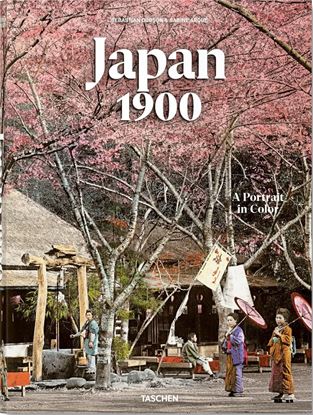
JAPAN 1900. A PORTRAIT IN COLOR (FP) INT
The Golden Age of Travel neatly overlaps with the reign of the Emperor Meiji, which began in 1868 with the overthrow of a feudal order that had kept Japan secluded from the outside world for more than 200 years. In the ensuing four-and-a-half decades, Japan became a less remote and more attractive destination for the international traveler and a popular subject for photographers, both Japanese and foreign.
6,700
8,500
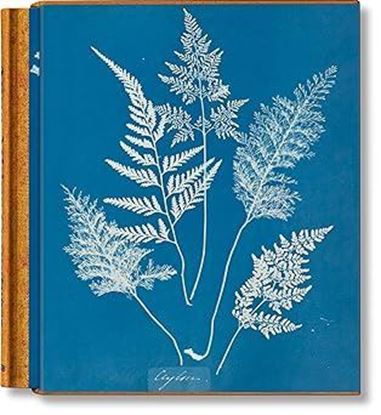
ANNA ATKINS. CYANOTYPES (CL) (INT)
At the dawn of the Victorian era in her open-air laboratory in Halstead, Kent, Anna Atkins embarked on a radical experiment to document botanical species using a completely new artistic medium. The inimitable cyanotype photograms of algae and ferns she created were made into the first books to feature photographic images. Striking yet ethereal, these albums are a perfect synthesis of art and science.Although the cyanotype technique was discovered by her friend John Herschel, Atkins was the first to realize both its practical purpose for own her interests in botany and taxonomy, and its intriguing artistic potential.
8,500
9,500
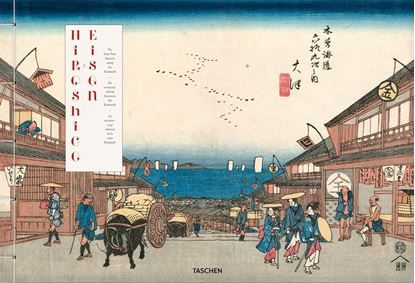
XL-HIROSHIGE/EISEN, KISOKAIDO-INT
The Kisokaido route through Japan was ordained in the early 1600s by the country’s then-ruler Tokugawa Ieyasu, who decreed that staging posts be installed along the length of the arduous passage between Edo (present-day Tokyo) and Kyoto. Inns, shops, and restaurants were established to provide sustenance and lodging to weary travelers. In 1835, renowned woodblock print artist Keisai Eisen was commissioned to create a series of works to chart the Kisokaido journey. After producing 24 prints, Eisen was replaced by Utagawa Hiroshige, who completed the series of 70 prints in 1838.
9,500