
1,995
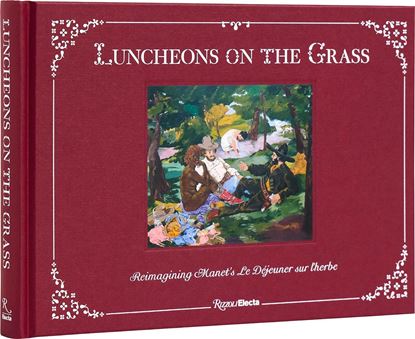
LUNCHEONS ON THE GRASS
Thirty-five contemporary artists create their own version of Le Déjeuner sur l’herbe.
Édouard Manet’s Le Déjeuner sur l’herbe (1863) is generally cited as the first modern painting. The entry slide in art history lectures about modernism, the work remains among the “most audacious painting[s] ever seen in France,” as Ross King described it in The Judgement of Paris (2006).
As Manet did with Le Déjeuner sur l’herbe, the most provocative painters today collapse the historical and the contemporary onto one plane. Jeffrey Deitch invited a group of these influential artists to create their own versions, combined here with historical responses to Manet’s painting. The slim volume features these often biting and satirical works alongside essays discussing Le Déjeuner sur l’herbe’s enduring influence on contemporary figurative painting.
1,995
2,995
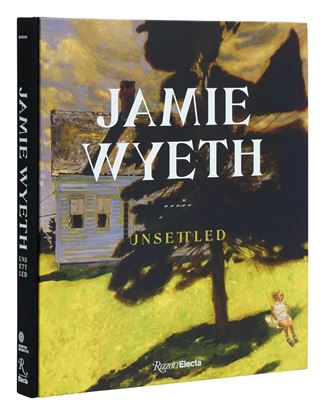
JAMIE WYETH. UNSETTLED
A major monograph of the American realist artist, descendant of one of America’s most revered artistic families, and painter of dark and uneasy subjects.
This book traces a persistent vein of intriguing, often disconcerting, imagery over the career of renowned artist Jamie Wyeth (b. 1946), famous for his hyperrealist paintings of farm animals and Maine lighthouses. The focus in this volume is on the chilling thread that runs through his work, present but not overwhelming, and ever-evolving with his style and subjects. Whether he is introducing curious characters or surveying strange landscapes, Wyeth is at home with uneasy subjects and a master of the unsettled mood
2,995
2,300
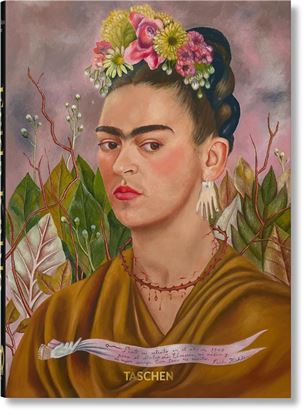
KAHLO, PAINTINGS (40TH) (GB)
Among the few women artists who have transcended art history, none had a meteoric rise quite like Mexican painter Frida Kahlo (1907–1954). Her unmistakable face, depicted in over fifty extraordinary self-portraits, has been admired by generations; along with hundreds of photographs taken by notable artists such as Manuel and Lola Álvarez Bravo, Nickolas Muray, and Martin Munkácsi, they made Frida Kahlo an iconic image of 20th century art.After an accident in her early youth, Frida became a painter of her own free will. Her marriage to Diego Rivera in 1929 placed her at the forefront of an artistic scene not only in the cultural Renaissance of Mexico, but also in the United States. Her work garnered praise from the poet André Breton, who added the Mexican painter to the ranks of international surrealism and exhibited her work in Paris in 1939 to the admiration of Picasso, Kandinsky, and Duchamp.We access the intimacy of Frida’s affections and passions through a selection of drawings, pages from her personal diary, and an extensive illustrated biography featuring photos of Frida, Diego, and the Casa Azul, Frida’s home and the center of her universe.This book allows readers to admire Frida Kahlo’s paintings like never before, including unprecedented detail shots and famous photographs. It presents pieces in private collections and reproduces works that were previously lost or have not been exhibited for more than 80 years.
2,300

1,750
CONVERSACIONES CON GRANDES FIGURAS DE LA
De música, por supuesto sus inicios, referencias y maestros, sus trabajos, pero también de otros asuntos más personales sus miedos y sueños y universales amor, drogas, política, religión, muerte es de lo que el autor de este libro, reconocido periodista cultural con varias biografías de estrellas de la canción española en su haber, ha conversado a lo largo de tres décadas con los 40 grandes músicos e intérpretes que lo protagonizan.
1,750
1,500
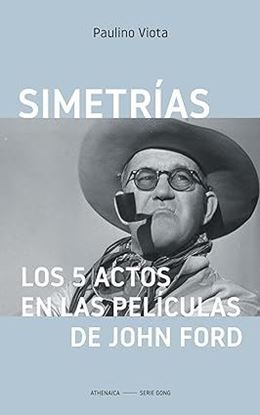
SIMETRIAS. LOS 5 ACTOS DE JOHN FORD
De una incomparable familiaridad con el legado clásico y moderno del cine, del estudio exhaustivo de sus películas y de los rasgos de estilo de sus cineastas, nace el Paulino Viota teórico, ese sabio que ha plantado en artículos, libros, conferencias y cursos la fructífera semilla de su apasionamiento, marcando a varias generaciones de cinéfilos mediante la finura del análisis, la argumentación audaz y la iluminación arrebatadora. Fue, como bien se ha dicho, la opción elegida para seguir siendo creativo, para hacer cine de otra manera, cuando su carrera de cineasta se vio desgraciadamente truncada. En "Simetrías. Los cinco actos en las películas de John Ford", catorce títulos del director de Fort Apache o The Searchers son desmenuzados para hacer comparecer a su cineasta-constructor, demiurgo tras las apariencias que apuntala la narración y gestiona su memoria esa guía afectiva del espectador atento a partir de cinco actos, unidades de sentido de raigambre mítica relacionadas entre sí por simetrías y correspondencias que explican la pregnancia del cine fordiano. Así, Paulino Viota, con una clarividencia que se impone a la hybris, nos faculta a comprender y sentir la parte sumergida que sustenta la punta visible de ese imponente iceberg llamado John Ford; y mientras, el lector, en justa proporción, celebra el trabajo minucioso y callado, la tramoya de diagramas y esquemas que el analista ha ido desarrollando durante años para poder arribar a sus emocionantes conclusiones, aquí donadas con la generosidad que todos conocemos y admiramos en él.
1,500
1,750
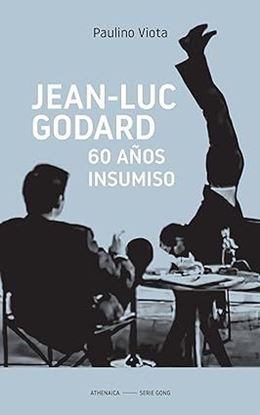
JEAN-LUC GODARD
Casi las mismas decadas de insumisión y rebeldía que ha protagonizado Godard con su vida y obra lleva Paulino Viota estudiando ambas, desde el apasionamiento cinefilo y la devoción inteligente que siente por "el cineasta con mayor riqueza estructural de la historial del cine". Dividido en dos grandes bloques, este ensayo magistral y ya definitivo tras la reciente desaparición del cineasta pone en perspectiva todas las etapas de su mítica carrera, que arranca con la irreverente modernidad de los años 60, atraviesa la militancia política y el utópico deseo de fusión en lo colectivo, y desemboca, rayando el nuevo milenio y como colofón a una duradera y profunda reflexión sobre la mediación tecnológica, en ese estilo inimitable donde lo poetico acontece como posibilidad de una simultaneidad inedita entre imágenes y sonidos, materiales ya convertidos en "formas que piensan" la historia del cine y la del siglo XX, como ejemplifica a la perfección una de sus cimas, "Histoire(s) du cinema".
1,750