
3,500
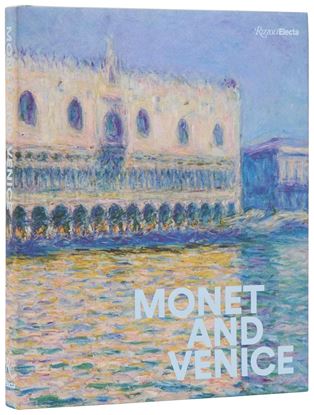
MONET AND VENICE
Monet’s Venice paintings are high points in his lifelong engagement with the interplay of water and light. Monet and Venice—anchored by two masterworks from the collections of Brooklyn and San Francisco, The Doge’s Palace and The Grand Canal, Venice—will be the first exhibition and English-language publication dedicated to this significant suite of paintings since their Parisian debut at the Bernheim-Jeune gallery in 1912.
Monet keenly felt the burden of influence in a city that had so often been depicted and had long been an icon of waning, fragile beauty. Venice was—and is—a place where culture and nature are profoundly and uniquely entangled. Monet’s images of Venice’s buildings and canals dissolved in colorful mist and hazy light may be seen as meditations on human aesthetic interaction with a natural environment built upon for centuries.
3,500
4,350
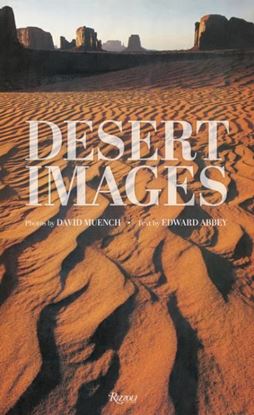
DESERT IMAGES
When first published, Desert Images was a watershed project in the nascent environmental movement—bringing together two titans of American literature and art in their heyday. Still resonating all these decades later, Muench’s evocative photography and Abbey’s fiery, poetic text remain an unsurpassed tribute to this extraordinary American landscape. Those who imagine that the desert is merely a monotonous vista of sand and rock will be surprised by the variety of landforms, plants, and other natural phenomena shown on these pages.
As Abbey wrote, “For some of those who have learned not only to live in but also to love the desert, it offers rewards greater than its visual appeal to the sense of beauty—the promise implicit in all that rugged wildness, that open, unfenced, untrammeled space—the sense of adventure, the reality of freedom, the hope of a refuge.” This photographic and literary passport to a great American wilderness will be treasured by all those who cherish the natural world.
4,350

2,350
STAR WARS MUNDOS Y ESCENARIOS. NUEVA ED
Explora los mundos de una galaxia muy muy lejana como no lo habías hecho nunca
Con más de 60 intrincadas ilustraciones a todo color y mapas 3D, explora lugares icónicos que dan vida a la saga Star Wars.
Esta edición actualizada ha sido completamente revisada e incluye las nuevas entregas de Star Wars junto a los cásicos: Los últimos Jedi, Star Wars: El ascenso de Skywalker, Rogue One: una historia de Star Wars, Han Solo: una historia de Star Wars, Star Wars: The Mandalorian y Star Wars: Andor.
Adéntrate en más de 60 inmersivas secciones transversales de lugares icónicos de Star Wars.
Compilado y escrito por expertos de Star Wars, este libro muestra fascinantes secretos sobre los mundos y escenarios de las películas y series de televisión.
2,350

3,200
1,995
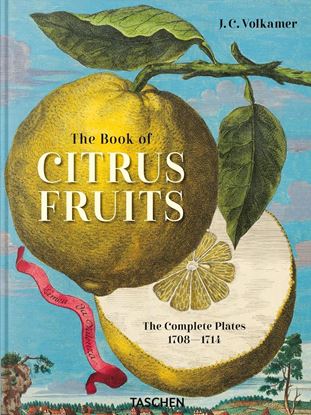
J.C. VOLKAMER. THE BOOK OF CITRUS FRUITS
Have you ever thought of citrus fruits as celestial bodies, angelically suspended in the sky? Perhaps not, but J. C. Volkamer (1644–1720) did―commissioning an extravagant and breathtaking series of large-sized copperplates representing citrons, lemons, and bitter oranges in surreal scenes of majesty and wonder.
Ordering plants by post mostly from Italy, Germany, North Africa, and even the Cape of Good Hope, the Nuremberg merchant Volkamer was a devotee of the fragrant and exotic citrus at a time when such fruits were still largely unknown north of the Alps. His garden came to contain a wide variety of specimens, and he became so obsessed with the fruits that he commissioned a team of copperplate engravers to create 256 plates of 170 varieties of citrus fruits, many depicted life size, published in a two-volume work. The first volume appeared in 1708, with the impressively lengthy title The Nuremberg Hesperides, or: A detailed description of the noble fruits of the citron, lemon and bitter orange; how these may be correctly planted, cared for and propagated in that and neighboring regions.
1,995
6,500
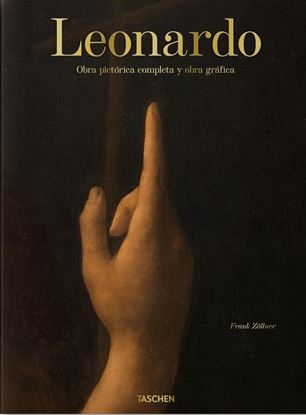
LEONARDO. OBRA PICTORICA COMPLETA (FP) E
Unmatched in his ingenuity, technical prowess, and curiosity, Leonardo da Vinci (1452–1519) epitomizes the humanistic ideal of the Renaissance man: a peerless master of painting, sculpture, cartography, anatomy, architecture – and more. Simultaneously captivating art historians, collectors, and the millions who flock yearly to admire his works, Leonardo’s appeal is as diffuse as were his preoccupations. His images permeate nearly every facet of Western culture – The Vitruvian Man is engraved into millions of Euro coins, The Last Supper is considered the single most reproduced religious painting in history, and the Mona Lisa has entranced countless artists and observers for centuries.
6,500