

1,850
THE FANTASTIC WORLDS OF. F.F. (45) (INT)
Frank Frazetta has reigned as the undisputed king of fantasy art for 50 years, his fame only growing in the years since his death. With his paintings now breaking auction records (Egyptian Queen sold for $ 5.4 million in 2019) he’s long overdue for this ultimate monograph.Born to a Sicilian immigrant family in Brooklyn, 1928, Frazetta was a minor league athlete, petty criminal and serial seducer with movie star looks and phenomenal talent. He claimed to only make art when there was nothing better to do – he preferred playing baseball - yet began his professional career in comics at age 16. Strip work led him to the infamous EC Comics, then to oils for Tarzan and Conan pulp covers. Both characters were interpreted by many before him, but as he explained in the 1970s, “I’m very physical minded. In Brooklyn, I knew Conan, I knew guys just like him,” and he used this first-hand knowledge of muscle and macho to redefine fantasy heroes as more massive, more menacing, more testosterone-fueled than anything seen before. As counterbalance he created a new breed of women, nude as censorship allowed, with pixie faces and multiparous bodies: thick thighed, heavy buttocked, breasts cantilevered out to there, yet still, with their soft bellies and hints of cellulite, believably real. Add in the action, the creatures, the twilit worlds of haunting shadow and Frazetta’s art is addictive as potato chips.
1,850

1,995
THE GODFATHER FAMILY ALBUM (45TH) (GB)
"Es peligroso ser un hombre honesto".
—Michael Corleone, El Padrino IIIComo fotógrafo especial en los platós y los exteriores de la trilogía El Padrino de Francis Ford Coppola, Steve Schapiro tuvo la oportunidad excepcional de presenciar el trabajo de actores legendarios en algunas de sus interpretaciones más memorables. Schapiro inmortalizó a Marlon Brando, Al Pacino, Robert De Niro, James Caan, Robert Duvall y Diane Keaton en fotos que desde entonces se han convertido en imágenes emblemáticas, reconocibles al instante e imitadas hasta la saciedad. Reunidas por primera vez en este libro están las mejores fotografías de Schapiro de las tres películas de El Padrino, cuidadosamente reproducidas a partir de los negativos originales. Con ensayos y entrevistas que cubren la trilogía en su integridad, este libro contiene más de 300 imágenes a color y en blanco y negro.
Las imágenes de Schapiro nos llevan tras las escenas de esta epica e inimitable saga cinematográfica, revelando el proceso de trabajo del director, captando las atmósferas y las personalidades involucradas y proporcionando interioridades de cómo se hacía la historia del cine.
1,995
3,350
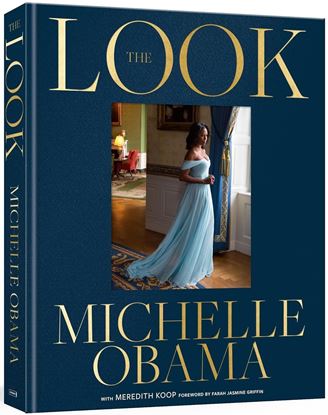
THE LOOK
In this celebration of style, from the moment she entered the public eye during her husband’s U.S. Senate campaign through her time as the first Black First Lady and today as one of this country’s most influential figures, Michelle Obama shares how she uses the beauty and intrigue of fashion to draw attention to her message.
Featuring the voices of Meredith Koop, Obama’s trusted stylist, as well as her makeup artist Carl Ray, hairstylists Yene Damtew, Johnny Wright, and Njeri Radway, and many of the designers who have dressed Obama for notable events, The Look brings readers behind the scenes not only to reveal how her most memorable looks came together but also to tell a powerful story about how we present ourselves.
Obama’s intimate and candid stories illuminate how her approach to dressing has evolved throughout her life—from the colorful sheath dresses, cardigans, and brooches she wore during her time as First Lady to the bold suits, denim, and braids of her post-White House life and all the active looks and beautiful gowns in between.
3,350

1,995
THE NASA ARCHIVES (45TH) (GB)
Prepárese para un viaje por el espacio y el tiempo con The NASA Archives, un homenaje visual al impulso imparable del ser humano por viajar más allá de la Tierra. Con cientos de fotografías históricas e imágenes renderizadas poco conocidas, esta colección nos guía por los 60 años de historia de la NASA.
1,995

1,995
THE ROLLING STONES (45TH ED)
The kind of fame and success The Rolling Stones have achieved in their 60-plus year career is without parallel; their most famous riffs and catchiest lyrics are indelibly engraved in our collective memory. With their mesmerizing on- and off-stage presence, the Stones set the standard for how a rock band should sound, pose, pout, and behave. They were the first to instinctively understand that what you looked like was as important as the music, and that photography had a vital role in promoting that image.
“The clothes and the hair are always impeccable,” describes author Lucy Sante. “They were playing themselves, but with such consistent finesse you knew they were instinctively aware of the camera and how good they will look in the photos.” Unsurprisingly many of the greatest photographers in the history of the medium wanted to take their picture.
Produced in close collaboration with the band, this edition charts the Stones’ remarkable history and outrageously cool lifestyle in over 500 pages of photographs and illustrations, gathered from archives all over the world. Unprecedented access to the Rolling Stones’ own archives in New York and London adds an equally extraordinary, more private side to their story. For Mick, Keith, Charlie, and Ronnie this is and was their official photographic record.
1,995
4,995
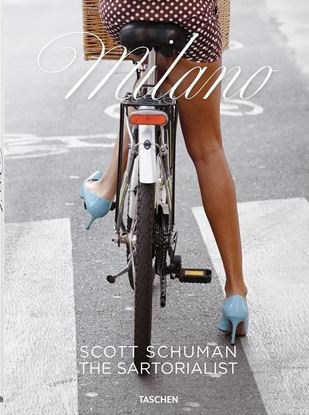
THE SARTORIALIST. MILANO
In 2005, Scott Schuman transformed fashion photography forever when he founded the blog The Sartorialist. The idea was simple: to open a dialogue between fashion and daily life, by shooting locals in public spaces. But in the lineage of Bill Cunningham and August Sander, that unpretentious, radical emphasis on “real people”—off the runway, out of the studio—elevated people-watching to an art and street style to high fashion, long before Instagram. In Milan, Schuman found a muse dressed for the task.
Milano chronicles nearly twenty years of his devotion to the inimitable Milanese and their bustling, stylish city, first as a visitor, then as a local. Featuring a foreword by the late Giorgio Armani and an extensive interview unpacking Schuman’s unique approach to capturing fashion in the wild, the photos are so cinematically composed, it’s a wonder they were shot on the move. Schuman seems to pause Milano, not only those shoppers, skaters, and smokers who might have the time but those without it: Miuccia Prada, Emiliano Salci, Luciano Barbera, the Sozzani sisters, all caught here in the same streets and |caffés. What emerges is a street-view history of modern Milanese fashion, by an American with the open mind to see the elegance overlooked by locals born to it and missed in stiffer fashion shoots—the beauty in the authentic, unpredictable styles combined only by those under no pressure to conform. Young and old, they pose while Milan flies by on bikes, Vespas, and trams, amid a dazzle of marble, frescos, sculptures, spires, columns, ornate palazzi and brutalist facades, local markets, florists, vertical gardens, iconic hangouts like Bar Basso and Marchesi 1824, espressos, handbags, high heels, and suits in every color imaginable. From the canals of Naviglio Grande to the cobblestones of Via Brera to the glass ceiling of “the Galleria Vittorio Emanuele II” and Milano Centrale, the city’s blend of architectural styles is seen as a radiant reflection of its people.
4,995