

3,995
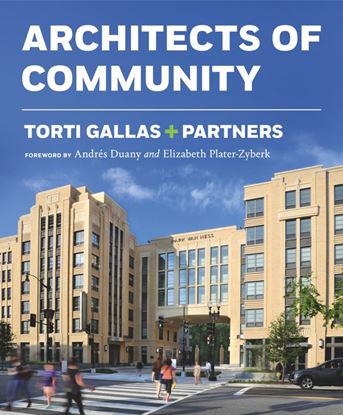
ARCHITECTS OF COMMUNITY
Passionate about designing buildings and neighborhoods that quietly transform the urban environment, Torti Gallas is committed to improving cities, towns, and distressed communities throughout the United States and around the world. This fully illustrated book shows how they have combined the disciplines of architecture, planning, and urban design into a single practice, creating housing and mixed-use buildings that bring catalytic change to urban neighborhoods: the mixed-use apartment buildings, rowhouses, and single-family homes that comprise the fabric of a city. Their work hearkens back to a tradition that, before World War II, created some of the country’s finest neighborhoods, including Forest Hill Gardens in Queens, Rittenhouse Square in Philadelphia, and Russian Hill in San Francisco. Featuring 60 built projects, this book shows how Torti Gallas is dedicated to raising the level of this architecture to a new high.
3,995
3,995
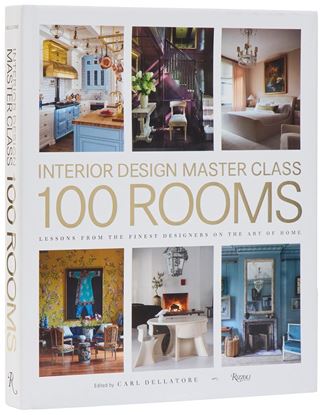
INTERIOR DESIGN MASTER CLASS: 100 ROOMS
Everyone wants a stylish home, but with so much information available, how does one begin to put it all together? EnterInterior Design Master Class: 100 Rooms. The designers who’ve created the remarkable spaces in this volume individually explain in their own words the framework for the success of each room. The spaces featured in the book are broken down by type of room, including Gathering (media and family rooms), Transitional (porches and entryways), Respite (bedrooms and sitting rooms), Entertaining (dining rooms and bars), and Utility (kitchens, baths, and mudrooms). In each category, the multiple examples by designers well known from their appearances in Architectural Digest, Elle Decor, and Southern Living explore a variety of topics. Katie Ridder uses her vibrant living room to write about establishing a successful palette. Suzanne Kasler writes about the importance of light in bedrooms. Frances Merrill of Reath Design shares her thoughts about kitchens. Mark Sikes contributes an essay on tables. Steven Gambrel writes about the color blue. Josh Greene expounds on the bath. Also featuring Bunny Williams, Robert Couturier, Heidi Caillier, Miles Redd and David Kaihoi, Nicole Hollis, and Corey Damen Jenkins, the book is an elegant guide to twenty-first-century living, room by room.
3,995
3,995
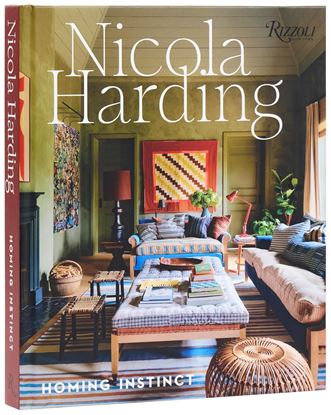
NICOLA HARDING
Having moved around a lot as a child, Harding has always been interested in creating homes that evoke a sense of belonging. After designing several homes for herself, what began as a passion grew organically into a thriving career. Today Harding is known for her quintessentially British, reassuringly familiar interiors that mix traditional charm with rich atmosphere. A sense of meaning comes from deftly weaving together expertly sourced antiques and luxurious fabrics, married with craftsmanship that has a particular significance—for example, a supplier who works in a village near where a client grew up, or antiques from local dealers.
With a calming, nature-inspired palette, Harding’s residential projects embrace English country-house coziness and radiate a warmth that makes each place feel personal and well lived in, while her hospitality commissions are bold and spirited, often inspired by literary or historic characters. This first book delves into Harding’s design philosophy, which, at its heart, prioritizes human experience above all else.
3,995
3,995
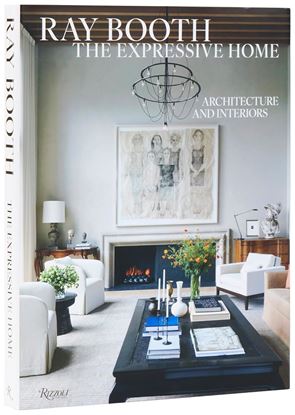
RAY BOOTH: THE EXPRESSIVE HOME
Booth showcases his innovative and sophisticated modern interiors, which mix a keen sense of tranquility with bold and elegant details, as well as homes renovated inside and out, and houses designed and decorated from the foundations up. Both his exteriors and interiors display a harmonious blend of traditional and contemporary elements, resulting in an appealingly timeless aesthetic. This exquisitely designed tome presents his forward-thinking vision.
The spectacular projects featured span the country from coast to coast—from a dramatic Los Angeles hillside dwelling with expansive windows to a contemporary Nashville home that marries brick, metal, and wood. For his own Provincetown seaside getaway, he has chosen an unexpected cutting-edge style. These projects show how he pushes the boundaries of design while imbuing spaces with soul.
3,995
3,995
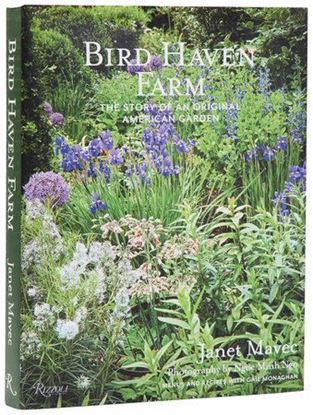
BIRD HAVEN FARM. THE STORY OF AN ORGINAL
Preserving and enhancing a property rich in narrative and natural beauty has been a twenty-year obsession for this property’s owner. Mavec has called upon a host of well-known garden luminaries to help preserve what began as a farm with a solitary stone house originally owned by the publisher of the Nancy Drew mysteries while making it functional, productive, and beautiful for the twenty-first century. Today, a series of individual gardens rest within a natural hollow surrounded by native woodland, including a broad gathering space defined by whimsical cloud-pruned boxwood hedges, groves of lilacs, and dogwoods and hellebores that entice visitors into early-season walks with delicate color each spring, a stone-walled vegetable and flower garden whose geometry is inspired by medieval monasteries, winding perennial-lined paths, orchards that produce over five hundred pounds of apples each fall, a natural pond brimming with aquatic plants, and an elliptical hillside meadow farmed for hay. All lead intuitively back to the “town square,” an open area tucked among the dwelling spaces featuring a broad ground-level fountain that clearly identifies it as the true heart of the farm.
3,995
3,995
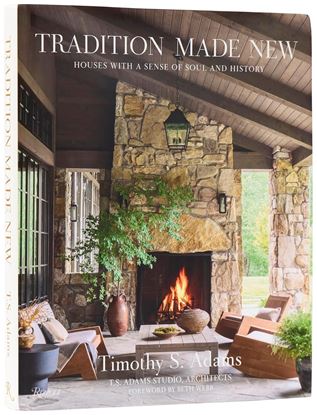
TRADITION MADE NEW
Architect Adams has long had a passion for design. His appreciation for how things are made had its genesis in his childhood experiences on a farm in Asheville, North Carolina. As a boy, Adams always had a pencil in hand, sketching for hours. Today, it is his understanding of craft and response to place that sets him apart.
Informed by Adams’s deep knowledge of historic precedents, proportions, and details, the homes featured in this book are imbued with soul, whether it’s a charming house in the woods on the lake, a refined contemporary beachside retreat, or a traditional manor house in town. While the homes featured range in scale and style— Tudor, Arts and Crafts, French country, Southern farmhouse—Adams imbues each with natural materials such as bespoke architectural details in millwork and molding, arched doorways, and oversized windows. He brilliantly weaves wood, stone, copper, and other natural substances through the interiors to create an effect that casts a spell inside and out. These are houses that are grounded in the past, designed for the present, and intended to remain beautiful and functional over the long term.
3,995