

1,350
HADID (BA-ARCH) (GB)
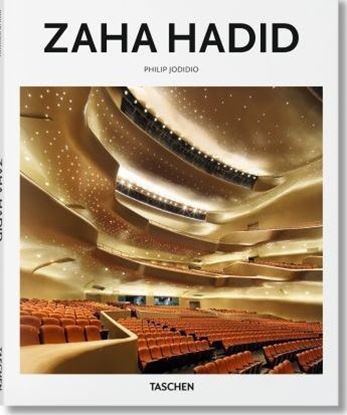
Zaha Hadid was a revolutionary architect, who for many years built almost nothing, despite winning critical acclaim. Some even said her audacious, futuristic designs were unbuildable.
During the latter years of her life, Hadid’s daring visions became a reality, bringing a unique new architectural language to cities and structures as varied as the Rosenthal Center for Contemporary Art in Cincinnati, hailed by The New York Times as “the most important new building in America since the Cold War”; the MAXXI Museum in Rome; the Guangzhou Opera House in China; and the London 2012 Olympics Aquatics Centre.
At the time of her unexpected death in 2016, Hadid was firmly established among the elite of world architecture, recognized as the first woman to win both the Pritzker Prize for architecture and the RIBA Royal Gold Medal, but above all as a giver of new forms, the first great architect of the noughties.
From her early sharply angled buildings to later more fluid architecture that made floors, ceilings, walls, and furniture part of an overall design, this essential introduction presents key examples of Hadid’s pioneering practice. She was an artist, as much as an architect, who fought to break the old rules and crafted her own 21st-century universe.
1,350
1,350
ANDO (BA-ARCH) (ES)
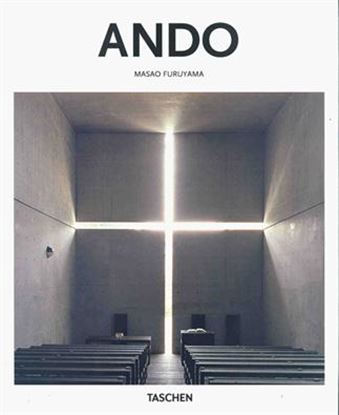
Este libro de TASCHEN ofrece la introducción perfecta a la obra de Tadao Ando y explora el híbrido de tradición, modernidad y función de unos edificios que fascinan a arquitectos, diseñadores y diseñadores de moda, entre otros. A través de obras clave como viviendas particulares, iglesias, museos, complejos de apartamentos y espacios culturales, analizamos una estética única, monumental y acogedora, basada tanto en la tradicional serenidad japonesa como en los vocabularios decididamente modernos de la Bauhaus y Le Corbusier.
1,350
1,350
CALATRAVA (BA-ARCH)
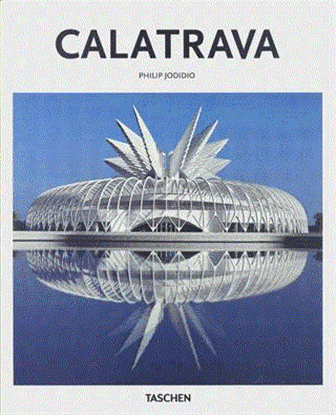
Con su trabajo visionario, el valenciano Santiago Calatrava (Benimámet, 1951) ha conseguido el reconocimiento internacional como arquitecto, ingeniero estructural, escultor y artista. Famoso tanto por sus puentes como por sus edificios, en su obra destacan las estructuras de aires neofuturistas, que combinan hábiles soluciones de ingeniería con un impacto visual asombroso. Desde el Complejo Deportivo Olímpico de Atenas 2004 y el reciente Museo del Mañana de Río de Janeiro hasta los puentes de la Paz, en Calgary; del Alamillo, en Sevilla, y de la Mujer, en Buenos Aires, los proyectos de Calatrava inciden especialmente en la relación entre el movimiento y el equilibrio. Con fuentes de inspiración tan diferentes como los diseños espaciales de la NASA o los estudios de anatomía de Leonardo Da Vinci, las obras del arquitecto español fascinan por la sensación de ligereza, agilidad y aerodinamismo que transmiten mientras mantienen una elegante relación con su entorno. Esta monografía concisa explora la singular estética de Calatrava a partir de proyectos clave de su carrera, desde sus primeros éxitos hasta sus creaciones más recientes. A través de edificios dedicados a la cultura, la ciencia o la fe, descubrimos la manera en la que integra las formas orgánicas y los movimientos humanos con una fluidez futurista que mira al mañana.
1,350
1,350
MIES VAN DER ROHE (BA-ARCH) (INT)
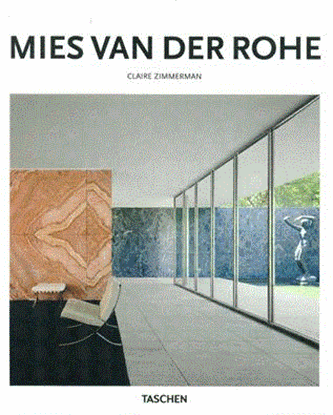
Célebre por su lema «menos es más», Ludwig Mies van der Rohe (1886-1969)fue uno de los padres fundadores de la arquitectura moderna y una figura influyente y polémica de la estética y la experiencia urbana del siglo XX. La filosofía de Mies van der Rohe consistía en fundamentar la verdad en las formas puras y las proporciones. Mediante avances tecnológicos y materiales contemporáneos, quiso vestir la arquitectura de una pureza elemental, ejemplificada por el Seagram Building y la Farnsworth House. Hubo quien denunció este planteamiento austero como el precursor de paisajes urbanos planos y genéricos. Otros citan a Mies van der Rohe como el maestro por excelencia de una esencia perdurablemente elegante. Con más de 20 de los proyectos que creó entre 1906 y 1967, este libro presenta el carácter vanguardista de la arquitectura de Mies van der Roge y su influencia en Estados Unidos y Europa.
1,350
1,350
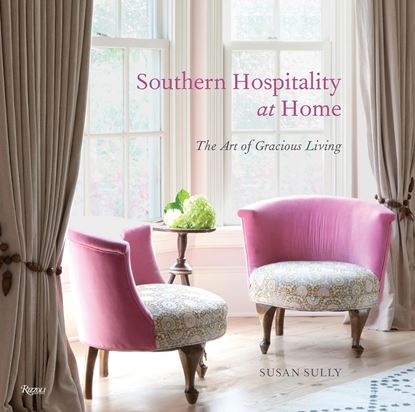
SOUTHERN HOSPITALITY AT HOME
From Susan Sully comes this book of inspirations for those who are enamored with the ever-enchanting Southern way of living.
The words "Southern hospitality" conjure up a wealth of welcoming images, from breezy porches with white colonnades and the seductive scent of magnolia blossoms cut from the yard to fill heirloom vases to tables laden with fine china on embroidered linens, illuminated by candles. Southern Hospitality at Home showcases the special qualities of graciousness and charm that define the American South's way of living. Learn from Southern style experts how to make your home an inviting place for sharing with family and friends--from designing welcoming entrance halls and inviting living rooms to comfortable kitchens, pretty guest rooms, and shady garden rooms--and weave your spell of hospitality.
1,350
1,350
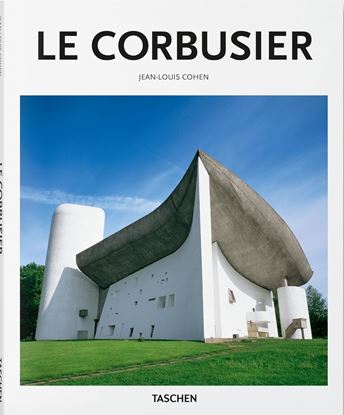
LE CORBUSIER (BA) (GB)
Born Charles-Édouard Jeanneret, Le Corbusier (1887–1965) is widely acclaimed as the most influential architect of the 20th century. From private villas to mass social housing projects, his radical ideas, designs, and writings presented a whole-scale reinvention not only of individual structures, but of entire concepts of modern living.
1,350