



4,500
MY LIFE IN COLORS
For Brudnizki, color is an essential ingredient for storytelling and conjuring atmosphere. Color is a force that brings his spaces to life, defining them, and enhancing the experience within them; it is a character in itself and Brudnizki uses it to blur the lines between eras and styles, to marry heritage with modern luxury.
From the fantasy-full and decadent rococo interiors of London members club Annabel’s to the soft, muted palette of the Splendido’s Baronessa Suite and the Parisian spirit of the restaurant at New York’s outpost of Fouquet’s, Brudnizki’s signature paintbrush imbues his interiors with idiosyncrasy and flair.
In this enchanting volume, the designer draws inspiration from nature, art, fashion, and history to show us how color influences his life and work. The charming design of the book brings the magic of his world to life: classical busts are unmoored from their pedestals, silky peonies embellish texts, candelabras glow, and birds flutter free from their frescoes and travel with us for pages. Each chapter is devoted to a single color, illuminating how Brudnizki leverages the emotional power of color to enhance the overwhelmingly beautiful and luxurious spaces he creates.
4,500

6,700
THE LEGENDARY ESTATES OF BEVERLY HILLS
This deluxe volume offers a meticulously researched and lavishly illustrated history of fifty magnificent estates in three of America’s most prized residential districts: Beverly Hills, Bel-Air, and Holmby Hills. Lush color photographs as well as a trove of historical images take readers beyond the front gates for an exceptional view of the mansions, grounds, and gardens of these sumptuous estates and tell the history of Los Angeles’s rise from rugged paddocks and farmland to famed metropolis. Each house is explored both for its historical and architectural importance, for here are the epitome of residences and gardens reflecting the famed Italianate and California Mediterranean styles by all the leading architects of Southern California, including Wallace Neff, James Dolena, Gordon Kaufmann, Robert Farquhar, Roland Coate, and Paul Williams. They built for clients such as Gary Cooper, Buster Keaton, Harold Lloyd, and Bing Crosby, whose own stories reflect the intrigue and foibles of Hollywood society. The book’s final chapter, “Gone but Not Forgotten,” pays homage to great estates that have been destroyed or lost to history.
6,700

5,700
LOUIS VUITTON AND JAPAN. VISIONARY JOURN
Published on the occasion of a major exhibition at Nakanoshima Museum of Art in Osaka, Japan, this volume explores the deep and transformative relationship between Louis Vuitton and Japan, which has produced myriad innovative collaborations that have defined the brand and revolutionized contemporary fashion. This fresh perspective on the global impact of the luxury powerhouse follows Louis Vuitton’s journey from pioneering trunk innovations to its outsize influence on global street style, especially in Japan.
In the volume, the Maison’s history comes to life, from the evolution of its Monogram logo (which took inspiration, in part, from Japanese design) to the ingenious flat stackable trunk and patented lock innovations, alongside the brand’s bold expansion into Japan. The authors consider the house’s groundbreaking artistic collaborations most notably with artists Takashi Murakami (with his iconic “Monogramouflage”) and Yayoi Kusama (with her signature polka-dot motifs) which transformed Louis Vuitton’s visual identity.
5,700
4,400
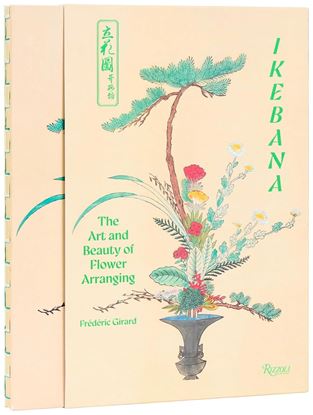
IKEBANA. THE ART AND BEAUTY OF FLOWER A.
Meticulous reproductions of sublime paintings showcase rikka, the oldest and most traditional form of flower arranging, which is linked to the Ikenobō school, Japan’s first and largest school of ikebana. The images presented here perfectly illustrate the main principles of ikebana—harmonious juxtaposition of flowers, balance between foliage (leaves, fronds, reeds, etc.) and branches, and naturalistic compositions for display.
Several schools and styles of ikebana have evolved over the centuries. The rikka style is characterized by the use of erect branches and flowers to display a marked verticality in order to express the beauty of a natural landscape in a single vase. The floral arrangements in this collection date back to the Ikenobō Grand Master of Kyoto’s Rokkakudō Temple and his disciples from the Ashikaga Shogunate (1336–1573). These flower arrangements were officially documented by Igai Sansaemon in 1673 in artworks printed xylographically and then hand-colored using the gansai watercolor technique. The reproductions are accompanied by authoritative text by one of the world’s leading authorities on Japanese art.
4,400

4,500
FROM HAND TO HOME
Wright has captured the attention of design aficionados with his breathtaking architectural spaces informed by the spirit and lessons of historical, vernacular, and modern styles for today. Each of the presented residences—from a Queen Anne–style house and a seaside Shingle-style cottage to a modern beach house, a Frank Lloyd Wright–inspired retreat, and a McKim, Mead & White city apartment—is paired with Wright’s painted and penciled sketches, along with floor plans, all of which demonstrate his facility with the history of ornament and contemporary currents. Wright frequently collaborates with the country’s most esteemed interior designers, including Bunny Williams, Cullman & Kravis, Brian J. McCarthy, and the late Amy Lau. Sophisticated yet approachable, Wright’s architecture will tour the reader through the legacy of great buildings and outstanding craftmanship reinterpreted for the contemporary sensibility.
4,500
4,700
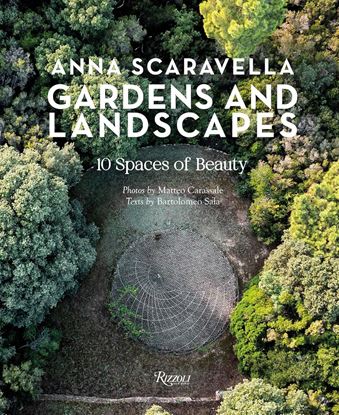
GARDENS AND LANDSCAPES. 10 SPACES OF B.
Every garden possesses its own unique beauty, just as every place holds a mysterious equilibrium within it. This is the premise advanced by Anna Scaravella, a renowned expert in landscape architecture who views every project as a new opportunity to explore the alchemy of plant culture and design. Scaravella’s unerring instincts and aesthetic rigor bring her to the nexus of garden and landscape, resulting in the creation of places that are not only marvelous but also energy-conscious and environmentally sustainable.
This splendid volume of photography takes us on a journey through ten gardens from northern to southern Italy: from the garden of Villa Albera in Lombardy to the hills of Piacenza with Villa Bellaria, on to Bagno Vignoni in Tuscany, and then even further south, to marvelous Ostuni. Scaravella has crafted magnificent oases of peace and beauty and invited us to visit and admire them by her side.
4,700