1,995
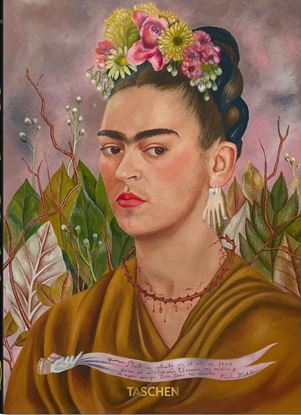
FRIDA KAHLO (45TH) (E)
Among the few women artists who have transcended art history, none had a meteoric rise quite like Mexican painter Frida Kahlo (1907–1954). Her unmistakable face, depicted in over fifty extraordinary self-portraits, has been admired by generations; along with hundreds of photographs taken by notable artists such as Manuel and Lola Álvarez Bravo, Nickolas Muray, and Martin Munkácsi, they made Frida Kahlo an iconic image of 20th century art.After an accident in her early youth, Frida became a painter of her own free will. Her marriage to Diego Rivera in 1929 placed her at the forefront of an artistic scene not only in the cultural Renaissance of Mexico, but also in the United States. Her work garnered praise from the poet André Breton, who added the Mexican painter to the ranks of international surrealism and exhibited her work in Paris in 1939 to the admiration of Picasso, Kandinsky, and Duchamp.We access the intimacy of Frida’s affections and passions through a selection of drawings, pages from her personal diary, and an extensive illustrated biography featuring photos of Frida, Diego, and the Casa Azul, Frida’s home and the center of her universe.This book allows readers to admire Frida Kahlo’s paintings like never before, including unprecedented detail shots and famous photographs. It presents pieces in private collections and reproduces works that were previously lost or have not been exhibited for more than 80 years.
1,995
1,350
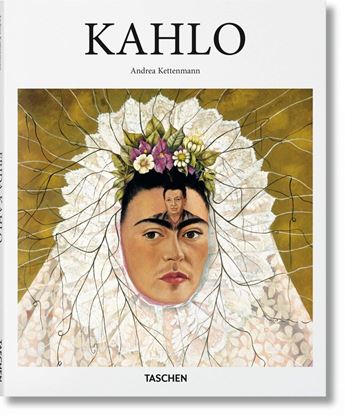
FRIDA KAHLO (BA-ART) (GB)
The arresting pictures of Frida Kahlo (1907–54) were in many ways expressions of trauma. Through a near-fatal road accident at the age of 18, failing health, a turbulent marriage, miscarriage and childlessness, she transformed the afflictions into revolutionary art.
In literal or metaphorical self-portraiture, Kahlo looks out at the viewer with an audacious glare, rejecting her destiny as a passive victim and rather intertwining expressions of her experience into a hybrid real-surreal language of living: hair, roots, veins, vines, tendrils and fallopian tubes. Many of her works also explore the Communist political ideals which Kahlo shared with her husband Diego Rivera. The artist described her paintings as “the most sincere and real thing that I could do in order to express what I felt inside and outside of myself.”
This book introduces the rich body of Kahlo’s work to explore her unremitting determination as an artist, and her significance as a painter, feminist icon, and a pioneer of Latin American culture.
1,350
1,400
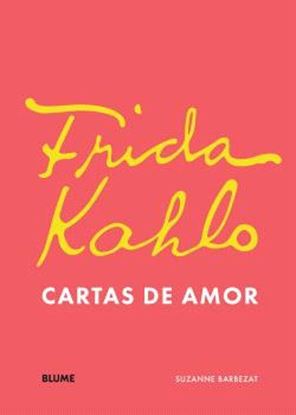
FRIDA KAHLO. CARTAS DE AMOR
* Frida Kahlo fue una prolífica y emotiva escritora de cartas. Aunque pasó una buena parte de su vida casada con el también artista Diego Rivera, ambos tuvieron numerosas aventuras y Frida escribió a sus amantes con frecuencia.
* Este libro incluye una selección de cartas de Frida, muchas de ellas reproducidas en facsímil, junto con fotografías y obras de la artista.
* Además de las muestras de correspondencia con su primer amor, Alejandro Gómez Arias, y con su marido, Diego Rivera, se presentan asimismo cartas dirigidas a Nickolas Muray, Georgia O’Keeffe y Josep Bartolí, entre otros.
En conjunto, las misivas crean un retrato íntimo de la vida personal de Frida Kahlo y revelan otra vertiente de su creatividad.
''Desde que me enamoré de ti,
todo se transforma y se llena de belleza.
Quiero regalarte los colores más bonitos,
quiero besarte...''
[A JOSEP BARTOLÍ, 20 DE OCTUBRE DE 1946]
1,400
1,350
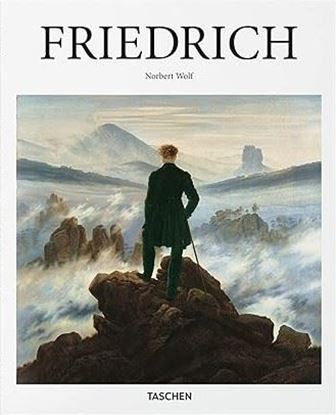
FRIEDRICH (BA-ART) (ES)
La belleza de la naturaleza y la soledad del hombre son temas dominantes en la obra de Caspar David Friedrich (1774-1840). El artista con frecuencia dispone una pequeña figura humana en un amplio paisaje, como en sus famosos lienzos Monje a la orilla del mar y El caminante sobre el mar de nubes. Durante mucho tiempo, la importancia y la influencia de este gran pintor romántico fueron subestimadas. Cuando murió, Friedrich había sido olvidado ya por sus coetáneos y no fue redescubierto hasta principios del siglo xx. Actualmente, se le considera el pintor alemán más importante de su generación y un precursor del expresionismo.
1,350

4,500
FROM HAND TO HOME
Wright has captured the attention of design aficionados with his breathtaking architectural spaces informed by the spirit and lessons of historical, vernacular, and modern styles for today. Each of the presented residences—from a Queen Anne–style house and a seaside Shingle-style cottage to a modern beach house, a Frank Lloyd Wright–inspired retreat, and a McKim, Mead & White city apartment—is paired with Wright’s painted and penciled sketches, along with floor plans, all of which demonstrate his facility with the history of ornament and contemporary currents. Wright frequently collaborates with the country’s most esteemed interior designers, including Bunny Williams, Cullman & Kravis, Brian J. McCarthy, and the late Amy Lau. Sophisticated yet approachable, Wright’s architecture will tour the reader through the legacy of great buildings and outstanding craftmanship reinterpreted for the contemporary sensibility.
4,500
1,500
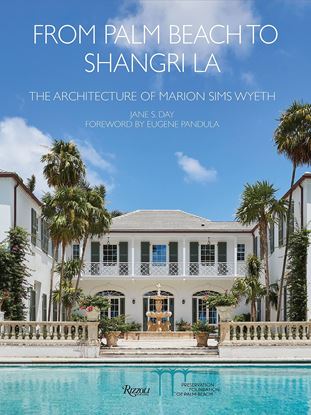
FROM PALM BEACH TO SHANGRI LA
Beauty and elegance mingle with extravagance in the Palm Beach style of architect Marion Sims Wyeth, a kind of home design that takes the standard fixtures of paradise palm trees, ebullient fountains, glistening pools and gardens, views of the sea and mixes them with a dash of the exotic a Moorish-style balcony or doorway, Venetian archways, fanciful courtyards in the Spanish style, and spiralling staircases in stone and iron. Featured here are the legendary abodes of Marjorie Merriweather Post and Doris Duke Mar-a-Lago and Shangri La, respectively as well as the less well known but equally spectacular Hogarcito and La Claridad, to name but a few. For those unfamiliar with these dream palaces, intimate homes of repose and reflection, for the enjoyment of life and the living of it, the book serves at once as a revelation and an inspiration.
1,500