

5,700
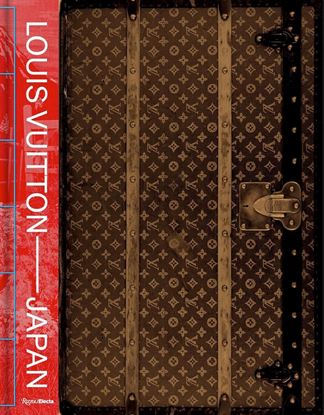
LOUIS VUITTON AND JAPAN. VISIONARY JOURN
Published on the occasion of a major exhibition at Nakanoshima Museum of Art in Osaka, Japan, this volume explores the deep and transformative relationship between Louis Vuitton and Japan, which has produced myriad innovative collaborations that have defined the brand and revolutionized contemporary fashion. This fresh perspective on the global impact of the luxury powerhouse follows Louis Vuitton’s journey from pioneering trunk innovations to its outsize influence on global street style, especially in Japan.
In the volume, the Maison’s history comes to life, from the evolution of its Monogram logo (which took inspiration, in part, from Japanese design) to the ingenious flat stackable trunk and patented lock innovations, alongside the brand’s bold expansion into Japan. The authors consider the house’s groundbreaking artistic collaborations most notably with artists Takashi Murakami (with his iconic “Monogramouflage”) and Yayoi Kusama (with her signature polka-dot motifs) which transformed Louis Vuitton’s visual identity.
5,700
4,995
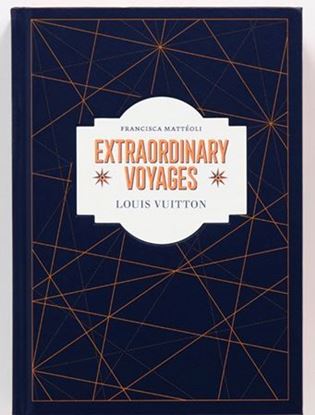
LOUIS VUITTON. EXTRAORDINARY VOYAGES
The mid-19th and early 20th centuries heralded new means of transport and equipment and, with them, new and original ways of exploring the world. Transatlantic liners, automobiles, long-haul airplanes, zeppelins, and express trains unfurled new horizons and changed travel itself into an adventure. Distant lands were no longer solely accessible to aristocrats, explorers, and adventurers. Instead, the world opened up to new groups of people eager to circumvent the globe. And for many of these new globetrotters, traveling was synonymous with Louis Vuitton, the French label whose iconic and functional luggage trunks could be found on nearly every boat, plane, car, and train around the world.
In this beautiful book, author Francisca Mattéoli recounts 50 tales of thrilling travel undertaken in every possible mode of transit, from the hot air balloon to the space shuttle, each lavishly illustrated with more than 300 historical photographs and ephemera from Louis Vuitton’s official archives. Louis Vuitton: Extraordinary Voyages is a journey all its own—an evocative and transporting account of the most surprising and transformative trips taken since the 19th century.
4,995
1,995
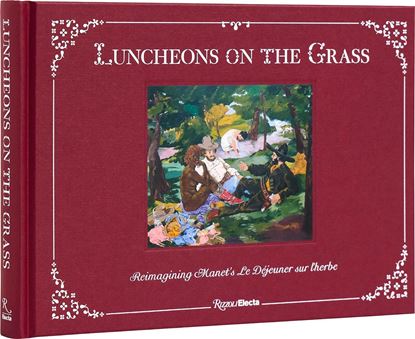
LUNCHEONS ON THE GRASS
Thirty-five contemporary artists create their own version of Le Déjeuner sur l’herbe.
Édouard Manet’s Le Déjeuner sur l’herbe (1863) is generally cited as the first modern painting. The entry slide in art history lectures about modernism, the work remains among the “most audacious painting[s] ever seen in France,” as Ross King described it in The Judgement of Paris (2006).
As Manet did with Le Déjeuner sur l’herbe, the most provocative painters today collapse the historical and the contemporary onto one plane. Jeffrey Deitch invited a group of these influential artists to create their own versions, combined here with historical responses to Manet’s painting. The slim volume features these often biting and satirical works alongside essays discussing Le Déjeuner sur l’herbe’s enduring influence on contemporary figurative painting.
1,995
1,250
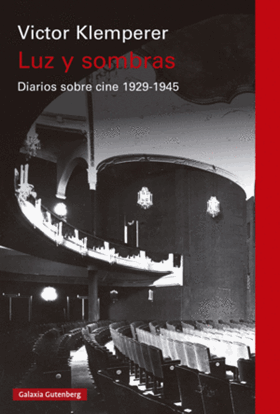
LUZ Y SOMBRAS
Presentamos íntegras por primera vez las anotaciones del diario del gran cronista Victor Klemperer sobre sus experiencias cinematográficas en los inicios de la era del cine sonoro. Desde el principio, el cinefilo es testigo de cómo la innovación tecnica se abre paso en la Alemania de 1929, y aunque inicialmente fue crítico con las películas sonoras, pronto cayó rendido ante las posibilidades de este nuevo formato. No era raro que viera varios filmes por semana. Sin embargo, los nacionalsocialistas se fueron apoderando del medio, y Klemperer acabará por quedar excluido de las salas de cine cuando en 1938 se prohíbe la entrada a los 'no arios'. Afortunadamente, ni siquiera eso pudo mantenerlo alejado de su gran pasión. Obligado a una existencia en la sombra, Klemperer experimentó momentos de luz ante la gran pantalla: 'Tanta música, humor, arte interpretativo y todo.
1,250
2,500
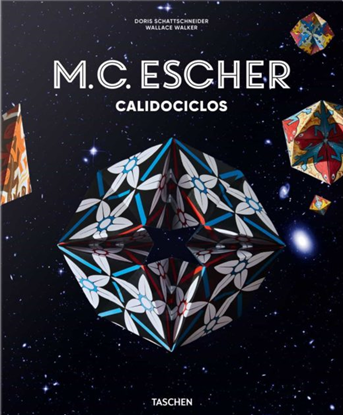
M.C. ESCHER. CALIDOCICLOS (VA)
Complicados patrones, elegantes formas geométricas e increíbles grafismos son los rasgos que convierten en fascinantes las creaciones de M.C. Escher. Este set pone en sus manos el mundo visual mágico del artista a través de 17 plantillas de papel listas para montar que le permitirán crear sus diseños multidimensionales y transformarlos, las veces que quiera, en objetos complejos, calidociclos entrelazados y mutantes. El cuadernillo incluye un análisis de los principios geométricos y la invención artística subyacente a estas maravillas ópticas.
2,500
2,300
M.L. THE WORLDS MOST B. LIBRARIES (45)(I
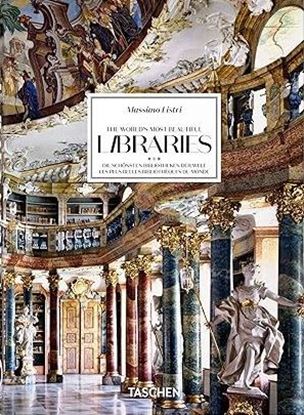
From the mighty halls of ancient Alexandria to the coffered ceilings of the Morgan Library in New York, human beings have had a long, enraptured relationship with libraries. Like no other concept and like no other space, the collection of knowledge, learning, and imagination offers a sense of infinite possibility. It’s the unrivaled realm of discovery, where every faded manuscript or mighty clothbound tome might reveal a provocative new idea, a far-flung fantasy, an ancient belief, a religious conviction, or a whole new way of being in the world.In this new photographic journey, Massimo Listri travels to some of the oldest and finest libraries to reveal their architectural, historical, and imaginative wonder. Through great wooden doors, up spiraling staircases, and along exquisite, shelf-lined corridors, he leads us through outstanding private, public, educational, and monastic libraries, dating as far back as 766. Between them, these medieval, classical, baroque, rococo, and 19th-century institutions hold some of the most precious records of human thought and deed, inscribed and printed in manuscripts, volumes, papyrus scrolls, and incunabula. In each, Listri’s poised images capture the library’s unique atmosphere, as much as their most prized holdings and design details.Featured libraries include the papal collections of the Vatican Apostolic Library and the Trinity College Library, home to the Book of Kells and Book of Durrow. With meticulous descriptions accompanying each featured library, we learn not only of the libraries’ astonishing holdings—from which highlights are illustrated—but also of their often lively, turbulent, or controversial pasts. Like the Franciscan monastery in Lima, Peru, with its horde of archival Inquisition documents.At once a bibliophile beauty pageant, an ode to knowledge, and an evocation of the particular magic of print, Massimo Listri. The World’s Most Beautiful Libraries is above all a cultural-historical pilgrimage to the heart of our halls of learning, to the stories they tell, as much as those they gather in printed matter along polished shelves.
2,300