2,200
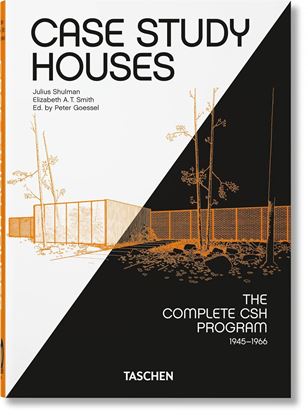
CASE STUDY HOUSES 1945-1966 (45TH) (INT)
The Case Study House program (1945–1966) was an exceptional, innovative event in the history of American architecture and remains to this day unique. The program, which concentrated on the Los Angeles area and oversaw the design of 36 prototype homes, sought to make available plans for modern residences that could be easily and cheaply constructed during the postwar building boom.
The program’s chief motivating force was Arts & Architecture editor John Entenza, a champion of modernism who had all the right connections to attract some of architecture’s greatest talents, such as Richard Neutra, Charles and Ray Eames, and Eero Saarinen. Highly experimental, the program generated houses that were designed to redefine the modern home, and had a pronounced influence on architecture―American and international―both during the program’s existence and even to this day.
TASCHEN brings you a retrospective of the entire program with comprehensive documentation, brilliant photographs from the period and, for the houses still in existence, contemporary photos, as well as extensive floor plans and sketches.
2,200
6,500
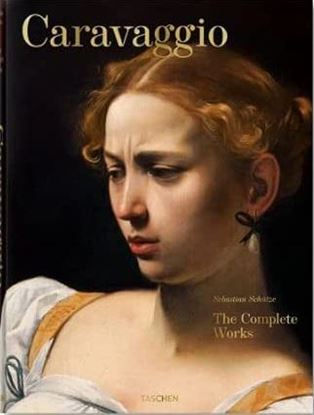
CARAVAGGIO (XL) (INT)
Caravaggio, or more accurately Michelangelo Merisi da Caravaggio (1571–1610), was a legend even in his own lifetime. Notorious bad boy of Italian painting, the artist was at once celebrated and controversial: Violent in temper, precise in technique, a creative master, and a man on the run.
This work offers a comprehensive reassessment of Caravaggio’s entire œuvre with a catalogue raisonné of his works. Each painting is reproduced in large format, with recent, high production photography allowing for dramatic close-ups with Caravaggio's ingenious details of looks and gestures.
Five introductory chapters analyze Caravaggio's artistic career from his early struggle to make a living, through his first public commissions in Rome, and his growing celebrity status. They look at his increasing daring with lighting and with a boundary-breaking naturalism which allowed even biblical events to unfold with an unprecedented immediacy before the viewer.
6,500
1,350
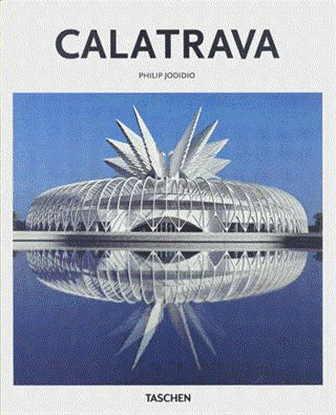
CALATRAVA (BA-ARCH)
Con su trabajo visionario, el valenciano Santiago Calatrava (Benimámet, 1951) ha conseguido el reconocimiento internacional como arquitecto, ingeniero estructural, escultor y artista. Famoso tanto por sus puentes como por sus edificios, en su obra destacan las estructuras de aires neofuturistas, que combinan hábiles soluciones de ingeniería con un impacto visual asombroso. Desde el Complejo Deportivo Olímpico de Atenas 2004 y el reciente Museo del Mañana de Río de Janeiro hasta los puentes de la Paz, en Calgary; del Alamillo, en Sevilla, y de la Mujer, en Buenos Aires, los proyectos de Calatrava inciden especialmente en la relación entre el movimiento y el equilibrio. Con fuentes de inspiración tan diferentes como los diseños espaciales de la NASA o los estudios de anatomía de Leonardo Da Vinci, las obras del arquitecto español fascinan por la sensación de ligereza, agilidad y aerodinamismo que transmiten mientras mantienen una elegante relación con su entorno. Esta monografía concisa explora la singular estética de Calatrava a partir de proyectos clave de su carrera, desde sus primeros éxitos hasta sus creaciones más recientes. A través de edificios dedicados a la cultura, la ciencia o la fe, descubrimos la manera en la que integra las formas orgánicas y los movimientos humanos con una fluidez futurista que mira al mañana.
1,350
2,300
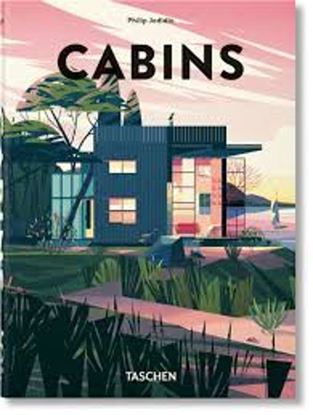
CABINS (45TH ED.) (INT)
Desde que Henry David Thoreau describiera en Walden o Vida en los bosques (1854) los dos años, dos meses y dos días que habitó en una cabaña en Walden Pond (Massachusetts), la idea de una vivienda refugio ha seducido a la psique moderna. En la última década, con el crecimiento exponencial del consumo de materias primas y el impacto de nuestra huella ecológica, arquitectos internacionales se han interesado por las posibilidades que brinda un tipo de casa aislada, minimalista y de bajo impacto.
Esta edición de Cabañas, que combina un texto en profundidad con abundantes fotografías y brillantes ilustraciones de Marie-Laure Cruschi, explora las oportunidades que brinda este tipo de arquitectura para la creatividad. La cabaña renuncia a los excesos y limita su intrusión espacial a cubrir las necesidades esenciales para vivir, al tiempo que se muestra respetuosa con el medio natural en el que se ubica y prioriza soluciones ecológicas. Así, las cabañas ofrecen algunas de las propuestas más innovadoras y con mayor visión de futuro de la arquitectura contemporánea, de la mano de Renzo Piano, Terunobu Fujimori, Tom Kundig y muchos otros jóvenes profesionales que trabajan en estos espacios refugio.
2,300
6,800
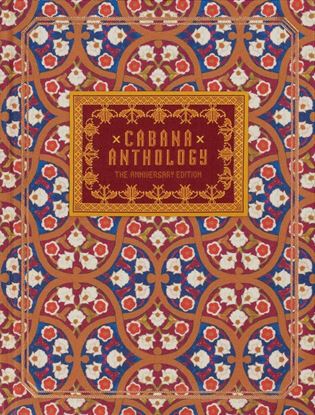
CABANA ANTHOLOGY: THE ANNIVERSARY
Celebrating 10 years of publishing the finest interior design and decorative arts, Cabana Anthology: The Anniversary Edition is a stunning showcase of the most impressive and influential styles featured in the cult interiors magazine in its first decade. This sublime book delves into the stories behind a multitude of stunning interiors, offering insights from the designers, collectors, and artists who have contributed to Cabana’s legacy of true artistry and craftsmanship. Founded by editor-in-chief Martina Mondadori along with designer Christoph Radl and publisher Gianluca Reina in 2014, Cabana aims to inspire a new generation of globetrotters, taking them on a journey through sophistication, obsessive collecting, colors, and fabrics.
This stunning volume features the very best photography, interviews, profiles, and features from the publication, with contributions from Carlos Mota, Marco Mansi, and Marian McEvoy, and photographers Miguel Flores-Vianna, Guido Taroni, Mark Luscombe Whyte, Tim Walker, and Joanna MacLennan, among many others.
6,800
4,995
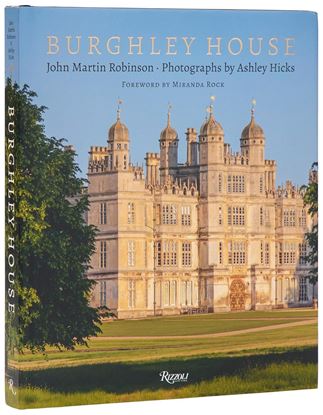
BURGHLEY HOUSE
Conceived by William Cecil, Lord High Treasurer to Queen Elizabeth I, and built between 1555 and 1587, Burghley House is a testament to the ambition and vision of the most powerful courtier of the first Elizabethan age.
Designed by Cecil himself, in consultation with the Dutch Renaissance architect and painter Hans Vredeman de Vries, the architecture and interiors at Burghley reflect a mix of contemporary fashionable influences. The house’s facades are each markedly different, with a striking and ornate Gothic gatehouse beneath a roofline of cupolas and obelisks, and with French and Italian styles visible in the windows and pilasters. And inside, where the State Rooms house remarkable collections of furniture, textiles, and Old Master paintings acquired over the centuries, Cecil’s Gothic-style Old Kitchen remains alongside the magnificent Renaissance staircase and Italianate fireplace in the Great Hall.
4,995