



1,500
13,500
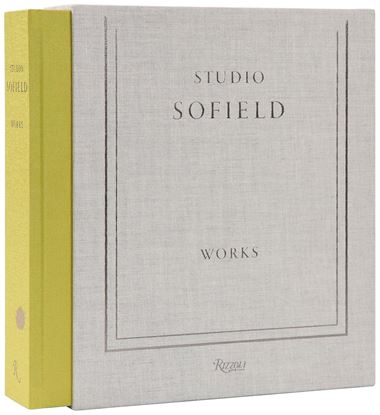
STUDIO SOFIELD
Studio Sofield Works is the landmark first book from the New York City firm.
At 656 pages, this slipcased volume is a visual journey through scores of projects that underline the Studio’s distinctive approach, including thirteen featured chapters illustrated with 730 full-color photographs. The book opens with a chronology of highlights, tracing the culture and mood of past decades with beguiling candor and spotlighting the inspiration that William Sofield and Emma O’Neill have taken from the times. The Studio’s very first office, above a slaughterhouse in the Meatpacking District, gives rise to ideas for Ralph Lauren’s Japanese-inspired estate in Montauk. In Laurel Canyon, the Studio’s West Coast home conjures decorative experiments only a Hollywood dream factory could match. And Sofield’s endless commuting for fashion clients—among them Gucci, Tom Ford, Bottega Veneta, and Yves Saint Laurent—informs a client’s nose-to-tail private plane redesign.
13,500
2,995
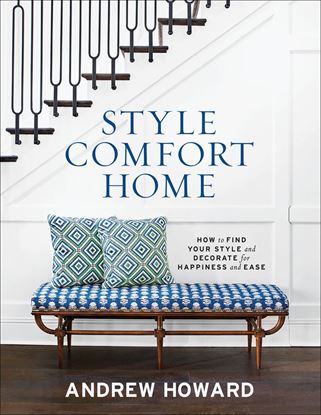
STYLE COMFORT HOME
Filled with stunning photographs and step-by-step instructions, Style, Comfort, Home is your go-to resource for achieving a harmonious and inviting living space. Learn how to balance aesthetics with practicality, personalize your decor, and create a home that reflects your personality and lifestyle.
This comprehensive guide offers practical tips and creative ideas to help you discover your unique decorating style and create a home that brings joy and ease to your everyday life.
From selecting the perfect color schemes and arranging furniture to choosing the right accessories and lighting, this book covers all aspects of home decor. Whether you're a beginner or an experienced decorator, you'll find inspiration and expert advice to make your home both beautiful and functional.
Embrace the art of decorating with confidence and transform your home into a sanctuary of happiness and comfort.
2,995
2,995
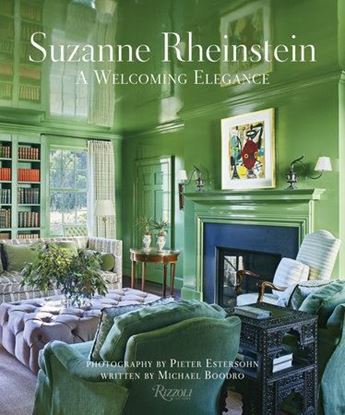
SUZANNE RHEINSTEIN
Over the past decade, celebrated style maker Suzanne Rheinstein has achieved an unprecedented level of refinement and clarity. Her love of objects from the past remains a touchstone, but in her newest rooms, stylish modernity and an elegant simplicity hold sway.
Presented are beautifully photographed homes of clients Suzanne Rheinstein has worked with before that reflect a vision of richness tempered by restraint. Her longtime fans will find new inspiration in these pages. Throughout, she shares her ideas of how to live in a relaxed way surrounded by artworks and personal collections. A traditional Georgian library is done in a totally untraditional lacquered green, while a San Francisco town house revamp includes a “California” room filled with Moroccan rugs and rattan chairs, and a serene retreat has a guesthouse evocative of the bohemian 1970s.
2,995

2,995
SYNAGOGUES. MARVELS OF JUDAISM
This visually striking compendium illustrates the architectural and historical evolution of over 60 iconic synagogues worldwide. Beginning with the foremost archaeological sites in the Holy Land, it extends to the Jewish sanctuaries of Europe, North Africa, Russia, the Caucasus, Israel, and the New World, from the most ancient to the most innovative creations around the globe. Masterpieces such as Frank Lloyd Wright’s Beth Sholom Synagogue in Pennsylvania, the Grand Synagogue in Paris, New York’s Temple Emanu-El, and Dresden’s Neue Synagogue are all featured in magnificent detail. In a series of compelling essays, prominent scholars Lidia Chakovskaya, Steven Fine, Max Fineblum, Mohammad Gharipour, Samuel D. Gruber, Sergey R. Kravtsov, Michael Levin, and Edward van Voolen explore the diverse architectural styles that reflect the synagogue’s rich, complex, and often tragic history. Noted Judaic studies authority Aaron Hughes provides the introduction, highlighting the synagogue’s history and liturgical furnishings from silver menorahs and textiles to carved wooden cabinets and lanterns of eternal light. This gorgeously illustrated volume will appeal to those with an appreciation for art and architecture as well as lovers of Jewish history.
2,995

3,600
TAYLOR SWIFT. LA HISTORIA DETRAS DE SUS.
Un recorrido fidedigno por la carrera de la cantante más influyente de toda una generación.
Un análisis de 248 temas y (pronto) veinte años de éxitos, como ningún otro libro lo ha hecho antes, en un repaso de la trayectoria de una joven apasionada por el country, ridiculizada en sus inicios por sus elecciones artísticas y que ha sabido transformar cada dificultad en un triunfo.
Desde sus modestos comienzos en Nashville, donde firmó su primer contrato a los quince años, hasta sus 11 Grammy Awards, pasando por las tormentas mediáticas a las que ha tenido que enfrentarse, Taylor Swift ha sabido imponer su voz y su estilo.
3,600