

4,300
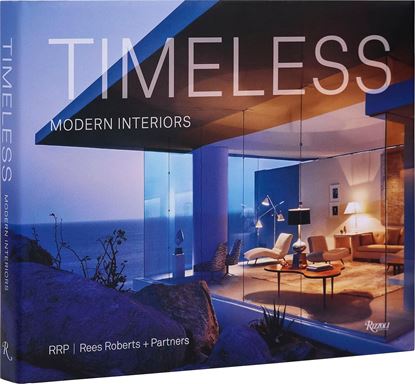
TIMELESS MODERN INTERIORS
The first book to feature the interior design of the stylish, award-winning firm RRP / Rees Roberts + Partners, led by Interior Design–hall of fame inductee Lucien Rees-Roberts.
As Pilar Viladas writes in her introduction, “Rees-Roberts does not have a signature style. Instead, the interiors designed by his New York firm … have style, period, and lots of it.”
Well-known for his subtle use of color, texture, and fabric, Rees-Roberts’s designs capture the essence of modern living. Descended from generations of painters, his love for art is an important source for his inspiration and indelibly marks the work. Functionally elegant designs are characterized by a deference to art as well as to light and the views provided by natural surroundings. Each designed home reflects the owner’s character as well as the needs of everyday life, incorporating custom furniture and unusual antiques. The book, bound in sumptuous cloth and wrapped in a jacket with French folds, reflects the firm’s ever-present attention to detail.
4,300

500
TODOPODEROSOS: CON MI PELI NO TE(OF2)
Cine y humor de la mano del podcast cultural con la comunidad más sólida de España.
El primer libro de Todopoderosos.
Todos tenemos películas supuestamente malas que no podemos dejar de ver una y otra vez. Cintas denostadas por público y crítica que, por diversos motivos, se nos han quedado pegadas, se han ganado un lugar en nuestro corazón.
Armados de argumentos, referencias y sentido del humor, Juan Gómez- Jurado, Rodrigo Cortés, Javier Cansado y Arturo González-Campos defienden en este libro este tipo de películas. A través de joyas desconocidas, placeres culpables, obras nostálgicas y bodrios divertidísimos, nos invitan a reconectar con el cine más allá de puntuaciones y tendencias efímeras para vivirlo como lo que es: una experiencia intelectual pero, sobre todo, emocional.
500

3,995
TRADITION MADE NEW
Architect Adams has long had a passion for design. His appreciation for how things are made had its genesis in his childhood experiences on a farm in Asheville, North Carolina. As a boy, Adams always had a pencil in hand, sketching for hours. Today, it is his understanding of craft and response to place that sets him apart.
Informed by Adams’s deep knowledge of historic precedents, proportions, and details, the homes featured in this book are imbued with soul, whether it’s a charming house in the woods on the lake, a refined contemporary beachside retreat, or a traditional manor house in town. While the homes featured range in scale and style— Tudor, Arts and Crafts, French country, Southern farmhouse—Adams imbues each with natural materials such as bespoke architectural details in millwork and molding, arched doorways, and oversized windows. He brilliantly weaves wood, stone, copper, and other natural substances through the interiors to create an effect that casts a spell inside and out. These are houses that are grounded in the past, designed for the present, and intended to remain beautiful and functional over the long term.
3,995
4,995
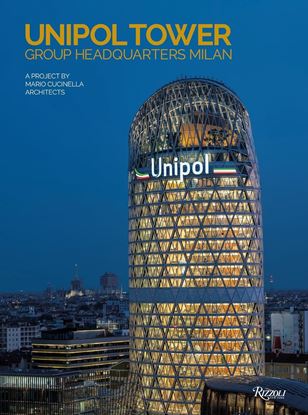
UNIPOL TOWER. GROUP HEADQUARTERS MILAN
A new tower stands out against the city skyline: the Unipol Tower designed by Mario Cucinella Architects, an internationally renowned architecture studio based in Milan and Bologna. The Unipol Tower is a 124-meter elliptical tower in the Porta Nuova area, in the heart of the city. Made from glass and steel, it has a glasshouse on the rooftop serving as a cultural venue. Commissioned by Unipol, the leading Italian insurance company, the tower looks beyond the corporate identity and headquarters of Unipol and has been acclaimed as one of the most advanced architecture projects ever created.
4,995
1,350
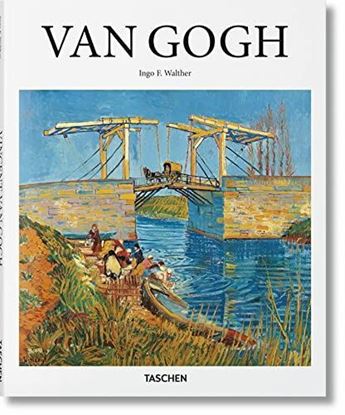
VAN GOGH (BA-ART) (GB)
Today, the works of Vincent van Gogh (1853–1890) are among the most well known and celebrated in the world. In Sunflowers, The Starry Night, Self-Portrait with Bandaged Ear, and many paintings and drawings beyond, we recognize an artist uniquely dexterous in the portrayal of mood and place through paint, pencil, charcoal, or chalk.
Yet as he was deploying the lurid colors, emphatic brushwork, and contoured forms that would subsequently make his name, van Gogh battled not only the disinterest of his contemporary audience but also devastating bouts of mental illness. His episodes of depression and anxiety would eventually claim his life, when, in 1890, he committed suicide shortly after his 37th birthday.
This richly illustrated introduction follows Vincent van Gogh’s story from his earliest pictures of peasants and rural workers, through his bright Parisian period, to his final, feverish burst of creative energy in the South of France during the last two and a half years of his life.
1,350
4,200