6,500
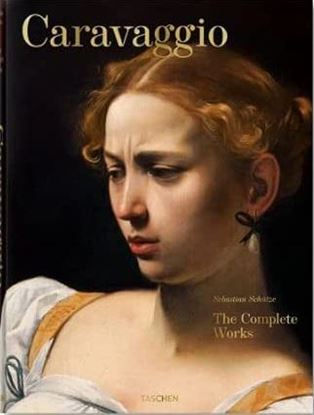
CARAVAGGIO (XL) (INT)
Caravaggio, or more accurately Michelangelo Merisi da Caravaggio (1571–1610), was a legend even in his own lifetime. Notorious bad boy of Italian painting, the artist was at once celebrated and controversial: Violent in temper, precise in technique, a creative master, and a man on the run.
This work offers a comprehensive reassessment of Caravaggio’s entire œuvre with a catalogue raisonné of his works. Each painting is reproduced in large format, with recent, high production photography allowing for dramatic close-ups with Caravaggio's ingenious details of looks and gestures.
Five introductory chapters analyze Caravaggio's artistic career from his early struggle to make a living, through his first public commissions in Rome, and his growing celebrity status. They look at his increasing daring with lighting and with a boundary-breaking naturalism which allowed even biblical events to unfold with an unprecedented immediacy before the viewer.
6,500
4,995
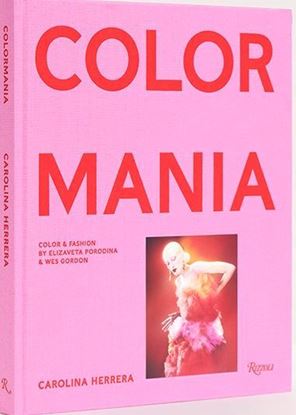
CAROLINA HERRERA
The sophistication and modern femininity of the American luxury fashion house Carolina Herrera is captured in this evocative and vividly hued volume photographed by Elizaveta Porodina. A collaborative series of images, the first chapter of which was created in 2020 over Zoom, feature Porodina’s signature timeless, painterly style—an effect achieved through complex lighting techniques and equipment— capture the brand’s evolving collections designed by Creative Director Wes Gordon in a dreamy, otherworldly light.
Inspired by dance, movement and the Herrera signature of bold color, this mesmerizing tome is flooded with photography of models and dancers in motion to reflect the vibrant energy and optimism of the clothing, arranged according to the chroma wheel instead of chronologically. Ethereal beauties, including singer and actress Dove Cameron, dancers Wendy Wheelan and Misa Kuranaga, and models Maggie Maurer and Mao Xing Xing, wear sweeping ballgowns, bold, saturated colors and dramatic silhouettes across ten collections designed by Wes Gordon over the past four years, capturing the fantastical universe of Beauty that is Carolina Herrera.
4,995
995
CARTIER. HISTORIA DETRAS DE LA MODA
Siga los pasos de la realeza, las celebridades y los mejor vestidos del mundo, y sumérjase en el lujoso universo de Cartier.
Recorra la historia de la famosa joyería y relojería, desde sus humildes comienzos en el París del siglo xix hasta el deslumbrante imperio que es ahora.
Descubra cómo la ambiciosa familia Cartier revolucionó el diseño, cautivó a marajás y presidentes, forjó estratégicas relaciones creativas y se hizo popular con diseños emblemáticos como el Panthère, el Tank y el brazalete Love.
995

5,995
CASE STUDY HOUSES. THE COMPLETE (FP)(INT
The Case Study House program (1945–66) was an exceptional, innovative event in the history of American architecture and remains to this day unique. The program, which concentrated on the Los Angeles area and oversaw the design of 36 prototype homes, sought to make available plans for modern residences that could be easily and cheaply constructed during the postwar building boom.
The program’s chief motivating force was Arts & Architecture editor John Entenza, a champion of modernism who had all the right connections to attract some of architecture’s greatest talents, such as Richard Neutra, Charles and Ray Eames, and Eero Saarinen. Highly experimental, the program generated houses that were designed to redefine the modern home, and thus had a pronounced influence on architecture―American and international―both during the program’s existence and even to this day.
TASCHEN brings you a monumental retrospective of the entire program with comprehensive documentation, brilliant photographs from the period and, for the houses still in existence, contemporary photos, as well as extensive floor plans and sketches.
5,995
995
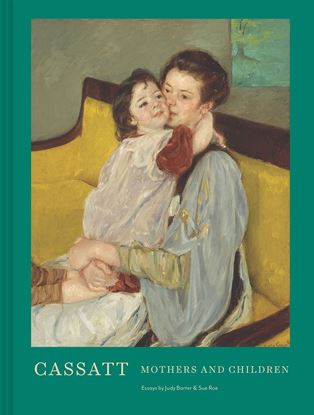
CASSATT (OF3)
Mary Cassatt's tender and profound paintings redefined portraiture and broke down barriers for women in art—both as artists and as subjects. This collection focuses on Cassatt's insightful portrayal of women and children living their everyday lives. Fifty magnificent images cover the scope of Cassatt's work, from her early interest in Japanese woodblocks all the way to her exploration of Modernist techniques. Two essays contextualize her as a pioneering female artist and as the American face of Impressionist painting.
995
1,250
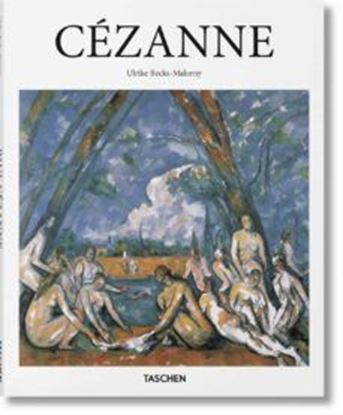
CEZANNE (BA-ART) (E)
Descubra las obras fundamentales de Paul Cézanne a través de manzanas, peras y las nuevas perspectivas experimentales del artista al que Matisse y Picasso calificaron como el‘padre de todos nosotros’. De naturalezas muertas a imágenes de su querida montaña Sainte-Victoire, recorremos el audaz acercamiento del artista a la luz, el espacio y la...
Durante la segunda mitad del siglo XIX, en los verdes campos de los alrededores de Aix-en-Provence, Paul Cézanne (1839-1906) se consagró a la representación de paisajes y naturalezas muertas que se convertirían luego en obras clave del arte moderno. Con pinceladas compactas e intensas y un audaz acercamiento al espacio y la luz, Cézanne intermedió entre el impresionismo y los movimientos fundamentales de principios del siglo XX y se convirtió, en palabras de Matisse y Picasso, en "el padre de todos nosotros”.
Esta nueva aproximación a su trabajo selecciona las obras clave que permiten entender el desarrollo, las innovaciones y la influencia crucial que Cézanne ha tenido en el arte moderno. Desde composiciones de frutas y peras hasta escenas de bañistas, recorremos su experimentación con el color, la perspectiva y la textura para evocar“una armonía paralela a la naturaleza”, así como el propio proceso de ver y representar.
1,250