
950
BORROW MY HEART
Wren is used to being called a control freak. She doesn’t care; sticking to the list of rules she created for herself helps her navigate life. But when a cute guy named Asher walks through the door of her neighborhood coffee shop, the rulebook goes out the window.
Asher is cute, charming . . . and being catfished by his online crush. So Wren makes an uncharacteristically impulsive decision—she pretends to be the girl he’s waiting for to save him from embarrassment. Suddenly she’s fake-dating a boy she knows nothing about. And it’s . . . amazing.
It’s not long before Asher has her breaking even more of her own rules. But will he forgive her when he finds out she’s not who she says she is? Wren’s not so sure. . . . After all, rules exist for a reason.
950
950
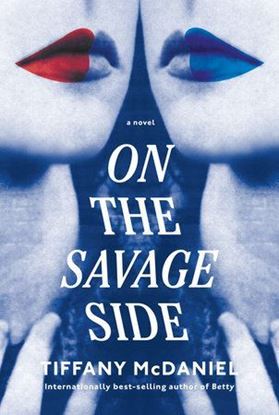
ON THE SAVAGE SIDE (MREXP)
Arcade and Daffodil are twins born one minute apart. With their fiery red hair and thirst for escape, they form an unbreakable bond nurtured by their grandmother’s stories. Together, they disappear into their imaginations and forge a world all their own.
But what the two sisters can’t escape are the generational ghosts that haunt their family. Growing up in the shadow of their rural Ohio town, the sisters cling tightly to one another. Years later, Arcade wrestles with the memories of her early life, just as a local woman is discovered drowned in the river. Soon, more bodies are found. As her friends disappear around her, Arcade is forced to reckon with the past while the killer circles closer. Arcade’s promise to keep herself and her sister safe becomes increasingly desperate and the powerful riptide of the savage side becomes more difficult to survive.
Drawing from the true story of women killed in Chillicothe, Ohio, acclaimed novelist and poet Tiffany McDaniel has written a moving literary testament and fearless elegy for missing women everywhere.
950
950
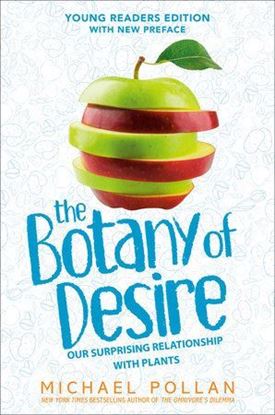
BOTANY OF DESIRE YOUNG READERS
In this entertaining young readers edition of the environmental studies classic, Michael Pollan demonstrates how people and domesticated plants have formed a reciprocal relationship. He links four fundamental human desires—sweetness, beauty, energy, and control—with the plants that satisfy them: the apple, the tulip, coffee, and the potato. In telling the stories of four familiar species, Pollan illustrates how the plants have evolved to satisfy humankind’s most basic yearnings. And just as we’ve benefited from these plants, we have also helped them to thrive.
950
950
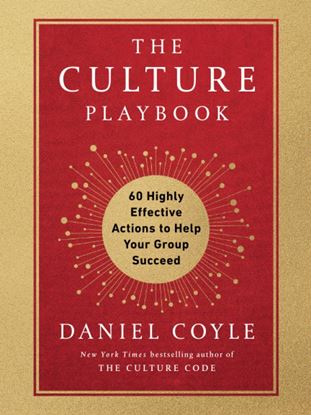
THE CULTURE PLAYBOOK
As an entrepreneur and founder of an investment bank led by women, | found The Culture Playbook to be an invaluable asset, providing tools and techniques as 1 work to unleash my team's full power and potential in an ever-evolving workplace. Daniel Coyle has given us all a game plan for success.”
950

950
EL EXTRANJERO (BOL)
Publicada originalmente en 1942, El extranjero es la primera novela de Albert Camus y una de sus obras más emblemáticas. Ahora con nueva traducción al español de María Teresa Gallego Urrutia y Amaya García Gallego, este libro capital para la cultura del siglo XX transcurre en Argelia y narra la anodina vida de Meursault, un joven oficinista que vive en perpetua apatía. Cuando recibe la noticia del fallecimiento de su madre, la encaja con la mayor impasibilidad. Obligado a abandonar la capital y viajar para asistir al funeral, Meursault desea que la ceremonia sea breve para regresar a su casa. Esa indiferencia existencial marca sus días, avanzando sin reaccionar a la muerte de su madre, al afecto de su amada y ni tan siquiera a un crimen que cometerá con idéntica desidia, incapaz de ver el alcance moral de sus actos.
Camus retrata magistralmente la indolencia del hombre del siglo XX, un hombre que no encuentra su lugar, extranjero en su propio mundo. Este personaje escéptico y desapasionado que ha abandonado su condición de sujeto autónomo sigue siendo hoy un imprescindible referente literario y existencial.
950
950
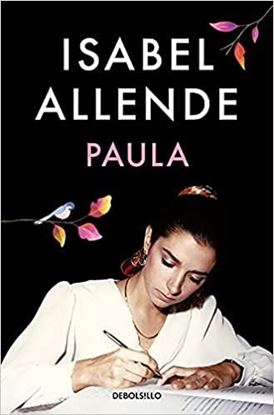
PAULA (N.C.) (BOL)
Cualquier libro de Isabel Allende es un acontecimiento. Paula lo es especialmente porque se trata del más conmovedor, más personal y más íntimo de todos los que ha publicado hasta la fecha.
Cuando la gran autora chilena se encontraba en España con ocasión de la presentación de El plan infinito, su hija entró en estado de coma. Junto al lecho de Paula, mientras seguía con angustia la evolución de su enfermedad, Isabel Allende comenzó a redactar en un cuaderno una historia de su familia y de sí misma con el propósito de regalársela a su hija una vez superara el dramático trance. Sin embargo, éste se prolongó durante meses y los apuntes de la autora acabaron convirtiéndose en este libro apasionante y revelador.
Isabel Allende ejerce aquí su prodigioso talento narrativo para recuperar y asumir sus propias vivencias como mujer y como escritora, así como las de su familia y las de la historia reciente de su país. Autorretrato de insólita emotividad al tiempo que exquisita recreación de la sensibilidad de las mujeres de nuestra época, Paula perdura en el ánimo del lector con la intensidad de una experiencia indeleble.
950