700
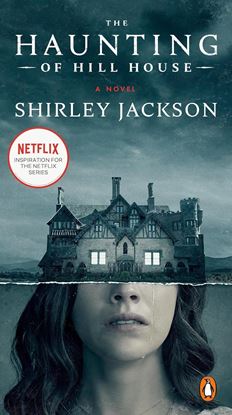
THE HAUNTING OF HILL HOUSE (MOVIE TIE-IN
First published in 1959, Shirley Jackson's The Haunting of Hill House has been hailed as a perfect work of unnerving terror. It is the story of four seekers who arrive at a notoriously unfriendly pile called Hill House: Dr. Montague, an occult scholar looking for solid evidence of a “haunting”; Theodora, his lighthearted assistant; Eleanor, a friendless, fragile young woman well acquainted with poltergeists; and Luke, the future heir of Hill House. At first, their stay seems destined to be merely a spooky encounter with inexplicable phenomena. But Hill House is gathering its powers—and soon it will choose one of them to make its own.
700
700
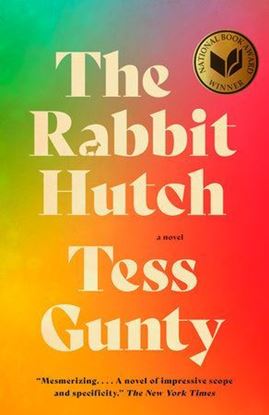
THE RABBIT HUTCH
The automobile industry has abandoned Vacca Vale, Indiana, leaving its residents behind, too. In a run-down apartment building on the edge of town, commonly known as the Rabbit Hutch, lives one of these people, a young girl named Blandine Watkins, who The Rabbit Hutch centers around. Hauntingly beautiful and unnervingly bright, Blandine lives alongside three teenage boys, all recently aged out of the state foster-care system, all of them madly in love with Blandine. Plagued by the structures, people, and places that not only failed her but actively harmed her, Blandine pays no mind to their affection. All she wants is an escape, a true bodily escape like the mystics describe in the books she reads.
700

700
TRUE BIZ
True biz? The students at the River Valley School for the Deaf just want to hook up, pass their history finals, and have politicians, doctors, and their parents stop telling them what to do with their bodies. This revelatory novel plunges readers into the halls of a residential school for the deaf, where they’ll meet Charlie, a rebellious transfer student who’s never met another deaf person before; Austin, the school’s golden boy, whose world is rocked when his baby sister is born hearing; and February, the hearing headmistress, a CODA (child of deaf adult(s)) who is fighting to keep her school open and her marriage intact, but might not be able to do both. As a series of crises both personal and political threaten to unravel each of them, Charlie, Austin, and February find their lives inextricable from one another—and changed forever.
700
700
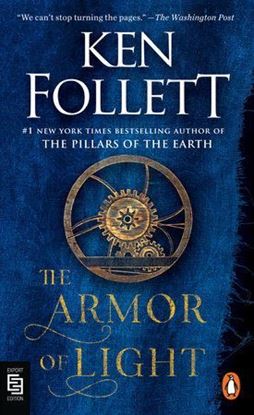
THE ARMOR OF LIGHT (EXP) (MM)
The Spinning Jenny was invented in 1770, and with that, a new era of manufacturing and industry changed lives everywhere within a generation. A world filled with unrest wrestles for control over this new world order: A mother’s husband is killed in a work accident due to negligence; a young woman fights to fund her school for impoverished children; a well-intentioned young man unexpectedly inherits a failing business; one man ruthlessly protects his wealth no matter the cost, all the while war cries are heard from France, as Napoleon sets forth a violent master plan to become emperor of the world. As institutions are challenged and toppled in unprecedented fashion, ripples of change ricochet through our characters’ lives as they are left to reckon with the future and a world they must rebuild from the ashes of war.
700

700
EL PROFETA / JARDIN DEL PROFETA (BOL)
Almustafá está a punto de regresar a su casa tras pasar doce años en Orfalese. Pero, antes de tomar el barco que le llevará a su ciudad, se entretiene con un grupo de personas departiendo sobre diferentes aspectos de la condición humana. Dividido en veintiséis breves ensayos poéticos, El profeta refleja los pensamientos de Almustafá acerca del amor, el trabajo, la alegría, Dios, la amistad, el crimen o la belleza… Un tratado humanista, trascendente y poético, que se convirtió en un clásico de la literatura del siglo XX y que tuvo su continuación con El jardín del profeta, cuando Almustafá llega a su isla natal y se reúne con diez de sus discípulos, para posteriormente dirigirse hacia las alturas y, una vez allí, dejarse llevar por la neblina.
700

700

700
LAGRIMAS EN LA LLUVIA (BOL)
Estados Unidos de la Tierra, Madrid, 2019. Aumentan las muertes de replicantes que enloquecen de repente. La detective Bruna Husky es contratada para descubrir qué hay detrás de esta locura colectiva. Mientras, un anónimo transforma el archivo de documentación de la Tierra para modificar la Historia de la humanidad.
Husky se ve en una trama mundial, y se enfrenta a la sospecha de traición de sus aliados, con la sola compañía de unos seres marginales capaces de conservar la razón y la ternura.
700
700
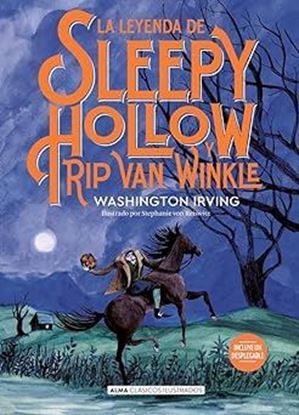
LA LEYENDA DE SLEEPY HOLLOW Y RIP VAN WI
Parejas de enamorados, jinetes sin cabeza y aldeanos que duermen siestas de décadas confluyen en un díptico que parece al mismo tiempo realismo mágico y terror costumbrista. En estos dos relatos, Sleepy Hollow, o La leyenda del jinete sin cabeza, y Rip van Winkle, se encuentra la simiente del llamado Gótico Americano, que convirtió a Washington Irving en el primer escritor de una literatura genuinamente estadounidense, porque toda nación recién creada necesita nuevas leyendas, nuevos mitos, nuevos símbolos; en resumen, unas señas de identidad propias.
700

700
MEMORIAS DE ANTES DEL EXILIO (1887-1919)
Félix F. Yusúpov nació en una de las más antiguas y poderosas familias de la aristocracia rusa. La muerte de su hermano mayor Nikolái en un duelo lo convirtió en heredero de una inmensa fortuna. En estas Memorias de antes del exilio, escritas en francés y publicadas en 1952, la recreación de una vida de fastos y lujos casi increíbles se alterna con observaciones sagaces sobre la avaricia; la fe en presagios y apariciones, con el horror al falso misticismo; la complacencia en el poder, con momentos de duda y crisis. Yusúpov fue el instigador y responsable principal del asesinato de Rasputin, que para él debía abrir una nueva era de regeneración en Rusia. Lo que siguió, sin embargo, fue la Revolución soviética, que lo desposeyó de sus riquezas y lo lanzó al exilio.
700