

750
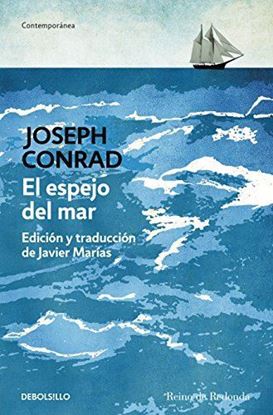
EL ESPEJO DEL MAR (BOL)
Las crónicas que conforman este libro repasan las vivencias marítimas de Conrad, primero como marinero en Francia y más adelante en la marina mercante británica. Estos textos componen un vivísimo retrato de la relación entre el hombre y el mar en una época en que la llegada del vapor supuso el fin de la hegemonía de los barcos devela. Considerado como el cruce entre un cantar de gesta sobre la navegación a vela y la biblia del oleaje, El espejo del mares la insuperable reminiscencia de una forma de vida y una obra imprescindible para comprender a su autor.
750
750
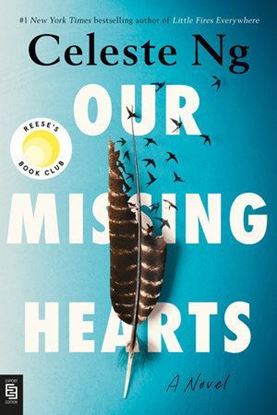
OUR MISSING HEARTS
Twelve-year-old Bird Gardner lives a quiet existence with his loving but broken father, a former linguist who now shelves books in a university library. His mother Margaret, a Chinese American poet, left the family when he was nine years old without a trace. Bird knows to not ask too many questions, stand out too much, or stray too far. For a decade, his family's life has been governed by laws written to preserve “American culture” in the wake of years of economic instability and violence. To keep the peace and restore prosperity, the authorities are now allowed to relocate children of dissidents, especially those of Asian origin, and libraries have been forced to remove books seen as unpatriotic.
Bird has grown up disavowing his mother and her poems; he doesn’t know her work or what happened to her, and he knows he shouldn’t wonder. But when he receives a mysterious letter containing only a cryptic drawing, he is pulled into a quest to find her. His journey will take him back to the many folktales she poured into his head as a child, through the ranks of an underground network of librarians, into the lives of the children who have been taken, and finally to New York City, where a new act of defiance may be the beginning of much-needed change.
750
750
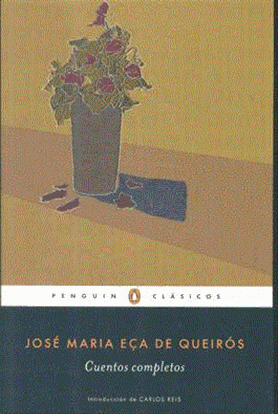
CUENTOS COMPLETOS
Los relatos de Eca de Queirós son una prueba de su evrsatilidad, su estilo único y su unvierso narrativo plural. Son múltiples también sus imaginarios: desde el mundo etno-fantástico de «El difunto» y «El tesoro», o el maravilloso bíblico de «El suave milagro» o «El aya», hasta la reaidad de las mujeres adúlteras de «En el molino» y la crítica de costumbres que le confirió el fulgor de la universidad. Su nombre no es tan solo garante de un talento que lo convirtió en el escritor portugués más importante de todos los tiempos; hablamos de algo todavía más infrecuente: de un creador por excelencia, de un demiurgo satánico y divino, y, en definitiva, de un genio.
750

750
THE DOG OF THE NORTH
Penny Rush has problems. Her marriage is over; she’s quit her job. Her mother and stepfather went missing in the Australian outback five years ago; her mentally unbalanced father provokes her; her grandmother Dr. Pincer keeps experiments in the refrigerator and something worse in the woodshed. But Penny is a virtuoso at what’s possible when all else fails.
750
750
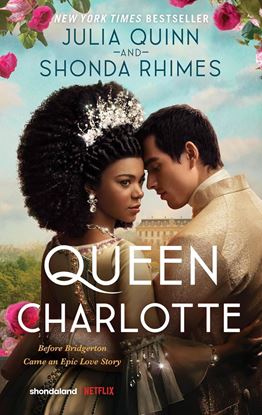
QUEEN CHARLOTTE
as the marriage of Queen Charlotte and King George of England leads to an unexpected love story and a union that transforms society.
In 1761, on a sunny day in September, a King and Queen met for the very first time. They were married within hours.
Born a German Princess, Charlotte of Mecklenburg-Strelitz was beautiful, headstrong, and fiercely intelligent… not precisely the attributes the British Court had been seeking in a spouse for the young King George III. But her fire and independence were exactly what she, and her King, needed.
Because George has secrets… secrets with the potential to shake the very foundations of the monarchy.
750

750
EL FIN DEL AMOR (BOL)
El fin del amor explora qué sucede cuando el matrimonio o la pareja monógama ya no son un objetivo vital, como lo fue para nuestros padres. Desde el valor de la amistad hasta la cultura del consentimiento, pasando por la maternidad, la soltería y el poliamor, Tenenbaum se zambulle en el universo de los afectos para celebrar el fin del amor romántico y proponer que, de sus cenizas, salga un amor mejor, que haga más libres a hombres y mujeres.
750