


800
THE EDGE
When CIA operative Jenny Silkwell is murdered in rural Maine, government officials have immediate concerns over national security. Her laptop and phone were full of state secrets that, in the wrong hands, endanger the lives of countless operatives. In need of someone who can solve the murder quickly and retrieve the missing information, the U.S. government knows just the chameleon they can call on.
Ex-Army Ranger Travis Devine spent his time in the military preparing to take on any scenario, followed by his short-lived business career chasing shadows in the deepest halls of power, so his analytical mind makes him particularly well-suited for complex, high-stakes tasks. Taking down the world’s largest financial conspiracy proved his value, and in comparison, this case looks straightforward. Except small towns hold secrets and Devine finds himself an outsider again.
800
800
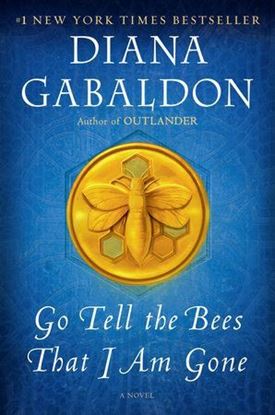
GO TELL THE BEES THAT I AM GONE
War leaves nobody alone. Neither the past, the present, nor the future offers true safety, and the only refuge is what you can protect: your family, your friends, your home.
Jamie Fraser and Claire Randall were torn apart by the Jacobite Rising in 1746, and it took them twenty years of loss and heartbreak to find each other again. Now it’s 1779, and Claire and Jamie are finally reunited with their daughter, Brianna, her husband, Roger, and their children, and are rebuilding their home on Fraser’s Ridge—a fortress that may shelter them against the winds of war as well as weather.
But tensions in the Colonies are great: Battles rage from New York to Georgia and, even in the mountains of the backcountry, feelings run hot enough to boil Hell’s teakettle. Jamie knows that loyalties among his tenants are split and it won’t be long before the war is on his doorstep.
Brianna and Roger have their own worry: that the dangers that provoked their escape from the twentieth century might catch up to them. Sometimes they question whether risking the perils of the 1700s—among them disease, starvation, and an impending war—was indeed the safer choice for their family.
800

800
DISHONESTLY YOURS. (WEBS 1)
Phoebe Graves grew up in a family where deception and seduction are as commonplace as breathing. The Graves and her best friend Hailey’s family have been on the run their whole lives, but after a high-stakes con job goes south, Phoebe and Hailey decide to run away and start over. The small Connecticut town they settle in seems too good to be true.
The biggest flaw in their plan is Hailey’s frustratingly handsome brother, Rocky, who insists on coming with them. Living honestly isn’t in his DNA, and his past with Phoebe is downright messy. He’s everything she wants, but nothing she can have.
Phoebe worries that Rocky will tempt them back into their old ways, where lying is second nature. She doesn’t want Rocky to mess up the new life she’s begun for herself. The longer she stays in town, the more she realizes what it means to have a reputation—and what a normal life with the man she loves could look like.
800

800
GREAT EXPECTATIONS (MODERN LIBRARY)
Pip, a poor orphan being raised by a cruel sister, does not have much in the way of great expectations—until he is inexplicably elevated to wealth by an anonymous benefactor. Full of unforgettable characters—including a terrifying convict named Magwitch, the eccentric Miss Havisham, and her beautiful but manipulative niece, Estella, Great Expectations is a tale of intrigue, unattainable love, and all of the happiness money can’t buy. “Great Expectations has the most wonderful and most perfectly worked-out plot for a novel in the English language,” according to John Irving, and J. Hillis Miller declares, “Great Expectations is the most unified and concentrated expression of Dickens’s abiding sense of the world, and Pip might be called the archetypal Dickens hero.”
800

800

800

800
LA GUERRA DE LAS MUJERES (PENGUIN)
En medio de la guerra de la Fronda, dos mujeres, como dos mosqueteras, se enfrentan con todas sus armas: sus belleza, su gran capacidad para la intriga, su amor y sus celos, sin renegar del coraje ni de sus dotes militares. Una es Nanon de Lartigues, la astuta y encendida amante del duque d´Épernon, fiel a Ana de Austria y al cardenal Mazarino. La otra es la rubia y valerosa Claire de Cambes, que sostiene la rebelión de los príncipes de Condé con inteligencia y sagacidad. Su enemistad se convierte en el eje de una historia llena de acción e intriga, una rara avis en la obra de Alexandre Dumas que aquí presenta y vierte a nuestra lengua el escritor y crítico Mauro Armiño.
800
800
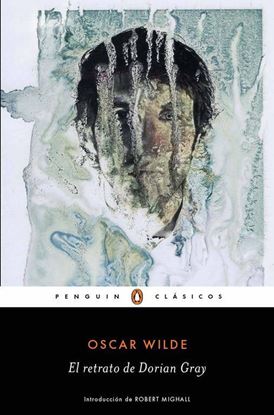
EL RETRATO DE DORIAN GRAY (PENG)(BOL)
Basil Hallward había terminado el retrato. El joven Dorian, al verlo, no pudo más que desear, desde su frívola inocencia, que fuera su imagen la que envejeciera y se corrompiera con el paso de los años mientras él permanecía intacto. Y así fue: a partir de entonces, Dorian Gray conservó el aspecto puro de los inocentes. Pero ¿a qué precio?
800
800
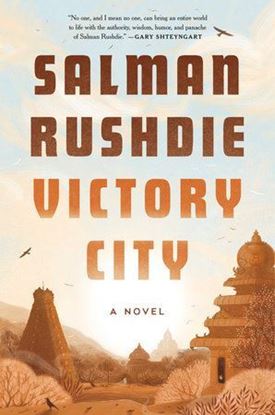
VICTORY CITY
In the wake of an unimportant battle between two long-forgotten kingdoms in fourteenth-century southern India, a nine-year-old girl has a divine encounter that will change the course of history. After witnessing the death of her mother, the grief-stricken Pampa Kampana becomes a vessel for a goddess, who begins to speak out of the girl’s mouth. Granting her powers beyond Pampa Kampana’s comprehension, the goddess tells her that she will be instrumental in the rise of a great city called Bisnaga—“victory city”—the wonder of the world.
Over the next 250 years, Pampa Kampana’s life becomes deeply interwoven with Bisnaga’s, from its literal sowing from a bag of magic seeds to its tragic ruination in the most human of ways: the hubris of those in power. Whispering Bisnaga and its citizens into existence, Pampa Kampana attempts to make good on the task that the goddess set for her: to give women equal agency in a patriarchal world. But all stories have a way of getting away from their creator, and Bisnaga is no exception. As years pass, rulers come and go, battles are won and lost, and allegiances shift, the very fabric of Bisnaga becomes an ever more complex tapestry—with Pampa Kampana at its center.
800