

750
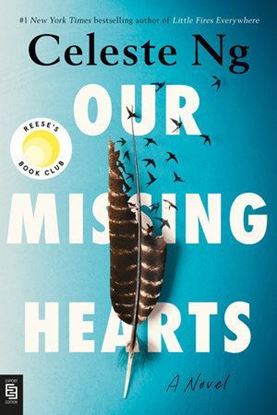
OUR MISSING HEARTS
Twelve-year-old Bird Gardner lives a quiet existence with his loving but broken father, a former linguist who now shelves books in a university library. His mother Margaret, a Chinese American poet, left the family when he was nine years old without a trace. Bird knows to not ask too many questions, stand out too much, or stray too far. For a decade, his family's life has been governed by laws written to preserve “American culture” in the wake of years of economic instability and violence. To keep the peace and restore prosperity, the authorities are now allowed to relocate children of dissidents, especially those of Asian origin, and libraries have been forced to remove books seen as unpatriotic.
Bird has grown up disavowing his mother and her poems; he doesn’t know her work or what happened to her, and he knows he shouldn’t wonder. But when he receives a mysterious letter containing only a cryptic drawing, he is pulled into a quest to find her. His journey will take him back to the many folktales she poured into his head as a child, through the ranks of an underground network of librarians, into the lives of the children who have been taken, and finally to New York City, where a new act of defiance may be the beginning of much-needed change.
750

750
CUENTOS COMPLETOS
Los relatos de Eca de Queirós son una prueba de su evrsatilidad, su estilo único y su unvierso narrativo plural. Son múltiples también sus imaginarios: desde el mundo etno-fantástico de «El difunto» y «El tesoro», o el maravilloso bíblico de «El suave milagro» o «El aya», hasta la reaidad de las mujeres adúlteras de «En el molino» y la crítica de costumbres que le confirió el fulgor de la universidad. Su nombre no es tan solo garante de un talento que lo convirtió en el escritor portugués más importante de todos los tiempos; hablamos de algo todavía más infrecuente: de un creador por excelencia, de un demiurgo satánico y divino, y, en definitiva, de un genio.
750
750
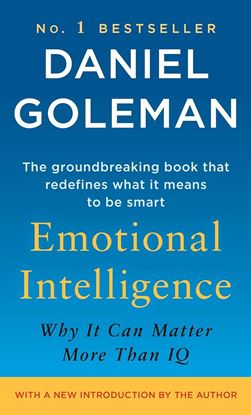
EMOTIONAL INTELLIGENCE (MM)
Everyone knows that high IQ is no guarantee of success, happiness, or virtue, but until the discoveries of modern brain researchers, theorists could only guess why. Daniel Goleman's fascinating report from the frontiers of psychology and neuroscience offers us startling new insight into our "two minds" -- the rational and the emotional -- and how they together shape our destiny. Beginning deep in the brain, Emotional Intelligence shows us the exact mechanism of an "emotional hijack," when passion overcomes reason. Through vivid examples, Goleman then delineates the crucial skills of emotional intelligence, and shows how they determine our success in relationships and work, and even our physical well-being. What emerges is a crucial new way to talk about being smart. The final chapters reveal the possibilities -- and limits -- of "emotional literary," as it is taught by both parents and educators. The book concludes with a compelling vision of what true emotional intelligence means for us both as individuals and as a society. The message of this eye-opening book is one we must take to heart: the true "bell curve" for a democracy must measure emotional intelligence. Daniel Goleman offers a new vision of excellence and a vital new curriculum for life that can change the future for us and our children.
750
750
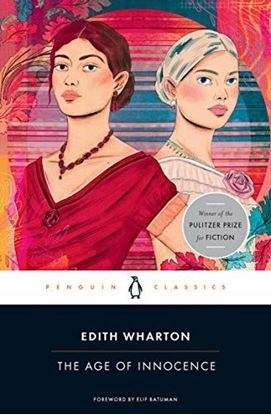
THE AGE OF INNOCENCE
The return of the beautiful Countess Olenska into the rigidly conventional society of New York sends reverberations throughout the upper reaches of society. Newland Archer, an eligible young man of the establishment is about to announce his engagement to May Welland, a pretty ingénue, when May's cousin, Countess Olenska, is introduced into their circle. The Countess brings with her an aura of European sophistication and a hint of scandal, having left her husband and claimed her independence. Her sorrowful eyes, her tragic worldliness and her air of unapproachability attract the sensitive Newland and, almost against their will, a passionate bond develops between them. But Archer's life has no place for passion and, with society on the side of May and all she stands for, he finds himself drawn into a bitter conflict between love and duty.
750
750
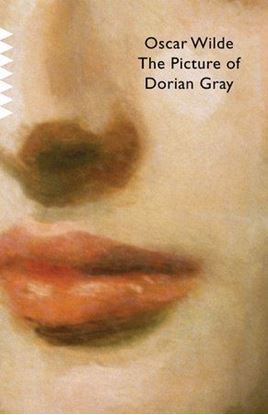
THE PICTURE OF DORIAN GRAY (VINTAGE CLAS
The Picture of Dorian Gray is Oscar Wilde's enduringly popular story of a beautiful and corrupt man and the portrait that reveals all his secrets. Entranced by the perfection of his recently painted portrait, the youthful Dorian Gray expresses a wish that the figure on the canvas could age and change in his place. When his wish comes true, the portrait becomes his hideous secret as he follows a downward trajectory of decadence and cruelty that leaves its traces only in the portrait's degraded image. Wilde's unforgettable portrayal of a Faustian bargain and its consequences is narrated with his characteristic incisive wit and diamond-sharp prose. The result is a novel that is as flamboyant and controversial as its incomparable author.
750

750
EL ESPEJO DEL MAR (BOL)
Las crónicas que conforman este libro repasan las vivencias marítimas de Conrad, primero como marinero en Francia y más adelante en la marina mercante británica. Estos textos componen un vivísimo retrato de la relación entre el hombre y el mar en una época en que la llegada del vapor supuso el fin de la hegemonía de los barcos devela. Considerado como el cruce entre un cantar de gesta sobre la navegación a vela y la biblia del oleaje, El espejo del mares la insuperable reminiscencia de una forma de vida y una obra imprescindible para comprender a su autor.
750

750
THE MARTIAN (EXPORT)
When a dust storm forces his crew to evacuate the planet while thinking him dead, astronaut Mark Watney finds himself stranded on Mars’s surface, completely alone. Armed with nothing but his ingenuity, his engineering skills – and a gallows sense of humor that proves to be his greatest source of strength – Mark embarks on a dogged quest to stay alive. But will his resourcefulness be enough to overcome the impossible odds against him?
750
750
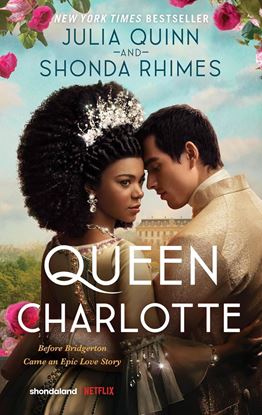
QUEEN CHARLOTTE
as the marriage of Queen Charlotte and King George of England leads to an unexpected love story and a union that transforms society.
In 1761, on a sunny day in September, a King and Queen met for the very first time. They were married within hours.
Born a German Princess, Charlotte of Mecklenburg-Strelitz was beautiful, headstrong, and fiercely intelligent… not precisely the attributes the British Court had been seeking in a spouse for the young King George III. But her fire and independence were exactly what she, and her King, needed.
Because George has secrets… secrets with the potential to shake the very foundations of the monarchy.
750
750
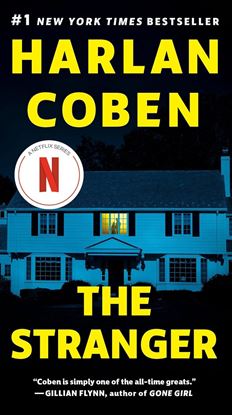
THE STRANGER (MM)
The Stranger appears out of nowhere, perhaps in a bar, or a parking lot, or at the grocery store. Their identity is unknown. Their motives are unclear. Their information is undeniable. Then they whisper a few words in your ear and disappear, leaving you picking up the pieces of your shattered world...
Adam Price has a lot to lose: a comfortable marriage to a beautiful woman, two wonderful sons, and all the trappings of the American Dream: a big house, a good job, a seemingly perfect life.
Then he runs into the Stranger. When he learns a devastating secret about his wife, Corinne, he confronts her, and the mirage of perfection disappears as if it never existed at all. Soon Adam finds himself tangled in something far darker than even Corinne's deception, and realizes that if he doesn't make exactly the right moves, the conspiracy he’s stumbled into will not only ruin lives—it will end them.
750