700
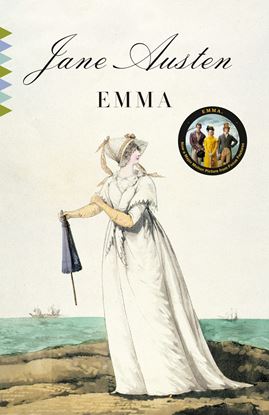
EMMA (ING) (VINTAGE CLASSIC)
A Vintage Classics edition of Jane Austen’s revolutionary and inspiring novel
Twenty-one-year-old Emma Woodhouse is comfortably dominating the social order in the village of Highbury, convinced that she has both the understanding and the right to manage other people’s lives—for their own good, of course. Her well-meant interfering centers on the aloof Jane Fairfax, the dangerously attractive Frank Churchill, the foolish if appealing Harriet Smith, and the ambitious young vicar Mr. Elton—and ends with her complacency shattered, her mind awakened to some of life’s more intractable dilemmas, and her happiness assured.
Austen’s comic imagination was so deft and beautifully fluent that she could use it to probe the deepest human ironies while setting before us a dazzling gallery of characters—some pretentious or ridiculous, some admirable and moving, all utterly true.
700
700
700
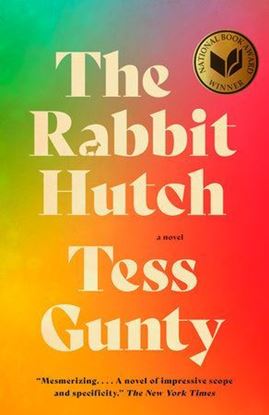
THE RABBIT HUTCH
The automobile industry has abandoned Vacca Vale, Indiana, leaving its residents behind, too. In a run-down apartment building on the edge of town, commonly known as the Rabbit Hutch, lives one of these people, a young girl named Blandine Watkins, who The Rabbit Hutch centers around. Hauntingly beautiful and unnervingly bright, Blandine lives alongside three teenage boys, all recently aged out of the state foster-care system, all of them madly in love with Blandine. Plagued by the structures, people, and places that not only failed her but actively harmed her, Blandine pays no mind to their affection. All she wants is an escape, a true bodily escape like the mystics describe in the books she reads.
700

700
TRUE BIZ
True biz? The students at the River Valley School for the Deaf just want to hook up, pass their history finals, and have politicians, doctors, and their parents stop telling them what to do with their bodies. This revelatory novel plunges readers into the halls of a residential school for the deaf, where they’ll meet Charlie, a rebellious transfer student who’s never met another deaf person before; Austin, the school’s golden boy, whose world is rocked when his baby sister is born hearing; and February, the hearing headmistress, a CODA (child of deaf adult(s)) who is fighting to keep her school open and her marriage intact, but might not be able to do both. As a series of crises both personal and political threaten to unravel each of them, Charlie, Austin, and February find their lives inextricable from one another—and changed forever.
700
700
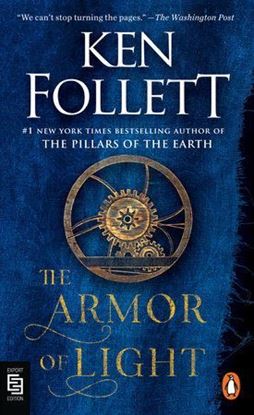
THE ARMOR OF LIGHT (EXP) (MM)
The Spinning Jenny was invented in 1770, and with that, a new era of manufacturing and industry changed lives everywhere within a generation. A world filled with unrest wrestles for control over this new world order: A mother’s husband is killed in a work accident due to negligence; a young woman fights to fund her school for impoverished children; a well-intentioned young man unexpectedly inherits a failing business; one man ruthlessly protects his wealth no matter the cost, all the while war cries are heard from France, as Napoleon sets forth a violent master plan to become emperor of the world. As institutions are challenged and toppled in unprecedented fashion, ripples of change ricochet through our characters’ lives as they are left to reckon with the future and a world they must rebuild from the ashes of war.
700
700
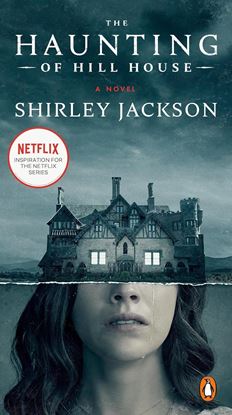
THE HAUNTING OF HILL HOUSE (MOVIE TIE-IN
First published in 1959, Shirley Jackson's The Haunting of Hill House has been hailed as a perfect work of unnerving terror. It is the story of four seekers who arrive at a notoriously unfriendly pile called Hill House: Dr. Montague, an occult scholar looking for solid evidence of a “haunting”; Theodora, his lighthearted assistant; Eleanor, a friendless, fragile young woman well acquainted with poltergeists; and Luke, the future heir of Hill House. At first, their stay seems destined to be merely a spooky encounter with inexplicable phenomena. But Hill House is gathering its powers—and soon it will choose one of them to make its own.
700
700
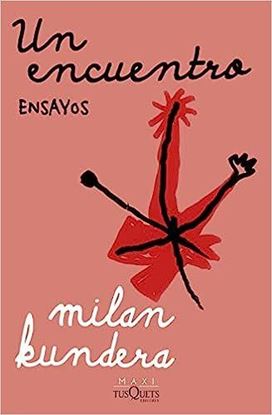
UN ENCUENTRO (BOL)
Un encuentro nos da a conocer a un Kundera, en cierto modo, inédito. En efecto, aunque el autor reflexione sobre sus «viejos temas existenciales y estéticos», lo cierto es que en este apasionado ―y apasionante― «encuentro» con algunas obras maestras de la literatura, la música y la pintura, el escritor checo aborda cuestiones hasta ahora poco o nada transitadas en sus libros anteriores.
Así, explora lo que la novela puede explicar sobre el ser humano, e indaga asimismo en las repercusiones, no siempre negativas, que el exilio tiene para el creador. También desentraña el papel de la memoria ante las tragedias del siglo XX y habla de la lucha desesperada del verdadero artista por asumir lo mejor de la tradición de su arte.
700

700
FUEGO LENTO (BOL)
Un thriller absorbente por la autora de La chica del tren.
Con la misma intensidad con la que ha cautivado a 27 millones de lectores en todo el mundo, la autora de La chica del tren, Paula Hawkins, nos ofrece un brillante thriller sobre las heridas que provocan los secretos que ocultamos.
El descubrimiento del cuerpo de un joven asesinado brutalmente en una casa flotante de Londres desencadena sospechas sobre tres mujeres. Laura es la chica conflictiva que quedó con la víctima la noche en que murió; Carla, aún de luto por la muerte de un familiar, es la tía del joven, y Miriam es la indiscreta vecina que oculta información sobre el caso a la policía. Tres mujeres que no se conocen, pero que tienen distintas conexiones con la víctima. Tres mujeres que, por diferentes razones, viven con resentimiento y que, consciente o inconscientemente, esperan el momento de reparar el daño que se les ha hecho.
Mira lo que has provocado.
700

700
LAS VIUDAS DE LOS JUEVES (BOL)
Detrás de las altas paredes perimetrales, más allá de los portones reforzados por barreras y flanqueados por garitas de vigilancia, se encuentra Altos de la Cascada. Afuera, la ruta, la barriada popular de Santa María de los Tigrecitos, la autopista, la ciudad, el resto del mundo.
En Altos de la Cascada viven familias que llevan un mismo estilo de vida y que quieren mantenerlo cueste lo que cueste. Allí, en el country, un grupo de amigos se reúne semanalmente lejos de las miradas de sus hijos, sus empleadas domésticas y sus esposas, quienes, excluidas del encuentro varonil, se autodenominan, bromeando, "las viudas de los jueves". Pero una noche la rutina se quiebra y ese hecho permite descubrir, en un país que se desmorona, el lado oscuro de una vida "perfecta".
700