
1,300
LOS REYES
«¡Cede lugar a mi secreto amor! ¡Ven, hermano, ven, amante al fin! ¡Surge de la profundidad que nunca osé salvar, asoma desde la hondura que mi amor ha derribado! ¡Brota asido al hilo que te lleva el insensato!».
Los reyes (1949), primer libro publicado por Cortázar con su nombre verdadero, es un poema dramático que propone una curiosa variante del mito del Minotauro: Ariadna no está enamorada de Teseo sino del monstruo que habita en el centro del laberinto. Gran conocedor de la estructura cerrada y fatal de los mitos griegos, Cortázar se las ingenia para que la historia tenga, de todas formas, el desenlace conocido: a pesar de las intenciones de su amada, el monstruo elige morir a manos de Teseo. Esta obra de estilo clásico y rara belleza, que ocupa un lugar de excepción dentro de la riquísima obra literaria de Cortázar, tiene el mérito enorme de respetar y, al mismo tiempo, transgredir la tradición.
1,300
1,450
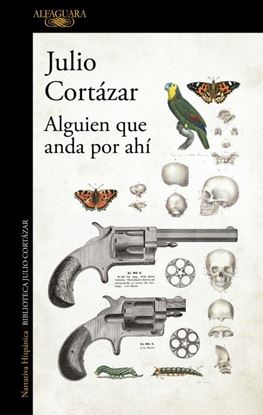
ALGUIEN QUE ANDA POR AHI
«También en el ajedrez y en el amor hay esos instantes en que la niebla se triza y es entonces que se cumplen las jugadas o los actos que un segundo antes hubieran sido inconcebibles».
Alguien que anda por ahí (1977) reúne once cuentos en los que Cortázar vuelve a superarse a sí mismo. Se abre con la inquietante melancolía de «Cambio de luces» y culmina con la violencia policial de «La noche de Mantequilla». Cortázar no sólo crea climas y situaciones irrepetibles, también es capaz de sorprender con proezas estilísticas como «Usted se tendió a tu lado», donde la historia se narra simultáneamente en dos registros distintos; o de rescatar un cuento escrito en los años cincuenta —«La barca o nueva visita a Venecia»—, intercalando comentarios que lo cargan de ironía y matices infinitos.
1,450
1,350
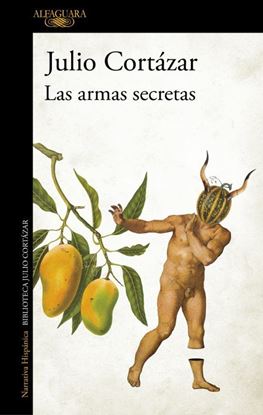
LAS ARMAS SECRETAS
«Que la música salve por lo menos el resto de la noche, y cumpla a fondo una de sus peores misiones, la de ponernos un buen biombo delante del espejo, borrarnos del mapa durante un par de horas».
Las armas secretas (1964) reúne cinco cuentos que forman parte de la mejor tradición del género. En medio de la excelencia de relatos como «Cartas de mamá», «Los buenos servicios» y «Las armas secretas», destacan dos obras maestras: «Las babas del diablo» (adaptado al cine por Antonioni en su recordada Blow up) y «El perseguidor», quizás el más perfecto y conmovedor homenaje a un genio del jazz como Charlie Parker.
1,350
1,350
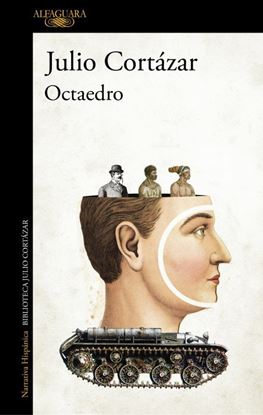
OCTAEDRO
«A vos que me leés, ¿no te habrá pasado eso que empieza en un sueño y vuelve en muchos sueños pero no es eso, no es solamente un sueño? Algo que está ahí pero dónde, cómo».
Cuando Cortázar parecía haber alcanzado la perfección en el género, Octaedro (1974) aportó novedades en su maestría incomparable a la hora de escribir cuentos.
Los ocho relatos que componen Octaedro —una figura tan geométrica como misteriosa, tan perfecta como reticente— entremezclan cierto contenido social y político que Cortázar había abordado en Libro de Manuel (1973) con sus temáticas más recurrentes: el amor, el sueño, la enfermedad, la muerte, el umbral entre lo cotidiano y lo fantástico. Pero, además, estos relatos funcionan como caras que, en su conjunto, van completando el sentido de la figura total: así, quien relata su propia muerte en «Liliana llorando» tendrá su contracara en «Las fases de Severo». Cada una de las tramas encuentra a lo largo de este libro continuaciones alternativas, extrañas formas de resonancia.
Compacto y, al mismo tiempo, ilimitado; preciso y también impredecible, si a un libro de cuentos le cabe el atributo de novela encubierta, no hay dudas de que es a Octaedro.
1,350
1,250
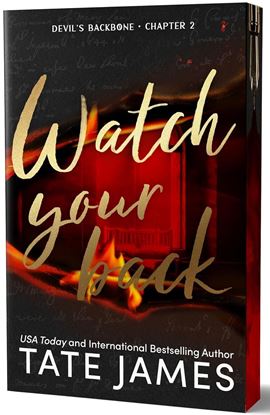
WATCH YOUR BACK (DELUXE EDITION)
Dear Reader,
Just when you think it can't get any worse, the universe seems to take that as a personal challenge. The Devil's Backbone Society has their fingers everywhere. It's more than a secret society―it's a leash and a prison sentence. The elders insist it's about making connections that will help you for the rest of your life, but what they don't tell you is how long―or, in this case, short―your life might be.
The society has already cost me―cost us. Blood. Sweat. Tears.
Lives.
Now, it may take more than what I have to give. A part of me wants to be here, wants to see this through to the end. But the rest of me?
The rest of me worries that even if I watch my back, it won't be enough. How do I protect them? How do I protect these handsome, crazy, over-the-top men that I'm falling for?
How do I save them from the society and themselves? And more importantly, how do I save myself?
1,250
1,150
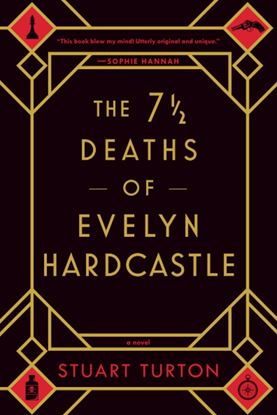
THE 7 1/2 DEATHS OF EVELYN HARDCASTLE
The 7½ Deaths of Evelyn Hardcastle is a breathlessly addictive mystery that follows one man's race to find a killer, with an astonishing time-turning twist that means nothing and no one are quite what they seem.
Aiden Bishop knows the rules. Evelyn Hardcastle will die every day until he can identify her killer and break the cycle. But every time the day begins again, Aiden wakes up in the body of a different guest at Blackheath Manor. And some of his hosts are more helpful than others. With a locked-room mystery that Agatha Christie would envy, Stuart Turton unfurls a breakneck novel of intrigue and suspense.
1,150
1,150
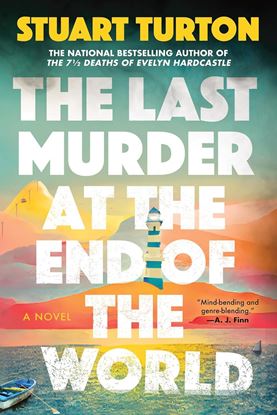
THE LAST MURDER AT THE END OT THE WORLD
Solve the murder to save what's left of the world.
Outside the island there is nothing: the world was destroyed by a fog that swept the planet, killing anyone it touched.
On the island: it is idyllic. One hundred and twenty-two villagers and three scientists, living in peaceful harmony. The villagers are content to fish, farm and feast, to obey their nightly curfew, to do what they're told by the scientists.
Until, to the horror of the islanders, one of their beloved scientists is found brutally stabbed to death. And then they learn that the murder has triggered a lowering of the security system around the island, the only thing that was keeping the fog at bay. If the murder isn't solved within 107 hours, the fog will smother the island―and everyone on it.
But the security system has also wiped everyone's memories of exactly what happened the night before, which means that someone on the island is a murderer―and they don't even know it.
And the clock is ticking.
1,150
1,150
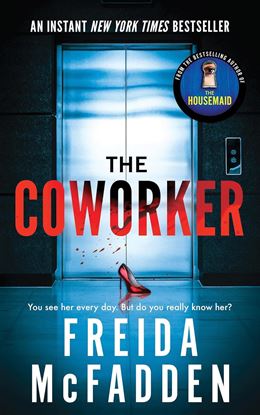
THE COWORKER
Two women. An office filled with secrets. One terrible crime that can't be taken back.
Dawn Schiff is strange.
At least, everyone thinks so at Vixed, the nutritional supplement company where Dawn works as an accountant. She never says the right thing. She has no friends. And she is always at her desk at precisely 8:45 a.m.
So when Dawn doesn't show up to the office one morning, her coworker Natalie Farrell―beautiful, popular, top sales rep five years running―is surprised. Then she receives an unsettling, anonymous phone call that changes everything…
It turns out Dawn wasn't just an awkward outsider―she was being targeted by someone close. And now Natalie is irrevocably tied to Dawn as she finds herself caught in a twisted game of cat and mouse that leaves her wondering: who's the real victim?
But one thing is incredibly clear: somebody hated Dawn Schiff. Enough to kill.
1,150
1,150
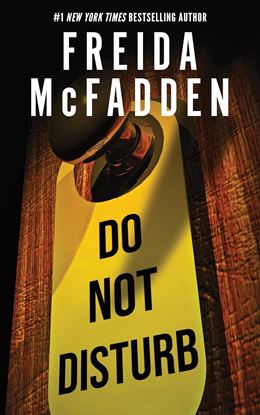
DO NOT DISTURB
Quinn Alexander has committed an unthinkable crime.
To avoid spending her life in prison, Quinn makes a run for it. She leaves behind her home, her job, and her family. She grabs her passport and heads for the northern border before the police can discover what she's done.
But when an unexpected snowstorm forces her off the road, Quinn must take refuge at the broken-down, isolated Baxter Motel. The handsome and kindly owner, Nick Baxter, is only too happy to offer her a cheap room for the night.
Unfortunately, the Baxter Motel isn't the quiet, safe haven it seemed to be. The motel has a dark and disturbing past. And in the dilapidated house across the way, the silhouette of Nick's ailing wife is always at the window. Always watching.
In the morning, Quinn must leave the motel. She'll pack up her belongings and get back on the road to freedom.
1,150