
1,950
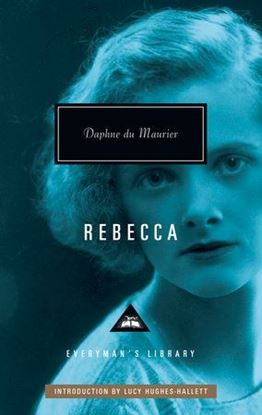
REBECCA
The unassuming young heroine of Daphne du Maurier’s Rebecca finds her life changed overnight when she meets Maxim de Winter, a handsome and wealthy widower whose sudden proposal of marriage takes her by surprise. Rescuing her from an overbearing employer, de Winter whisks her off to Manderley, his isolated estate on the windswept Cornish coast—but there things take a chilling turn. Max seems haunted by the memory of his glamorous first wife, Rebecca, whose legacy is lovingly tended by the sinister housekeeper, Mrs. Danvers. As the second Mrs. de Winter finds herself increasingly burdened by the shadow of her mysterious predecessor, she becomes determined to uncover the dark secrets that threaten her happiness, no matter the cost.
1,950
1,350
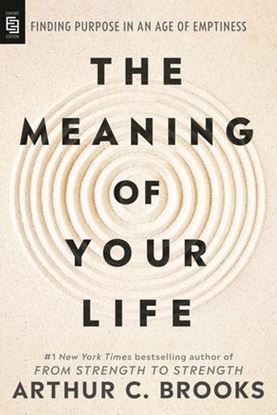
THE MEANING OF YOUR LIFE
Meaning in life is getting harder to find—and there’s a reason for that. In The Meaning of Your Life, social scientist and happiness expert Arthur Brooks explains how rapid societal and technological changes have rewired our brains, making them ill-equipped to handle questions of existential reckoning. The resulting emptiness is not imaginary, and it is life-destroying for some, especially for young people.
Fortunately, there's hope. With compassion, clarity, and practicality, Brooks tells you exactly what you need to do to move toward meaning. You'll take a test to determine where you are on your meaning journey, learn evidence-based tactics for rewiring your brain for complex and abstract concepts, and discover a vocabulary for your desires. Most importantly, Brooks will show you where to search for the transcendence, vocation, and significance that are your birthright as a human being.
1,350
995
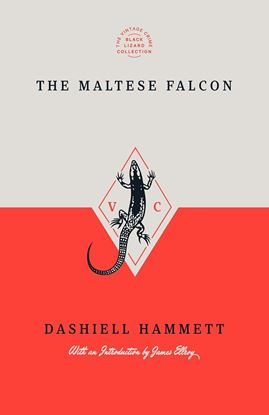
THE MALTESE FALCON (SPECIAL ED.) (PB)
A treasure worth killing for. Sam Spade, a slightly shopworn private eye with his own solitary code of ethics. A perfumed grafter named Joel Cairo, a fat man name Gutman, and Brigid O’Shaughnessy, a beautiful and treacherous woman whose loyalties shift at the drop of a dime. These are the ingredients of Dashiell Hammett's iconic, influential, and beloved The Maltese Falcon.
995
995
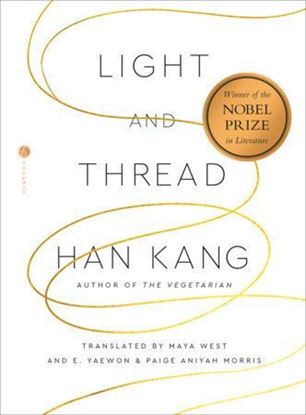
LIGHT AND THREAD
In this light-filled and multi-faceted book, Han Kang draws together the threads of her work and life, tracing the connections between her interior and exterior worlds through a sequence of essays, poems, photographs, and diaries, brilliantly translated by Maya West and e. yaewon & Paige Aniyah Morris.
A book of reflections, of words and light, it has at its heart the tiny, north-facing courtyard garden at her home, cultivated solely through the reflected sunlight of the mirrors which she must move throughout the day, as the earth turns on its axis.
In a poem written at eight years old, Han Kang imagined a “gold thread” of connection—an idea which she explores here with luminous attention, beginning with her Nobel Lecture. She writes of the wonder of following the thread we call language into the depths of other hearts, and her profound sense of an electric current which joins writer and reader.
Both intimate and illuminating, Light and Thread is a book for all readers of Han Kang’s unique body of work.
995
1,250
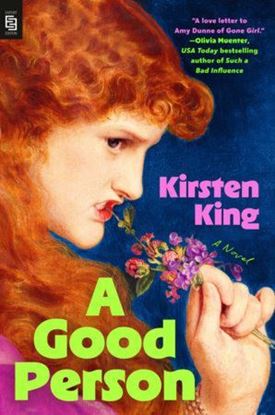
A GOOD PERSON
Lillian and Henry have been enjoying each other’s company, particularly in bed. Even though Lillian’s best (and only) friend calls it a “situationship,” Lillian knows better. And she has a plan to lock Henry down. She’ll be the best, most accommodating version of herself until he falls in love with her. But when Henry blindsides Lillian with a breakup instead of a love declaration, Lillian is left with no choice but to exact revenge with a hex.
Lillian expects Henry to grovel and come crawling back to her. What she doesn’t anticipate is becoming a prime suspect in his murder case when he’s found dead.
Desperate to control the narrative, clear her name, and assume her rightful place as Henry’s mourning girlfriend, Lillian’s pursuit of the truth will throw her into a dangerous tailspin, which may just upend her life for good.
1,250
1,200
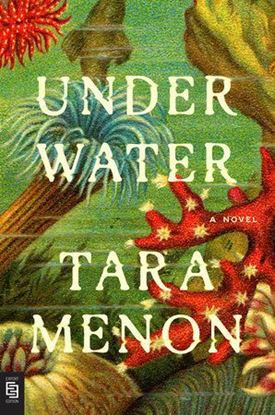
UNDER WATER
After Marissa loses her mother at six, the most intimate relationship of her life begins. Her marine biologist father, determined to channel his grief into completing his wife’s research, whisks her across the globe to Thailand. There she meets Arielle, and a fairytale friendship takes hold. During the week, the girls live at the resort owned by Arielle’s parents; on the weekends they join the tight-knit community of researchers on a nearby island. Together the girls discover the fragile wonders of its reefs, forests, and beaches. Together they learn to dive into the deep, holding their breath for minutes at a time, as effortlessly synchronized as the manta rays they come to know by name. Together they learn to swim their way out of danger. But then comes a wave Arielle can’t outpace, leaving Marissa gutted with loss.
1,200
900
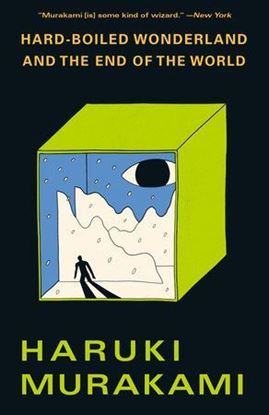
HARD-BOILED WONDERLAND AND THE END OF T.
Across two parallel narratives, Murakami draws readers into a mind-bending universe in which Lauren Bacall, Bob Dylan, a split-brained data processor, a deranged scientist, his shockingly undemure granddaughter, and various thugs, librarians, and subterranean monsters collide to dazzling effect. What emerges is a hyperkinetic novel that is at once hilariously funny and a deeply serious meditation on the nature and uses of the mind.
900
800
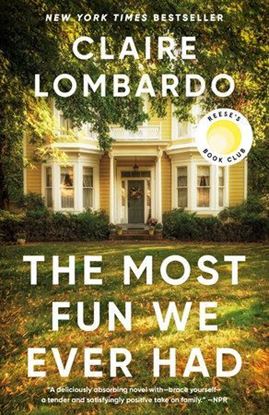
THE MOST FUN WE EVER HAD
In this “rich, complex family saga” (USA Today) full of long-buried family secrets, Marilyn Connolly and David Sorenson fall in love in the 1970s, blithely ignorant of all that awaits them. By 2016, they have four radically different daughters, each in a state of unrest.
Wendy, widowed young, soothes herself with booze and younger men; Violet, a litigator turned stay-at-home-mom, battles anxiety and self-doubt; Liza, a neurotic and newly tenured professor, finds herself pregnant with a baby she's not sure she wants by a man she's not sure she loves; and Grace, the dawdling youngest daughter, begins living a lie that no one in her family even suspects.
With the unexpected arrival of young Jonah Bendt—a child placed for adoption by one of the daughters fifteen years before—the Sorensons will be forced to reckon with the rich and varied tapestry of their past. As they grapple with years marred by adolescent angst, infidelity, and resentment, they also find the transcendent moments of joy that make everything else worthwhile.
800
650
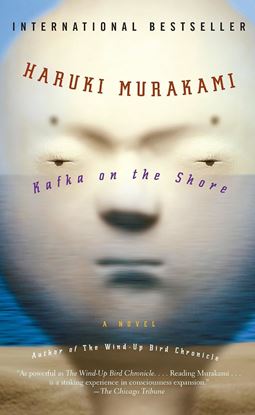
KAFKA ON THE SHORE
Kafka on the Shore is powered by two remarkable characters: a teenage boy, Kafka Tamura, who runs away from home either to escape a gruesome oedipal prophecy or to search for his long missing mother and sister; and an aging simpleton called Nakata, who never recovered from a wartime affliction and now is drawn toward Kafka for reasons that, like the most basic activities of daily life, he cannot fathom.
As their paths converge, and the reasons for that convergence become clear, Haruki Murakami enfolds readers in a world where cats talk, fish fall from the sky, and spirits slip out of their bodies to make love or commit murder. Kafka on the Shore display one of the world's great story tellers at the peak of his powers.
650
850
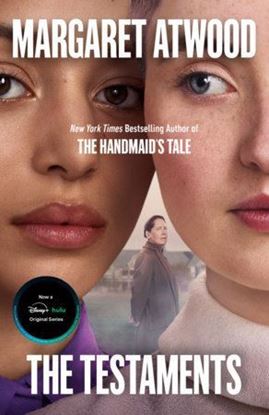
THE TESTAMENTS
More than fifteen years after the events of The Handmaid’s Tale, the theocratic regime of the Republic of Gilead maintains its grip on power, but there are signs it is beginning to rot from within. At this crucial moment, the lives of three women converge, with potentially explosive results. Two have grown up as part of the first generation to come of age in the new order. The testimonies of these two young women are joined by that of Aunt Lydia, whose complex past and uncertain future unfold in surprising and pivotal ways.
With The Testaments, Margaret Atwood opens up the innermost workings of Gilead, as each woman is forced to come to terms with who she is and how far she will go for what she believes.
850