

995
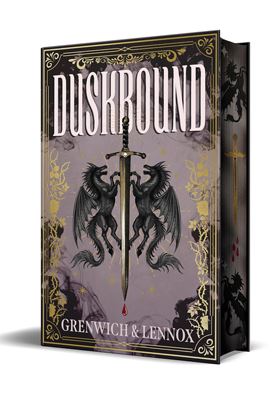
THE BRIGHT SWORD
A gifted young knight named Collum arrives at Camelot to compete for a place at the Round Table, only to find that he’s too late. King Arthur died two weeks ago at the Battle of Camlann, and only a handful of the knights of the Round Table are left.
The survivors aren’t the heroes of legend like Lancelot or Gawain. They’re the oddballs of the Round Table, like Sir Palomides, the Saracen Knight, and Sir Dagonet, Arthur’s fool, who was knighted as a joke. They’re joined by Nimue, who was Merlin’s apprentice until she turned on him and buried him under a hill.
But it's up to them to rebuild Camelot in a world that has lost its balance, even as God abandons Britain and the fairies and old gods return, led by Morgan le Fay. They must reclaim Excalibur and make this ruined world whole again—but first they'll have to solve the mystery of why the lonely, brilliant King Arthur fell.
995

1,450
THE BURNING GOD (3) (PB)
After saving her nation of Nikan from foreign invaders and battling the evil Empress Su Daji in a brutal civil war, Fang Runin was betrayed by allies and left for dead.
Despite her losses, Rin hasn’t given up on those for whom she has sacrificed so much—the people of the southern provinces and especially Tikany, the village that is her home. Returning to her roots, Rin meets difficult challenges—and unexpected opportunities. While her new allies in the Southern Coalition leadership are sly and untrustworthy, Rin quickly realizes that the real power in Nikan lies with the millions of common people who thirst for vengeance and revere her as a goddess of salvation.
Backed by the masses and her Southern Army, Rin will use every weapon to defeat the Dragon Republic, the colonizing Hesperians, and all who threaten the shamanic arts and their practitioners. As her power and influence grows, though, will she be strong enough to resist the Phoenix’s intoxicating voice urging her to burn the world and everything in it?
1,450
1,200
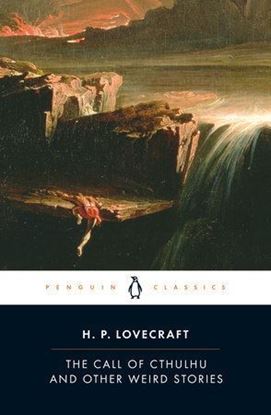
THE CALL OF CTHULHU AND OTHER WEIRD S.
A definitive collection of stories from the unrivaled master of twentieth-century horror
"I think it is beyond doubt that H. P. Lovecraft has yet to be surpassed as the twentieth century's greatest practitioner of the classic horror tale." -Stephen King
Frequently imitated and widely influential, Howard Philips Lovecraft reinvented the horror genre in the 1920s, discarding ghosts and witches and instead envisioning mankind as a tiny outpost of dwindling sanity in a chaotic and malevolent universe. S. T. Joshi, Lovecraft's preeminent interpreter, presents a selection of the master's fiction, from the early tales of nightmares and madness such as "The Outsider" to the overpowering cosmic terror of "The Call of Cthulhu." More than just a collection of terrifying tales, this volume reveals the development of Lovecraft's mesmerizing narrative style and establishes him as a canonical- and visionary-American writer.
1,200
1,450
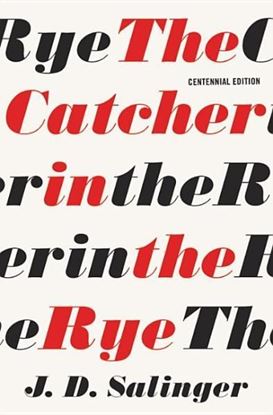
THE CATCHER IN THE RYE
"If you really want to hear about it, the first thing you'll probably want to know is where I was born, and what my lousy childhood was like, and how my parents were occupied and all before they had me, and all that David Copperfield kind of crap, but I don't feel like going into it, if you want to know the truth."
The hero-narrator of The Catcher in the Rye is an ancient child of sixteen, a native New Yorker named Holden Caufield. Through circumstances that tend to preclude adult, secondhand description, he leaves his prep school in Pennsylvania and goes underground in New York City for three days.
1,450
650
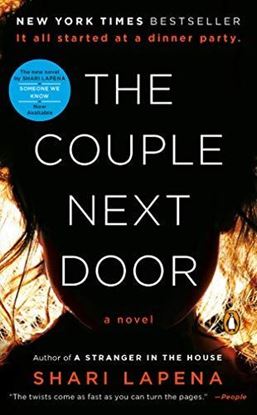
THE COUPLE NEXT DOOR (MM)
AN INSTANT NEW YORK TIMES BESTSELLER Shari Lapena's new thriller, AN UNWANTED GUEST, is available now! "The twists come as fast [as] you can turn the pages." --People "Provocative and shocking." --Lisa Gardner, New York Times bestselling author of Find Her "I read this novel at one sitting, absolutely riveted by the storyline. The suspense was beautifully rendered and unrelenting!" --Sue Grafton, New York Times bestselling author of X It all started at a dinner party. . . A domestic suspense debut about a young couple and their apparently friendly neighbors--a twisty, rollercoaster ride of lies, betrayal, and the secrets between husbands and wives. . . Anne and Marco Conti seem to have it all--a loving relationship, a wonderful home, and their beautiful baby, Cora. But one night, when they are at a dinner party next door, a terrible crime is committed. Suspicion immediately lands on the parents. But the truth is a much more complicated story. Inside the curtained house, an unsettling account of what actually happened unfolds. Detective Rasbach knows that the panicked couple is hiding something. Both Anne and Marco soon discover that the other is keeping secrets, secrets they've kept for years. What follows is the nerve-racking unraveling of a family--a chilling tale of deception, duplicity, and unfaithfulness that will keep you breathless until the final shocking twist.
650
1,600
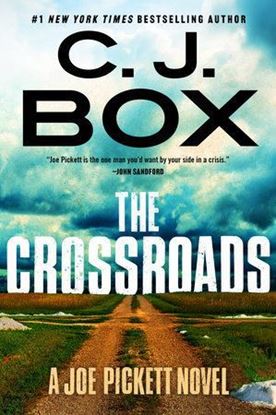
THE CROSSROADS
Marybeth Pickett gets the call she has always dreaded: her husband Joe is in critical condition with a gunshot wound to the head.
Joe was found in his pickup at Antler Creek Junction, a crossroads connecting three ranches. Each road leading to a dangerous family. Each family with a different bone to pick with the local game warden. Marybeth and the new sheriff assume that Joe was ambushed by one of the families, but they have no idea which one since Joe didn’t say where he was going or why.
With Joe unconscious and fighting for his life with Marybeth at his side, Sheridan, April, and Lucy split up and investigate each of families to uncover the truth of what happened to their father, before it’s too late.
1,600