
950
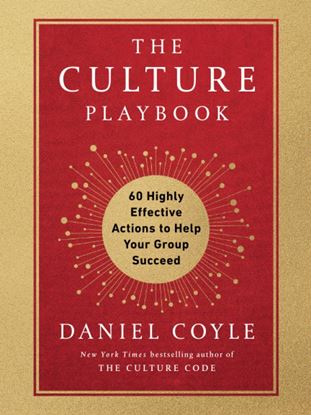
THE CULTURE PLAYBOOK
As an entrepreneur and founder of an investment bank led by women, | found The Culture Playbook to be an invaluable asset, providing tools and techniques as 1 work to unleash my team's full power and potential in an ever-evolving workplace. Daniel Coyle has given us all a game plan for success.”
950
1,250
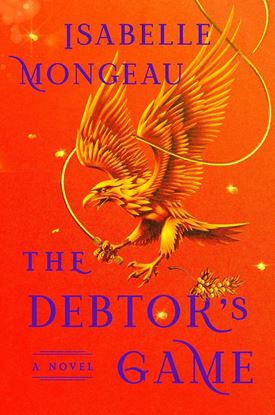
THE DEBTOR S GAME
"As a palace faerie, Avery is busy preparing Lady Kassandra, a High Fae of the House of Illusion, for the upcoming coronation. Both of their freedoms rely on it: Kassandra, to escape her violent brother, and Avery, to pay off rings of debt tattoos she has inherited from her family, which force her to serve the High Fae. After a series of tragic events, Avery is forced to split her loyalties between Lady Kassandra and the newly crowned King Maxian, an alluring High Fae of staggering power. Avery agrees to spy on the King in exchange for liberating her family from debt, forming a triangle that proves more dangerous by the minute--further complicated by Avery's warring desire and resentment for both Maxian and Kassandra. But freedom from her debt grows further out of reach when she's forced to test her loyalties, leading her to uncover secrets about the High Fae with earth-shattering implications. Soon, Avery must find out whether the faeries--and herself--are really as powerless against the High Fae as they seem...or whether she just might hold the key to freeing them all."
1,250

750
THE DOG OF THE NORTH
Penny Rush has problems. Her marriage is over; she’s quit her job. Her mother and stepfather went missing in the Australian outback five years ago; her mentally unbalanced father provokes her; her grandmother Dr. Pincer keeps experiments in the refrigerator and something worse in the woodshed. But Penny is a virtuoso at what’s possible when all else fails.
750
1,995
1,496
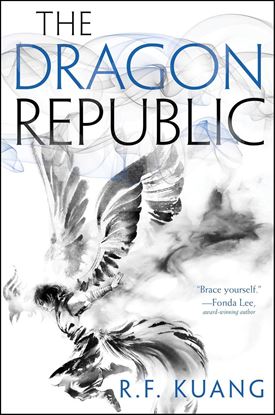
THE DRAGON REPUBLIC (2) (HC)
The war is over.
The war has just begun.
Three times throughout its history, Nikan has fought for its survival in the bloody Poppy Wars. Though the third battle has just ended, shaman and warrior Rin cannot forget the atrocity she committed to save her people. Now she is on the run from her guilt, the opium addiction that holds her like a vice, and the murderous commands of the fiery Phoenix—the vengeful god who has blessed Rin with her fearsome power.
Though she does not want to live, she refuses to die until she avenges the traitorous Empress who betrayed Rin’s homeland to its enemies. Her only hope is to join forces with the powerful Dragon Warlord, who plots to conquer Nikan, unseat the Empress, and create a new republic.
But neither the Empress nor the Dragon Warlord are what they seem. The more Rin witnesses, the more she fears her love for Nikan will force her to use the Phoenix’s deadly power once more.
Because there is nothing Rin won’t sacrifice to save her country . . . and exact her vengeance.
1,995
1,496

2,900
THE DRAGON REPUBLIC (2) DELUXE COLLECTOR
The war is over.
The war has just begun.
Three times throughout its history, Nikan has fought for its survival in the bloody Poppy Wars. Though the third battle has ended, the war still rages for Rin. Haunted by the atrocity she committed to save her people, the shaman and warrior is on the run from her guilt, the opium addiction that holds her like a vise, and the murderous commands of the fiery Phoenix—the vengeful god who has blessed Rin with fearsome power.
While the young warrior welcomes death, she must remain alive until she avenges the traitorous Empress who betrayed her homeland. Rin’s only hope is to join forces with the enemy of her enemy—the powerful Dragon Warlord, who plots to destroy the Empress.
2,900
1,200
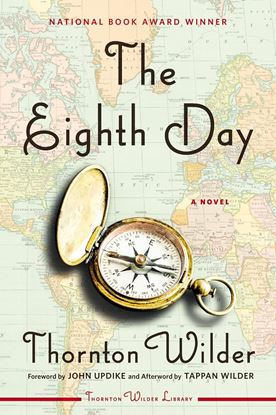
THE EIGHTH DAY
At once a murder mystery and a philosophical tale, The Eighth Day is a “suspenseful and deeply moving” (New York Times) work of classic stature that has been hailed as a great American epic.
Set in a mining town in southern Illinois, the novels centers around two families blasted apart when the patriarch of one family, John Ashley, is accused of murdering his best friend. Ashley's miraculous jailbreak on the eve of his execution and his subsequent flight to South America trigger a powerful story tracing the fates of all those whose lives are forever changed by the tragedy: Ashley himself, his wife and children, and the wife and children of the victim.
1,200