
NOVEDADES






3,995
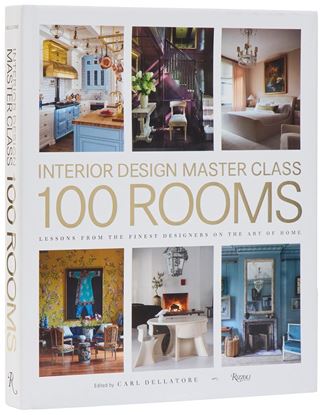
INTERIOR DESIGN MASTER CLASS: 100 ROOMS
Everyone wants a stylish home, but with so much information available, how does one begin to put it all together? EnterInterior Design Master Class: 100 Rooms. The designers who’ve created the remarkable spaces in this volume individually explain in their own words the framework for the success of each room. The spaces featured in the book are broken down by type of room, including Gathering (media and family rooms), Transitional (porches and entryways), Respite (bedrooms and sitting rooms), Entertaining (dining rooms and bars), and Utility (kitchens, baths, and mudrooms). In each category, the multiple examples by designers well known from their appearances in Architectural Digest, Elle Decor, and Southern Living explore a variety of topics. Katie Ridder uses her vibrant living room to write about establishing a successful palette. Suzanne Kasler writes about the importance of light in bedrooms. Frances Merrill of Reath Design shares her thoughts about kitchens. Mark Sikes contributes an essay on tables. Steven Gambrel writes about the color blue. Josh Greene expounds on the bath. Also featuring Bunny Williams, Robert Couturier, Heidi Caillier, Miles Redd and David Kaihoi, Nicole Hollis, and Corey Damen Jenkins, the book is an elegant guide to twenty-first-century living, room by room.
3,995
3,995
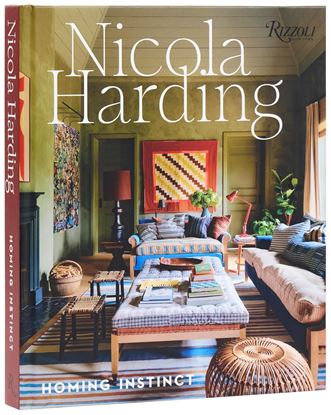
NICOLA HARDING
Having moved around a lot as a child, Harding has always been interested in creating homes that evoke a sense of belonging. After designing several homes for herself, what began as a passion grew organically into a thriving career. Today Harding is known for her quintessentially British, reassuringly familiar interiors that mix traditional charm with rich atmosphere. A sense of meaning comes from deftly weaving together expertly sourced antiques and luxurious fabrics, married with craftsmanship that has a particular significance—for example, a supplier who works in a village near where a client grew up, or antiques from local dealers.
With a calming, nature-inspired palette, Harding’s residential projects embrace English country-house coziness and radiate a warmth that makes each place feel personal and well lived in, while her hospitality commissions are bold and spirited, often inspired by literary or historic characters. This first book delves into Harding’s design philosophy, which, at its heart, prioritizes human experience above all else.
3,995

3,995
SIMS HILDITCH, BEATUFULLY BRITISH INT.
Spanning the extraordinary breadth of the studio’s most recent work—projects in townhouses, historic country manors, and seaside villas—the interiors in this book reflect the design philosophy of founder Emma Sims-Hilditch: Every house needs to work on a functional level before one even considers the decoration. Spaces, from sumptuous entrance halls and sitting rooms to hardworking kitchens and boot rooms, are organized for efficiency and practicality before the design team introduces an abundance of floral and damask textiles, striking colors, both refined and comfortable furnishings, and decorative trims.
This book not only explores the fruits of complex and rewarding collaborations that artfully breathe new life into old buildings but also offers an insight into an exciting new chapter in the fascinating story of classic English country houses. New materials and technologies, paired with traditional decorative devices, reinvigorate a Victorian house in the city, an eighteenth-century country house, a Jacobean manor, an apartment in London’s Old War Office, and many other quintessentially British residences.
3,995
3,995
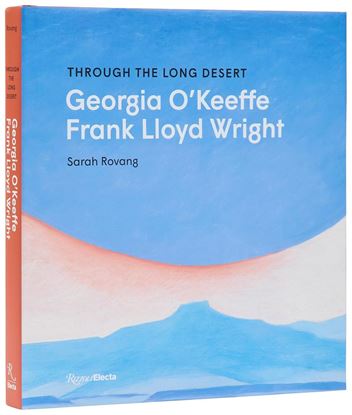
THROUGH THE LONG DESERT: G. O'KEEFE
Georgia O’Keeffe and Frank Lloyd Wright were neither competitors nor direct collaborators. Yet these romantic heroes of twentieth-century art and architecture largely operated in parallel. In this seminal book, Rovang weaves together their compelling life stories, examining newly discovered links between them and, in the process, offering a fresh perspective on their work, their intermittent yet poignant friendship, and their closeness to the desert.
Starting in 1933, O’Keeffe and Wright exchanged roughly two dozen letters in which they expressed admiration for one another but also their passion for the places that informed them—many of which they had in common. Both were born in rural Wisconsin and built their careers in Chicago and New York. However, both sought inspiration and fulfillment in places farther afield, including in Japan and the desert landscape of the American Southwest. Juxtaposing images highlighting shared aspects of their individual biographies and work, this unique take on American creative expression explores the nature of artistic friendship and the idea of “home.” Rovang’s text gives rich context to the allure and romance of her visual subject, offering readers new ways to appreciate O’Keeffe’s and Wright’s monumental contributions to American culture.
3,995
3,995
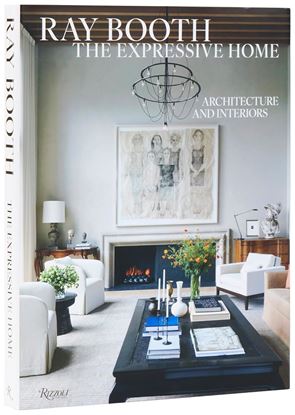
RAY BOOTH: THE EXPRESSIVE HOME
Booth showcases his innovative and sophisticated modern interiors, which mix a keen sense of tranquility with bold and elegant details, as well as homes renovated inside and out, and houses designed and decorated from the foundations up. Both his exteriors and interiors display a harmonious blend of traditional and contemporary elements, resulting in an appealingly timeless aesthetic. This exquisitely designed tome presents his forward-thinking vision.
The spectacular projects featured span the country from coast to coast—from a dramatic Los Angeles hillside dwelling with expansive windows to a contemporary Nashville home that marries brick, metal, and wood. For his own Provincetown seaside getaway, he has chosen an unexpected cutting-edge style. These projects show how he pushes the boundaries of design while imbuing spaces with soul.
3,995
3,995
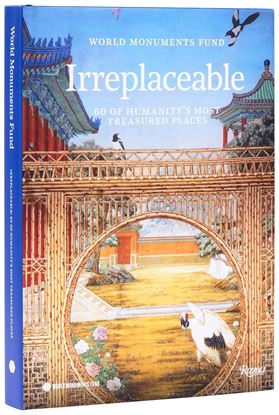
WORLD MONUMENTS FUND
From the fabled towers of Babylon and Angkor Wat to the colossal stone heads of Rapa Nui (Easter Island) and secret gardens of Beijing’s Forbidden City, each of the sixty sites featured in this lavishly illustrated book are must-visit destinations for every cultured traveler, representing the pinnacles of human achievement over millennia and across the globe.
Yet despite their beauty, fame, and importance, these treasured places face existential challenges arising from climate change, war, financial pressures, and—increasingly—over-tourism. From its founding in 1965, World Monuments Fund (WMF) has focused the public’s attention on these dangers while developing solutions that will ensure these sites will be enjoyed for generations to come.
3,995