NOVEDADES






3,995
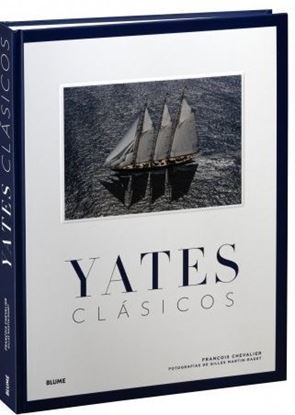
YATES CLASICOS
Dieciocho de los yates clásicos más hermosos del mundo, verdaderas obras maestras de la arquitectura naval.
Una invitación privada a un universo excepcional: desde las regatas de las Voiles de Saint-Tropez hasta la Copa América, los veleros logran que quienes los contemplan sueñen con regatas por todo el mundo.
Las historias de estos barcos son siempre singulares: desde el Manitou, que fue propiedad de John Fitzgerald Kennedy, hasta el Atlantic, una goleta de tres palos de proporciones espectaculares.
3,995

3,995
ATLAS MUNDIAL DEL WHISKY 3RA. EDICCION
Un recorrido exhaustivo e ilustrado a través de la historia, los procesos, las destilerías y las expresiones de los whiskies del mundo.
Información sobre los principales países y regiones productores de whisky del mundo, con los mejores exponentes de una gama de estilos cada vez más diversa y fascinante, con textos y notas de cata totalmente actualizados.
Un mapa en el que ubicar las destilerías, pero también un mapa de sabores y mentalidades, que incluye los muchos y apasionantes recién llegados a la escena del whisky. Con 34 mapas nuevos y revisados.
3,995
3,995
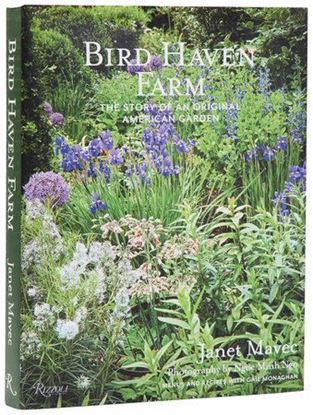
BIRD HAVEN FARM. THE STORY OF AN ORGINAL
Preserving and enhancing a property rich in narrative and natural beauty has been a twenty-year obsession for this property’s owner. Mavec has called upon a host of well-known garden luminaries to help preserve what began as a farm with a solitary stone house originally owned by the publisher of the Nancy Drew mysteries while making it functional, productive, and beautiful for the twenty-first century. Today, a series of individual gardens rest within a natural hollow surrounded by native woodland, including a broad gathering space defined by whimsical cloud-pruned boxwood hedges, groves of lilacs, and dogwoods and hellebores that entice visitors into early-season walks with delicate color each spring, a stone-walled vegetable and flower garden whose geometry is inspired by medieval monasteries, winding perennial-lined paths, orchards that produce over five hundred pounds of apples each fall, a natural pond brimming with aquatic plants, and an elliptical hillside meadow farmed for hay. All lead intuitively back to the “town square,” an open area tucked among the dwelling spaces featuring a broad ground-level fountain that clearly identifies it as the true heart of the farm.
3,995