
NOVEDADES











4,200
TRATADO DE FILOSOFIA DE LA MUSICA
El presente Tratado de filosofía de la música propone un desarrollo de las líneas generales de la filosofía del arte y de la música del Materialismo Filosófico de Gustavo Bueno, acotando la especificidad material de la categoría musical a partir de la reconstrucción y despliegue de la idea helénica de melos, expuesta en el libro Sobre la música de Arístides Quintiliano, desde la Teoría de la esencia genérica de la música.
De esta manera, se expone el sistema filosófico constituido por Gustavo Bueno y se realizan una serie de propuestas concretadas a partir de tres planos de estudio, a saber, el plano gnoseológico, en el que se propone un sistema de análisis de partituras a partir del desarrollo de la idea de Glomérulo acuñada por Gustavo Bueno; el plano noetológico, constituyente de una teoría de la racionalidad musical; y el plano alegórico, desde el cual se propone el estudio de las diversas formas de ejercitar las ideas que envuelven la categoría musical a partir del análisis de las velocidades de despliegue de la obra artística.
Todo ello establece la referencia de la idea de música sustantiva, la cual precisa de un material estético que concatene estos tres planos en un espacio determinado que, por otra parte, constituye la tesis fuerte de este Tratado, esto es, el espacio melológico.
4,200
4,350
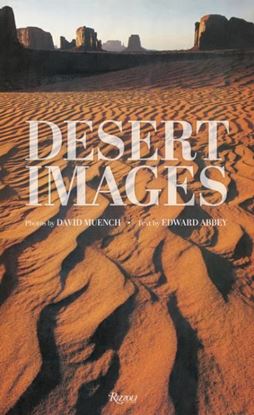
DESERT IMAGES
When first published, Desert Images was a watershed project in the nascent environmental movement—bringing together two titans of American literature and art in their heyday. Still resonating all these decades later, Muench’s evocative photography and Abbey’s fiery, poetic text remain an unsurpassed tribute to this extraordinary American landscape. Those who imagine that the desert is merely a monotonous vista of sand and rock will be surprised by the variety of landforms, plants, and other natural phenomena shown on these pages.
As Abbey wrote, “For some of those who have learned not only to live in but also to love the desert, it offers rewards greater than its visual appeal to the sense of beauty—the promise implicit in all that rugged wildness, that open, unfenced, untrammeled space—the sense of adventure, the reality of freedom, the hope of a refuge.” This photographic and literary passport to a great American wilderness will be treasured by all those who cherish the natural world.
4,350
4,400
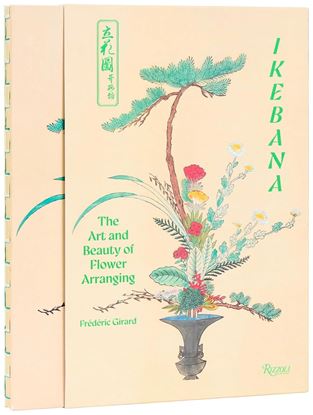
IKEBANA. THE ART AND BEAUTY OF FLOWER A.
Meticulous reproductions of sublime paintings showcase rikka, the oldest and most traditional form of flower arranging, which is linked to the Ikenobō school, Japan’s first and largest school of ikebana. The images presented here perfectly illustrate the main principles of ikebana—harmonious juxtaposition of flowers, balance between foliage (leaves, fronds, reeds, etc.) and branches, and naturalistic compositions for display.
Several schools and styles of ikebana have evolved over the centuries. The rikka style is characterized by the use of erect branches and flowers to display a marked verticality in order to express the beauty of a natural landscape in a single vase. The floral arrangements in this collection date back to the Ikenobō Grand Master of Kyoto’s Rokkakudō Temple and his disciples from the Ashikaga Shogunate (1336–1573). These flower arrangements were officially documented by Igai Sansaemon in 1673 in artworks printed xylographically and then hand-colored using the gansai watercolor technique. The reproductions are accompanied by authoritative text by one of the world’s leading authorities on Japanese art.
4,400