NOVEDADES











4,500
BUILDING ON TRADITION
Over two decades, William Curtis and Russell Windham have worked to show that classical architecture can embody the same attention to context and custom approach to design often ascribed to more modern movements, underscoring how versatile classical ideals and details can be. In styles reminiscent of the great Tudor manor houses of England to quaint symmetrical clapboard farmhouses, quintessentially Mission-style haciendas, and of course neo-Georgian mansions, the firm builds houses with a faithful adherence to historical detail, proportion, and materials that makes them stand out as truly world-class designers.
With interiors as much a part of their core practice as exteriors, this firm is able to carry through an integrity of vision—graciously curved banisters, warm and inviting mantels, detailed brickwork, and coffered ceilings—that makes every project feel truly whole, complete. Yet a strong sense still pervades every featured home that they are organized to support modern lifestyles, taking the best of the past and adapting it to create homes that are truly comfortable and functional for today’s families.
4,500
4,400
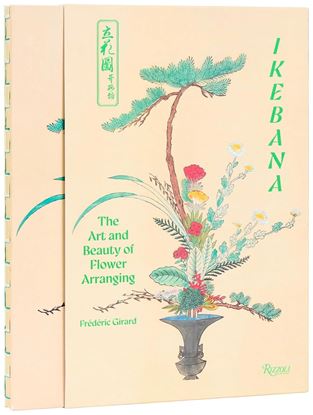
IKEBANA. THE ART AND BEAUTY OF FLOWER A.
Meticulous reproductions of sublime paintings showcase rikka, the oldest and most traditional form of flower arranging, which is linked to the Ikenobō school, Japan’s first and largest school of ikebana. The images presented here perfectly illustrate the main principles of ikebana—harmonious juxtaposition of flowers, balance between foliage (leaves, fronds, reeds, etc.) and branches, and naturalistic compositions for display.
Several schools and styles of ikebana have evolved over the centuries. The rikka style is characterized by the use of erect branches and flowers to display a marked verticality in order to express the beauty of a natural landscape in a single vase. The floral arrangements in this collection date back to the Ikenobō Grand Master of Kyoto’s Rokkakudō Temple and his disciples from the Ashikaga Shogunate (1336–1573). These flower arrangements were officially documented by Igai Sansaemon in 1673 in artworks printed xylographically and then hand-colored using the gansai watercolor technique. The reproductions are accompanied by authoritative text by one of the world’s leading authorities on Japanese art.
4,400

4,400
MODERN TREE HOUSES (JU) (GB)
Above the forest floor, a world of wonder awaits. Tree houses have always captured our imaginations—symbols of escapism, endless youthful summers, and a deep-rooted connection to nature. But today, they’ve evolved beyond childhood hideaways into architectural marvels that blend sustainability and cutting-edge design. So, climb up and explore 62 elaborate tree houses from around the world, each with its own fascinating story. With no single blueprint, they take many forms—some are anchored within towering branches, others mimic the shapes of trees, some shelter in the foliage without touching a trunk. But all have the same goal: to bring us closer to nature.
4,400
4,350
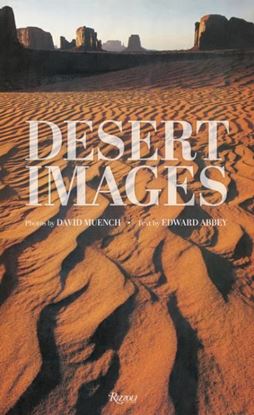
DESERT IMAGES
When first published, Desert Images was a watershed project in the nascent environmental movement—bringing together two titans of American literature and art in their heyday. Still resonating all these decades later, Muench’s evocative photography and Abbey’s fiery, poetic text remain an unsurpassed tribute to this extraordinary American landscape. Those who imagine that the desert is merely a monotonous vista of sand and rock will be surprised by the variety of landforms, plants, and other natural phenomena shown on these pages.
As Abbey wrote, “For some of those who have learned not only to live in but also to love the desert, it offers rewards greater than its visual appeal to the sense of beauty—the promise implicit in all that rugged wildness, that open, unfenced, untrammeled space—the sense of adventure, the reality of freedom, the hope of a refuge.” This photographic and literary passport to a great American wilderness will be treasured by all those who cherish the natural world.
4,350

4,200
TRATADO DE FILOSOFIA DE LA MUSICA
El presente Tratado de filosofía de la música propone un desarrollo de las líneas generales de la filosofía del arte y de la música del Materialismo Filosófico de Gustavo Bueno, acotando la especificidad material de la categoría musical a partir de la reconstrucción y despliegue de la idea helénica de melos, expuesta en el libro Sobre la música de Arístides Quintiliano, desde la Teoría de la esencia genérica de la música.
De esta manera, se expone el sistema filosófico constituido por Gustavo Bueno y se realizan una serie de propuestas concretadas a partir de tres planos de estudio, a saber, el plano gnoseológico, en el que se propone un sistema de análisis de partituras a partir del desarrollo de la idea de Glomérulo acuñada por Gustavo Bueno; el plano noetológico, constituyente de una teoría de la racionalidad musical; y el plano alegórico, desde el cual se propone el estudio de las diversas formas de ejercitar las ideas que envuelven la categoría musical a partir del análisis de las velocidades de despliegue de la obra artística.
Todo ello establece la referencia de la idea de música sustantiva, la cual precisa de un material estético que concatene estos tres planos en un espacio determinado que, por otra parte, constituye la tesis fuerte de este Tratado, esto es, el espacio melológico.
4,200
4,000
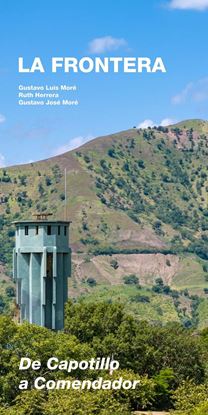
LA FRONTERA. DE CAPOTILLO A COMENDADOR
No conocemos la frontera.
Los 391 kilómetros de demarcación lineal terrestre y fluvial se extienden por las provincias Montecristi, Dajabón, Elías Piña, Independencia y Pedernales, y culminan en las aguas marinas de la isla caribeña compartida por la República Dominicana y la República de Haití.
A la distancia, la mavoría de los dominicanos imaginamos un territorio peligroso, desprotegido a la vez que inexpugnable, donde el sol abrasa y los habitantes se ahogan en medio del polvo y de la sed. Suponemos sobre el terreno una línea punteada por pirámides amarillas, colocadas en sitios remotos. inaccesibles. difíciles de encontrar.
Muchas interrogantes surgen de_ este espacio natural y humano, escenario por igual de luchas y tensiones, de mestizaie y afianzamiento de la identidad, de necesidad mutua y convivencia pacífica. iCuáles son las particularidades físicas de la frontera? Cual es el camino que sigue esa línea sobre la cartografía común entre República Dominicana v Haití? Cómo es el ser humano que la habita? .Cómo se sobrevive en ese ambito tan hermoso y palpitante como agreste y desolado?
Ahora, a través de las imágenes, mapas y textos de este libro La Frontera. De Capotillo a Comendador, la Fundación de Desarrollo Fronterizo busca dar a conocer mas de cerca y a mirar con otros ojos ese lugar "donde empieza la patria". una region esencial de nuestro pais que ha sido históricamente relegada, poco comprendida e ignorada.
4,000