
NOVEDADES










950
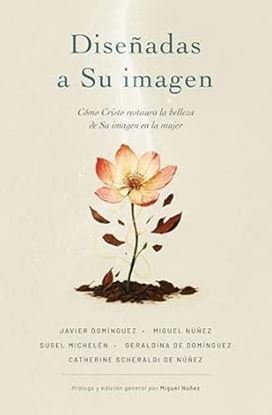
DISEÑADAS A SU IMAGEN
¿Sientes que las expectativas del mundo y las verdades del evangelio te dividen? ¿Anhelas sanar una imagen quebrantada en tu interior y entender tu verdadero valor? Este libro te ayudará a redescubrir la dignidad, la belleza y el propósito que Dios te dio al crearte a Su imagen, ofreciendo una guía para vivir como una mujer que refleja a su Creador.
Diseñadas a Su imagen es una invitación a un viaje transformador, desde el jardín del Edén hasta la restauración completa que se encuentra en Cristo. A través de una sólida exposición bíblica, los reconocidos autores Javier Domínguez, Miguel Núñez, Sugel Michelén, Geraldina de Domínguez y Catherine Scheraldi de Núñez te guiarán para que mires más allá de los estándares del mundo y abraces la identidad divina con la que fuiste formada.
Este libro te ayudará a:
Comprender tu valor: Entiende que tu dignidad no depende de estándares humanos, sino de haber sido creada a imagen de un Dios majestuoso.
Sanar tus heridas: Descubre cómo Cristo puede tomar el dolor, el menosprecio y el abuso para transformarlos para tu bien y moldearte a Su imagen.
Vivir con esperanza: Aprende a vivir entre el dolor de un mundo caído y la esperanza segura de la gloria futura, entendiendo que tu sufrimiento nunca es en vano.
Reflejar a Cristo: Renueva tu mente y corazón para deshacerte de los malos hábitos y vivir tu n
950
4,200
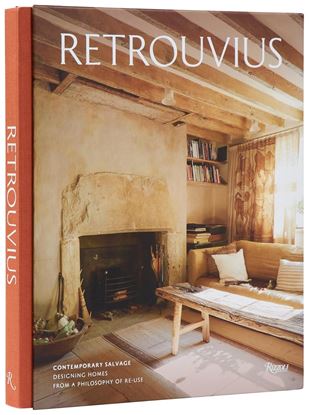
RETROUVIUS. CONTEMPORARY SALVAGE
In a world increasingly defined by the fleeting and the disposable, Retrouvius stands as a beacon of sustainability, creativity, and enduring beauty in interior design. Each space transformed by the studio is imbued with a history and a character uniquely its own, and a deep respect and sensitivity for original, historic designs and materials.
As interior designers and architects increasingly adopt sustainable practices to reduce their environmental footprint, Retrouvius has been discovering new life in the old and patinaed, new purpose in the centuries overlooked. Its work is a testament to the belief that sustainability can be synonymous with sophistication, and that the past can beautifully and intelligently inform the present.
4,200
6,995
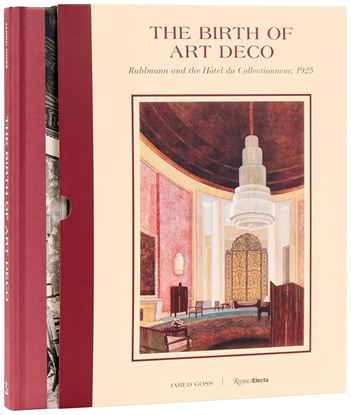
THE BIRTH OF ART DECO: RUHLMANN AND L H.
This book celebrates the 1925 Paris Exposition—at its centenary—a landmark event that shaped twentieth-century design and gave its name to Art Deco. The exposition dazzled over sixteen million visitors during its run, showcasing the pinnacle of French luxury goods and design innovation.
Renowned as the preeminent exponent of French Art Deco, Ruhlmann (1879–1933) was recognized for the aesthetic refinement, luxurious materials, and impeccable craftsmanship of his creations. Inspired by eighteenth-century pleasure pavilions, Ruhlmann’s pavilion, L’Hôtel du Collectionneur (The Town House of the Collector), was one of the most admired exhibits at the fair. Conceived as a modern-day Trianon, it was filled with his own sumptuous furnishings together with a meticulous selection of objets d’art by his contemporaries, including Edgar Brandt, Jean Dunand, and Jean Puiforcat.
6,995
2,995
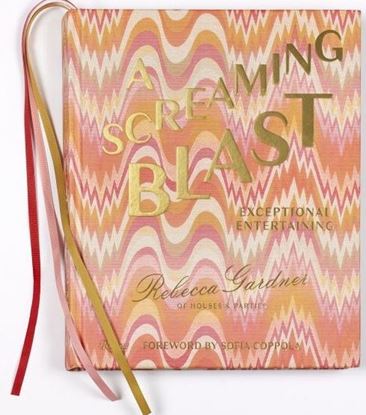
A SCREAMING BLAST
A swirl of elegantly offbeat parties and lush tablescapes, where ceramic snails creep under flower petals and chandelier girls covered in Swarovski crystals beckon guests to the dance floor: Gardner’s infectious irreverence shines in her glamorous approach to entertaining, where even the mundane is made delicious.
This book—like her parties—is a decadent feast for the eyes, with a foreword by Sofia Coppola and photography that captures the surprise and delight of Gardner’s hyperbolic entertaining style. From a brass band leading guests to dinner along the tracks of the Napa Valley Wine Train to a pink-poodle-themed holiday party with a bountiful buffet of retro desserts, the pages burst with entertainments, heavy pours, and flattering light as all the elements combine in a perfectly orchestrated yet seemingly effortless way that makes it impossible for guests not to have a screaming blast!
2,995

3,995
THROUGH THE LONG DESERT: G. O'KEEFE
Georgia O’Keeffe and Frank Lloyd Wright were neither competitors nor direct collaborators. Yet these romantic heroes of twentieth-century art and architecture largely operated in parallel. In this seminal book, Rovang weaves together their compelling life stories, examining newly discovered links between them and, in the process, offering a fresh perspective on their work, their intermittent yet poignant friendship, and their closeness to the desert.
Starting in 1933, O’Keeffe and Wright exchanged roughly two dozen letters in which they expressed admiration for one another but also their passion for the places that informed them—many of which they had in common. Both were born in rural Wisconsin and built their careers in Chicago and New York. However, both sought inspiration and fulfillment in places farther afield, including in Japan and the desert landscape of the American Southwest. Juxtaposing images highlighting shared aspects of their individual biographies and work, this unique take on American creative expression explores the nature of artistic friendship and the idea of “home.” Rovang’s text gives rich context to the allure and romance of her visual subject, offering readers new ways to appreciate O’Keeffe’s and Wright’s monumental contributions to American culture.
3,995
4,995
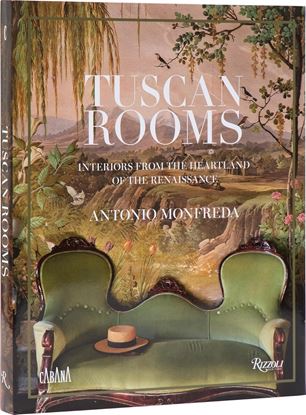
TUSCAN ROOMS
Tuscany’s historical residences tell stories that no mere guidebook can capture. The houses that dot the landscape—from the stately Medici villas to the more humble yet charming farmhouses—are not just structures but also symbols of a way of life, a lasting testament to the fusion of an agrarian lifestyle, picturesque towns, notable architecture, fine craft, and art.
In the book’s foreword, Cabana founder Mondadori writes, “Tuscany is not merely a region; it is a living canvas, a dreamscape that has cradled the imagination of artists, poets, and thinkers for centuries.” The interiors presented in this book are a celebration of the talents of the diverse contemporary homeowners, who are keeping the region’s creative spirit alive. Houses brim with the output of skilled craftsmen, exquisite tapestries, brocades and damasks, objects arranged as if painterly still lifes, fantastical murals, rare books, furniture from a range of periods, and fine porcelain.
4,995

2,500
THE WORLD ATLAS OF FOOTBALL STADIUMS
This panoramic collection showcases stadiums, venues, and pitches, from the quirky to the historic, covering both men’s and women’s leagues, professional to amateur, wherever the game is played with enthusiasm and great style.
For those who love the sport, either from birthright or from newly kindled passion, there’s a distinct and beloved resonance and local character to each stadium. This is one of soccer’s great charms, and this book is a road map to a pilgrimage to 1000 arenas that anyone in love with the beautiful game would want to visit in person: some visionary and new, some ageing but iconic, some remote yet picturesque, some tumbledown, quirky yet historical and utterly lovable—but all with such genuine personality, the fans’ hearts beat a little faster to see a match there.
2,500
3,995
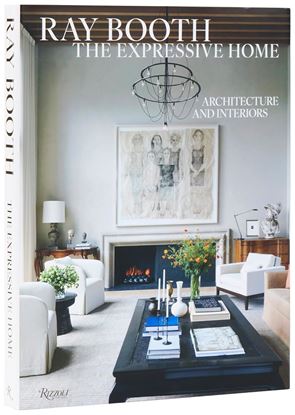
RAY BOOTH: THE EXPRESSIVE HOME
Booth showcases his innovative and sophisticated modern interiors, which mix a keen sense of tranquility with bold and elegant details, as well as homes renovated inside and out, and houses designed and decorated from the foundations up. Both his exteriors and interiors display a harmonious blend of traditional and contemporary elements, resulting in an appealingly timeless aesthetic. This exquisitely designed tome presents his forward-thinking vision.
The spectacular projects featured span the country from coast to coast—from a dramatic Los Angeles hillside dwelling with expansive windows to a contemporary Nashville home that marries brick, metal, and wood. For his own Provincetown seaside getaway, he has chosen an unexpected cutting-edge style. These projects show how he pushes the boundaries of design while imbuing spaces with soul.
3,995
3,500
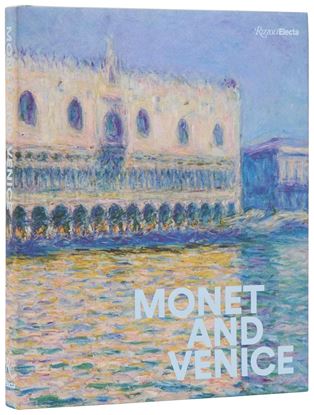
MONET AND VENICE
Monet’s Venice paintings are high points in his lifelong engagement with the interplay of water and light. Monet and Venice—anchored by two masterworks from the collections of Brooklyn and San Francisco, The Doge’s Palace and The Grand Canal, Venice—will be the first exhibition and English-language publication dedicated to this significant suite of paintings since their Parisian debut at the Bernheim-Jeune gallery in 1912.
Monet keenly felt the burden of influence in a city that had so often been depicted and had long been an icon of waning, fragile beauty. Venice was—and is—a place where culture and nature are profoundly and uniquely entangled. Monet’s images of Venice’s buildings and canals dissolved in colorful mist and hazy light may be seen as meditations on human aesthetic interaction with a natural environment built upon for centuries.
3,500