

2,500
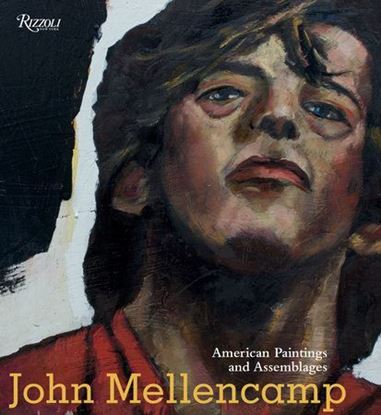
JOHN MELLENCAMP. AMERICAN PAITINGS AND A
Longtime music icon John Mellencamp’s artistic expression has never been limited to song.
The acclaimed singer-songwriter John Mellencamp has been an accomplished painter for more than four decades. This definitive survey—curated by Mellencamp himself—of his large-scale oil portraits and mixed-media assemblages documents America’s heart and soul, revealing unsettling but beautiful truths with an antiestablishment frown and a rich sense of narrative.
“Although we may primarily know Mellencamp as a rock star, one of the highest-selling of all time and a Hall of Famer, he is also a great painter, as this book shows. Not a musician who also paints... No, John legitimately belongs in the modern art pantheon,” says Bob Guccione Jr. in his essay that delineates the connection of Mellencamp’s music and art, both imbued with the earnest voice of America’s heartland.
2,500
1,995
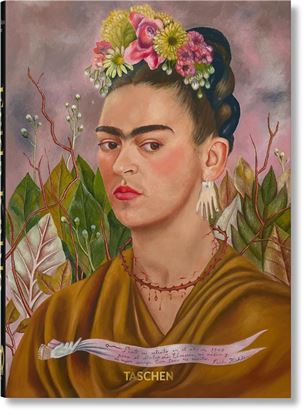
KAHLO, PAINTINGS (40TH) (GB)
Among the few women artists who have transcended art history, none had a meteoric rise quite like Mexican painter Frida Kahlo (1907–1954). Her unmistakable face, depicted in over fifty extraordinary self-portraits, has been admired by generations; along with hundreds of photographs taken by notable artists such as Manuel and Lola Álvarez Bravo, Nickolas Muray, and Martin Munkácsi, they made Frida Kahlo an iconic image of 20th century art.After an accident in her early youth, Frida became a painter of her own free will. Her marriage to Diego Rivera in 1929 placed her at the forefront of an artistic scene not only in the cultural Renaissance of Mexico, but also in the United States. Her work garnered praise from the poet André Breton, who added the Mexican painter to the ranks of international surrealism and exhibited her work in Paris in 1939 to the admiration of Picasso, Kandinsky, and Duchamp.We access the intimacy of Frida’s affections and passions through a selection of drawings, pages from her personal diary, and an extensive illustrated biography featuring photos of Frida, Diego, and the Casa Azul, Frida’s home and the center of her universe.This book allows readers to admire Frida Kahlo’s paintings like never before, including unprecedented detail shots and famous photographs. It presents pieces in private collections and reproduces works that were previously lost or have not been exhibited for more than 80 years.
1,995

1,995
KARL BLOSSFELDT. THE COMPLETE PUBLISHED
German photography pioneer Karl Blossfeldt (1865–1932) photographed plants so beautifully, and with such originality, that his work transcends the medium itself. Over more than 30 years, he took thousands of photographs, revealing a formally rigorous talent whose precision and dedication bridge the 19th- and 20th-century worlds of image-making and bring a distinctly sculptural aspect to a firmly two-dimensional art form.
Beautifully but starkly composed against plain cardboard backgrounds, Blossfeldt’s images, relying on a northern light for their sense of volume, reveal nothing of the man but everything of themselves. They are still lifes, piercingly final statements on their subject, and have endured owing to their aesthetics and the ongoing fascination of students and photographers. Like their maker, they are quietly and lastingly effective.
1,995

1,995
KIRSTEN FLAGSTAFF. LA VOZ DEL SIGLO
Los críticos musicales de la época describieron la voz de la soprano noruega Kirsten Flagstad como la luz del sol que incide sobre la cúspide de una montaña coronada por un glaciar. Jessye Norman la asemejó al oro líquido sobre terciopelo negro, mientras que Elisabeth Schwarzkopf percibió que tenía la dimensión de una madre cósmica que abraza el universo.
1,995
1,250
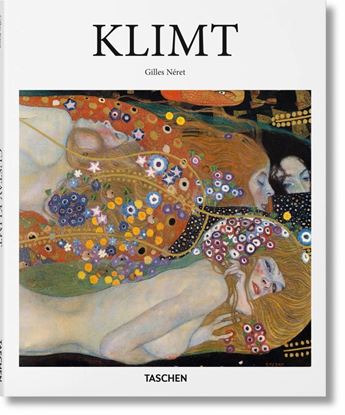
KLIMT (BA-ART)
The unfading popularity of Gustav Klimt (1862–1918) attests not only to the particular appeal of his luxuriant painting but also to the universal themes with which he worked: love, feminine beauty, aging, and death.The son of a goldsmith, Klimt created surfaces of ornate and jewel-like luminosity which show the influence of both Egyptian and Japanese art. Through paintings, murals, and friezes, his work is defined by radiant color, fluid lines, floral elements, and mosaic-like patterning.With subjects ranging from sensuality and desire to anxiety and despair, all this iridescence is also suffused with feeling. Klimt’s numerous images of women, characterized by curvaceous forms, tender flesh, red lips, and flushed cheeks, were particularly charged with passion, at a time when such frank eroticism was still taboo in Viennese upper-middle-class society.This book presents a selection of Klimt’s work, introducing his pictorial world of decoration and desire, as well as his influence on artists to come.
1,250
1,600
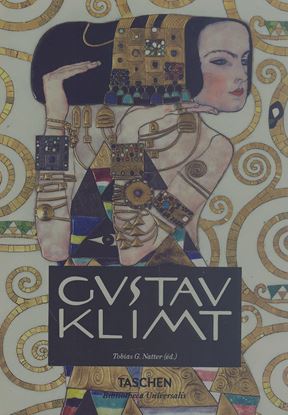
KLIMT (TD) (BU) (E)
Museística de envergadura de Estados Unidos, y marcó un antes y un después en el intento por Internacionalizar a Klimt. De manera paralela, a lo largo de la década de 1960 los estudios sobre la obra y la figura de Klimt adoptaron un nuevo enfoque.
1,600