1,250
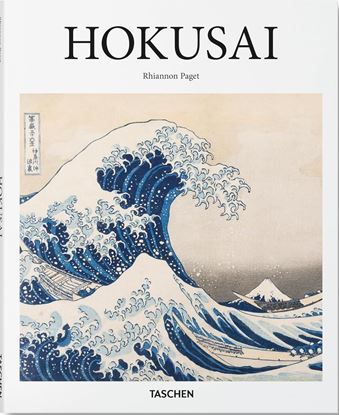
HOKUSAI (BASIC ART) (ES)
Meet the artist whose majestic breaking wave sent ripples across the world. Hokusai (1760–1849) is not only one of the giants of Japanese art and a legend of the Edo period, but also significantly influenced Western modernism, whose prolific gamut of prints, illustrations, paintings, and beyond forms one of the most comprehensive oeuvres of ukiyo-e art and a benchmark of japonisme. His influence spread through Impressionism, Art Nouveau, and beyond, enrapturing the likes of Claude Monet, Berthe Morisot, Edgar Degas, Mary Cassatt, and Vincent van Gogh.
1,250

999
2,500
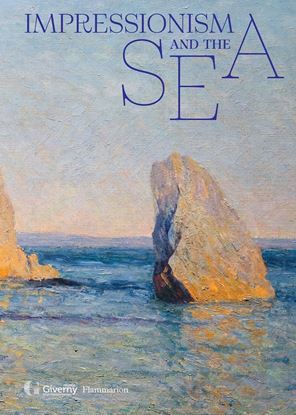
IMPRESSIONISM AND THE SEA
The impressionists were forever inspired by the sea, which Claude Monet considered “a wonderful teacher for landscape artists.” The movement’s penchant for plein air painting and its characteristic style, with delicate brushstrokes and incomparable color palettes, was perfectly suited to portrayals of the sea and its perpetual movement, from gently rippling waves to raging storms.
2,500
6,500
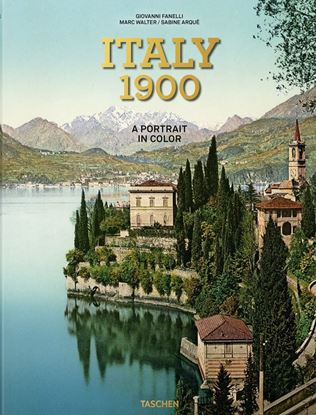
ITALY 1900. A PORTRAIT IN COLOR (FP) INT
“Puedes quedarte con el universo mientras yo pueda tener Italia”, dijo una vez el compositor Giuseppe Verdi. Ya a mediados del siglo XIX, el lenguaje emotivo de Verdi apelaba a los sentimientos patrióticos de un emergente Estado nación. Después de décadas de lucha cruenta, el movimiento conocido como Risorgimento triunfó con la proclamación de la unificación de Italia en 1861, que juntó reinos y territorios dispares que hasta entonces habían sido gobernados por Austria, el reino de Cerdeña y los Estados Pontificios.
Hoy, la apelación de Verdi a Italia no sólo encuentra eco entre sus compatriotas, sino también entre millones de personas de todo el mundo que observan esta península con forma de bota cautivados por su luz, su arte y su sensualidad. Esta colección es un documento visual fascinante de la Italia de principios del siglo XX que reúne fotocromos y láminas antiguas en color.
De costa a costa, por escenarios de la Antigüedad clásica y del prodigioso Renacimiento, por los canales venecianos y a lo largo del colorido litoral amalfitano, cada una de estas evocadoras imágenes impresiona tanto por su claridad cromática como por su vívida evocación de tiempos pasados. Como si se tratara de un sueño encantado, caminamos por una plaza de San Marcos vacía y en penumbra, paseamos solos por el patio en sombras de la Galería de los Uffizi y nos cruzamos con unos pocos carros tirados por caballos frente al Panteón en Roma. En lugar de cámaras, guías y grupos de visitantes, encontramos a comerciantes y trabajadores, tranquilas escenas callejeras y barrios humildes. El hechizo de los escenarios históricos y el cálido encanto de la vida cotidiana se combinan y dan como resultado un magnífico retrato de un joven país que luchó por existir y se ganó los corazones del mundo entero.
6,500
1,995
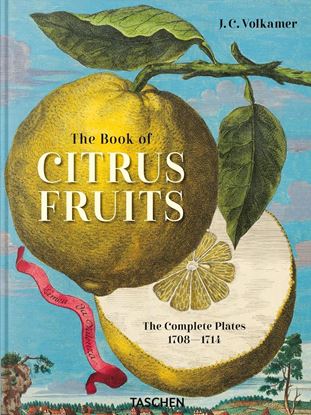
J.C. VOLKAMER. THE BOOK OF CITRUS FRUITS
Have you ever thought of citrus fruits as celestial bodies, angelically suspended in the sky? Perhaps not, but J. C. Volkamer (1644–1720) did―commissioning an extravagant and breathtaking series of large-sized copperplates representing citrons, lemons, and bitter oranges in surreal scenes of majesty and wonder.
Ordering plants by post mostly from Italy, Germany, North Africa, and even the Cape of Good Hope, the Nuremberg merchant Volkamer was a devotee of the fragrant and exotic citrus at a time when such fruits were still largely unknown north of the Alps. His garden came to contain a wide variety of specimens, and he became so obsessed with the fruits that he commissioned a team of copperplate engravers to create 256 plates of 170 varieties of citrus fruits, many depicted life size, published in a two-volume work. The first volume appeared in 1708, with the impressively lengthy title The Nuremberg Hesperides, or: A detailed description of the noble fruits of the citron, lemon and bitter orange; how these may be correctly planted, cared for and propagated in that and neighboring regions.
1,995
5,995
JACQUES DEVAULX. NAUTICAL WORKS (XL)
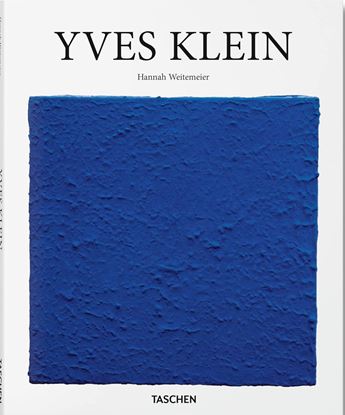
In the mid-1950s, Yves Klein (1928–1962) declared that “a new world calls for a new man.” With his idiosyncratic style and huge charisma, this bold artist would go on to pursue a brief but bountiful career, producing more than 1,000 paintings over seven years in an oeuvre now considered a mainstay of postwar modernism.Klein made his name above all with his large monochrome canvases in his own patented hue of blue. International Klein Blue (IKB), composed of pure pigment and binding medium, is at once rich and luminous, evocative and decorative, and was conceived by Klein as a means of evoking the immateriality and infinitude of the world. The works of this “Blue Revolution” seem to draw us into another dimension, as if hypnotized by a perfect summer sky. Klein was also renowned for his deployment of “living brushes,” in which naked women, daubed in International Klein Blue, would make imprints of their bodies on large sheets of paper.
5,995