2,995
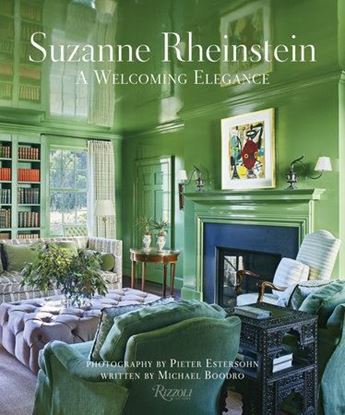
SUZANNE RHEINSTEIN
Over the past decade, celebrated style maker Suzanne Rheinstein has achieved an unprecedented level of refinement and clarity. Her love of objects from the past remains a touchstone, but in her newest rooms, stylish modernity and an elegant simplicity hold sway.
Presented are beautifully photographed homes of clients Suzanne Rheinstein has worked with before that reflect a vision of richness tempered by restraint. Her longtime fans will find new inspiration in these pages. Throughout, she shares her ideas of how to live in a relaxed way surrounded by artworks and personal collections. A traditional Georgian library is done in a totally untraditional lacquered green, while a San Francisco town house revamp includes a “California” room filled with Moroccan rugs and rattan chairs, and a serene retreat has a guesthouse evocative of the bohemian 1970s.
2,995

2,995
SYNAGOGUES. MARVELS OF JUDAISM
This visually striking compendium illustrates the architectural and historical evolution of over 60 iconic synagogues worldwide. Beginning with the foremost archaeological sites in the Holy Land, it extends to the Jewish sanctuaries of Europe, North Africa, Russia, the Caucasus, Israel, and the New World, from the most ancient to the most innovative creations around the globe. Masterpieces such as Frank Lloyd Wright’s Beth Sholom Synagogue in Pennsylvania, the Grand Synagogue in Paris, New York’s Temple Emanu-El, and Dresden’s Neue Synagogue are all featured in magnificent detail. In a series of compelling essays, prominent scholars Lidia Chakovskaya, Steven Fine, Max Fineblum, Mohammad Gharipour, Samuel D. Gruber, Sergey R. Kravtsov, Michael Levin, and Edward van Voolen explore the diverse architectural styles that reflect the synagogue’s rich, complex, and often tragic history. Noted Judaic studies authority Aaron Hughes provides the introduction, highlighting the synagogue’s history and liturgical furnishings from silver menorahs and textiles to carved wooden cabinets and lanterns of eternal light. This gorgeously illustrated volume will appeal to those with an appreciation for art and architecture as well as lovers of Jewish history.
2,995
3,600
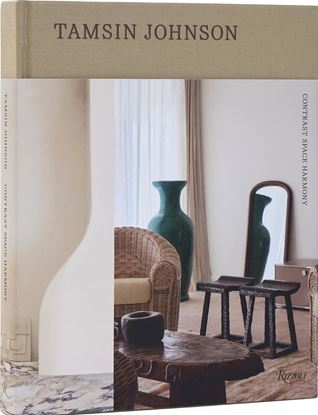
TAMSIN JOHNSON: CONTRAST, SPACE, HARMONY
This captivating new volume, the follow-up to Johnson’s beloved Spaces for Living, offers an inside look at her latest projects—spaces that seamlessly blend sophistication, comfort, and individuality.
At the heart of her approach is a deep appreciation for antiques and flair for combining pieces from across decades and continents. Sourcing antiques from around the world, she expertly layers them into contemporary settings, creating homes rich with history, character, and a sense of the unexpected. Whether it’s an eighteenth-century French commode juxtaposed with minimalist artwork or a vintage chandelier lending warmth to a sleek, modern space, Johnson’s eye for contrast and harmony makes every interior uniquely compelling.
3,600

2,995
TEORIA DE LA ARQUITECTURA. (T.P.) (SB)E
Esencia estructural
Los tratados de arquitectura que dieron forma a nuestro mundo
Si alguna vez se ha preguntado en qué piensan los arquitectos cuando proyectan un edificio, le encantará saber que no falta material brillante de lectura para satisfacer su curiosidad. Aunque una incursión en los archivos de la biblioteca de su ciudad seguramente le resultará muy provechosa, no le proporcionará la satisfacción inmediata que obtendrá con esta obra.
2,995

1,995
THE ADIDAS ARCHIVE. (45TH) (IE)
More than 100 years ago the brothers Adolf ("Adi") and Rudolf Dassler made their first pair of sports shoes. Hundreds of groundbreaking designs, epic moments, and star-studded collabs later, this book presents a visual review of the adidas shoe through almost 200 models.
To further develop and tailor his products to athletes’ specific needs, Dassler asked them to return their worn footwear when no longer needed, with all the shoes eventually ending up in his attic (to this day, many athletes return their shoes to adidas, often as a thank you after winning a title or breaking a world record). This collection now makes up the "adidas archive", one of the largest, if not the largest archive of any sports goods manufacturer in the world—which photographers Christian Habermeier and Sebastian Jäger have been visually documenting in extreme detail for years.
1,995

2,200
THE ADIDAS ARCHIVE. 45TH (INT)
More than 100 years ago the brothers Adolf ("Adi") and Rudolf Dassler made their first pair of sports shoes. Hundreds of groundbreaking designs, epic moments, and star-studded collabs later, this book presents a visual review of the adidas shoe through almost 200 models.To further develop and tailor his products to athletes’ specific needs, Dassler asked them to return their worn footwear when no longer needed, with all the shoes eventually ending up in his attic (to this day, many athletes return their shoes to adidas, often as a thank you after winning a title or breaking a world record). This collection now makes up the "adidas archive", one of the largest, if not the largest archive of any sports goods manufacturer in the world—which photographers Christian Habermeier and Sebastian Jäger have been visually documenting in extreme detail for years.Shot using the highest reproduction techniques, these images reveal the fine details as much as the stains, the tears, the repair tape, the grass smudges, the faded autographs. It’s all here, unmanipulated and captured in extremely high resolution—and with it comes to light the personal stories of each individual wearer. We encounter the shoes worn by West Germany’s football team during its “miraculous” 1954 World Cup win and those worn by Kathrine Switzer when she ran the Boston Marathon in 1967, before women were officially allowed to compete; custom models for stars from Madonna to Lionel Messi; collabs with the likes of Pharrell Williams, Raf Simons, Stella McCartneyor Yohji Yamamoto; as well as the brand’s trailblazing techniques and materials.Accompanied by expert texts, each picture tells us the why and the how, but also conveys the driving force behind adidas. What we discover goes beyond mere design; in the end, these are just shoes, worn out by their users who have loved them—but they are also first-hand witnesses of our sports, design, and culture history, from the beginnings of the Dassler brothers and the founding of adidas until today.
2,200