1,250
THEODORE DE BRY THE NEW WORLD.45TH ED
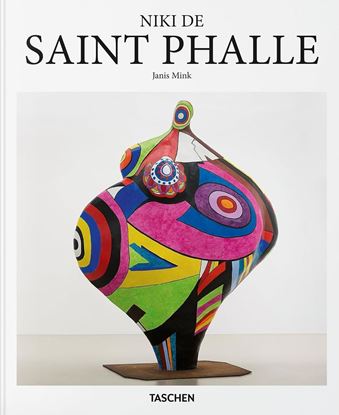
A key contributor to Nouveau Réalisme in early 1960s Paris, Niki de Saint Phalle (1930-2002) worked alongside artists such as Arman, Yves Klein, and Jean Tinguely, scavenging real objects in place of traditional art materials. She connected art to life by instrumentalizing household items, machine parts, and even toys for her early assemblages. Saint Phalle created her first shooting painting, or Tir, in 1961, and went on to conduct these performances in such varied locations as the Impasse Ronsin in Paris, a garden in Amsterdam, a sandpit outside Stockholm, and the Malibu Hills. Reliefs made of plaster, small objects, paint, wood, and wire were punctured by the bullets of a gun.
1,250
3,995
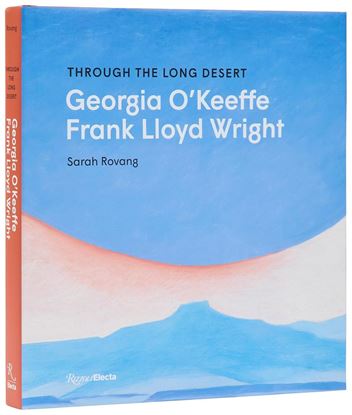
THROUGH THE LONG DESERT: G. O'KEEFE
Georgia O’Keeffe and Frank Lloyd Wright were neither competitors nor direct collaborators. Yet these romantic heroes of twentieth-century art and architecture largely operated in parallel. In this seminal book, Rovang weaves together their compelling life stories, examining newly discovered links between them and, in the process, offering a fresh perspective on their work, their intermittent yet poignant friendship, and their closeness to the desert.
Starting in 1933, O’Keeffe and Wright exchanged roughly two dozen letters in which they expressed admiration for one another but also their passion for the places that informed them—many of which they had in common. Both were born in rural Wisconsin and built their careers in Chicago and New York. However, both sought inspiration and fulfillment in places farther afield, including in Japan and the desert landscape of the American Southwest. Juxtaposing images highlighting shared aspects of their individual biographies and work, this unique take on American creative expression explores the nature of artistic friendship and the idea of “home.” Rovang’s text gives rich context to the allure and romance of her visual subject, offering readers new ways to appreciate O’Keeffe’s and Wright’s monumental contributions to American culture.
3,995

995
TIFFANY & CO. HISTORIA DETRAS DE LA MODA
Todo el mundo conoce las cajitas azules de Tiffany & Co., pero esta es la fascinante historia real que hay detrás del éxito de la marca de joyería más famosa del planeta.
Descubra cómo el valiente emprendedor Charles Lewis Tiffany, recién llegado a la ciudad de Nueva York en 1837, consiguió convertirse en el «Rey de los diamantes».
La historia de grandes ganancias y pérdidas, del descubrimiento de gemas inéditas y genios del diseño, y de la creación de algunas de las joyas más emblemáticas de nuestro tiempo, entre las que se incluye el clásico anillo de compromiso Tiffany.
995
3,300
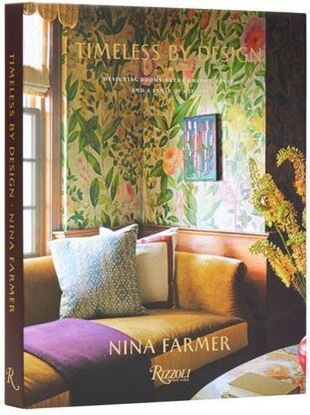
TIMELESS BY DESIGN
Designer Nina Farmer has made a name for herself with her classically beautiful interiors. From reimagining century-old homes to more modern dwellings, Farmer has a way of creating looks that celebrate the past and simultaneously live squarely—and stylishly—in the present. In these pages, Farmer introduces readers to the design solutions she has found for creating that special combination: a carefully curated mix of the classic and the contemporary that looks like it was collected over time rather than created all at once.
3,300
3,995
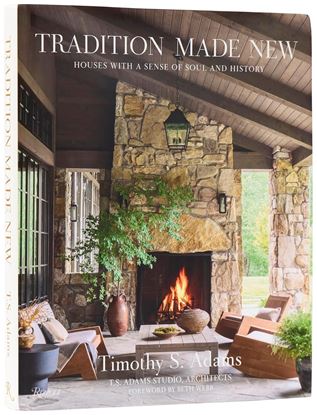
TRADITION MADE NEW
Architect Adams has long had a passion for design. His appreciation for how things are made had its genesis in his childhood experiences on a farm in Asheville, North Carolina. As a boy, Adams always had a pencil in hand, sketching for hours. Today, it is his understanding of craft and response to place that sets him apart.
Informed by Adams’s deep knowledge of historic precedents, proportions, and details, the homes featured in this book are imbued with soul, whether it’s a charming house in the woods on the lake, a refined contemporary beachside retreat, or a traditional manor house in town. While the homes featured range in scale and style— Tudor, Arts and Crafts, French country, Southern farmhouse—Adams imbues each with natural materials such as bespoke architectural details in millwork and molding, arched doorways, and oversized windows. He brilliantly weaves wood, stone, copper, and other natural substances through the interiors to create an effect that casts a spell inside and out. These are houses that are grounded in the past, designed for the present, and intended to remain beautiful and functional over the long term.
3,995
1,650
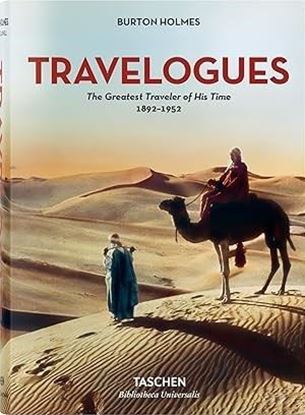
TRAVELOGUES. THE GREATEST (BU)(GB)
It was the Belle Époque, a time before air travel or radio, at the brink of a revolution in photography and filmmaking, when Burton Holmes (1870–1958) began a lifelong journey to bring the world home.
From the grand boulevards of Paris to China’s Great Wall, from the construction of the Panama Canal to the 1906 eruption of Mount Vesuvius, Holmes delighted in finding “the beautiful way around the world” and made a career of sharing his stories, colorful photographs, and films with audiences across America. He coined the term “travelogue” in 1904 to advertise his unique performance and thrilled audiences with two-hour sets of stories timed to projections of multihued, hand-painted glass-lantern slides and some of the first “moving pictures.
1,650